- Years of Life: 1802-1878
Early Life and Conversion
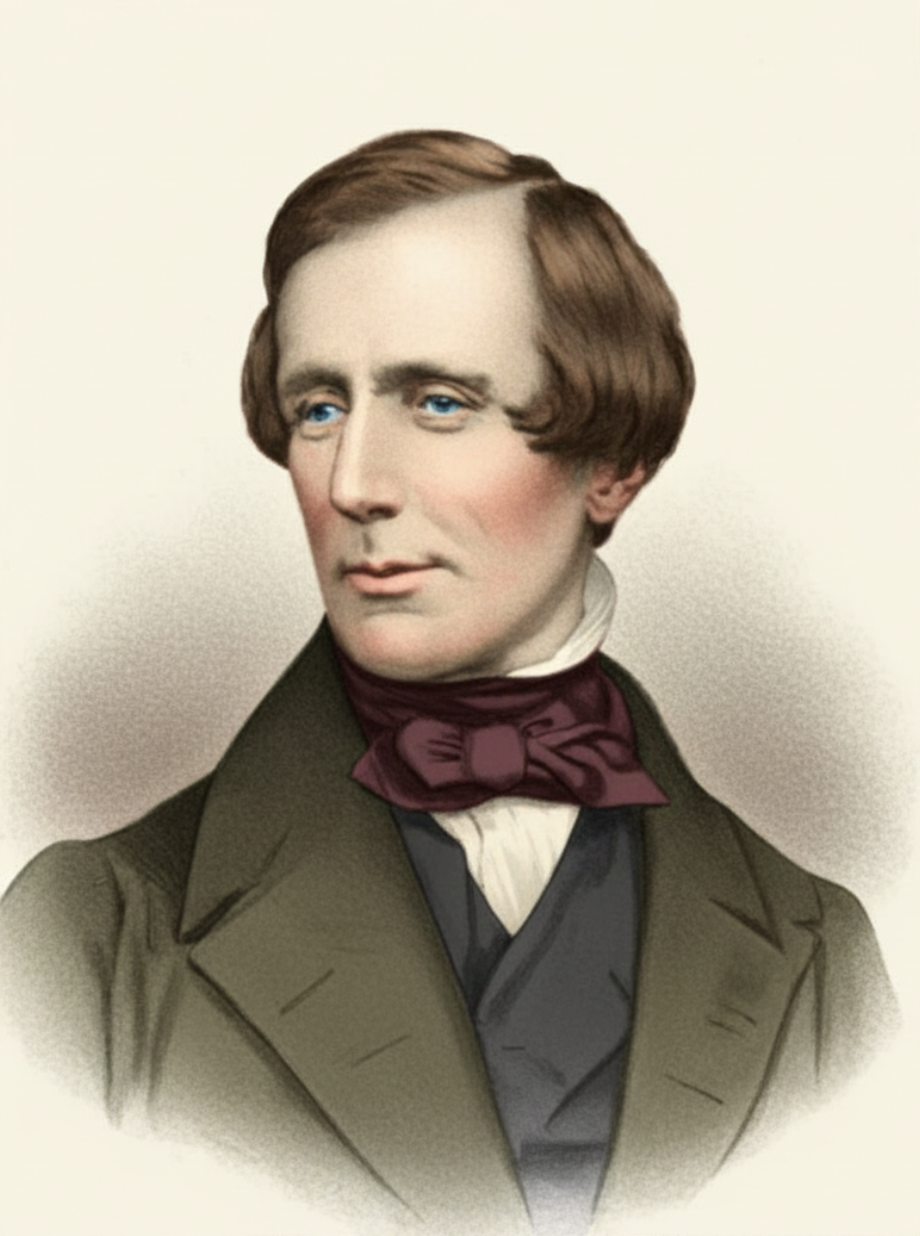
William Henry Dorman was born in 1802, of humble parentage. Converted to God at an early age, he soon showed marked spiritual earnestness and intellectual ability. From the beginning, his Christian life was characterised by seriousness of purpose, love for the Word of God, and a desire to serve Christ faithfully.
These qualities naturally led him into Christian ministry, where he quickly proved himself a man of real gift and moral weight.
Congregational Ministry and Pastoral Leadership
Dorman became a Congregational minister, eventually holding the important and influential pastorate of Union Chapel, Islington. In this position he was widely respected as a capable preacher and pastor, exercising a ministry that combined doctrinal clarity with pastoral care.
Yet even while occupying this prominent Nonconformist position, he was not content to accept inherited traditions without examination. He devoted himself to earnest and prayerful study of the Scriptures, carefully comparing what he found there with the existing ecclesiastical systems around him.
Association with the Brethren (c. 1838)
Around 1838, as a result of this Scriptural exercise, William Henry Dorman felt compelled to separate from denominational ministry and associate himself with Christians meeting simply as “brethren.” His step was remarkable and historically significant.
He became the only Nonconformist minister of real prominence in England to cast in his lot with the Brethren movement during its formative years. His accession awakened widespread interest among Nonconformists and gave fresh visibility to the principles for which the movement stood.
From the outset he was recognised as a true minister, exemplifying what was described as “the source of all true ministry”:
-
love produced in the heart by grace, impelling active service
-
the sovereignty of God in the communication of gifts and calls to service
For Dorman, ministry was no longer a matter of office or appointment, but of faithfulness and duty before God.
Ministry at Reading and Bristol
After leaving Congregationalism, Dorman laboured extensively among the Brethren.
He ministered at Reading, where his influence proved decisive in leading Charles Edward Stuart to leave the Church of England and take his place in fellowship with the believers meeting there. This act alone marked Dorman as a man whose convictions carried spiritual weight and personal cost.
He also ministered for several years at Bristol, contributing to the teaching and stability of the assemblies there.
Association with John Nelson Darby
William Henry Dorman was for many years closely associated with John Nelson Darby, sharing fellowship, labour, and responsibility in the early Brethren movement. He was known as a clear, concise, and powerful speaker, able to express truth with precision and balance.
During these years he contributed significantly through both oral ministry and writing, addressing questions relating to:
-
the present state of the Church
-
ministry and authority
-
prophetic interpretation
-
the dangers of clericalism and sectarian control
His book Principles of Truth on the Present State of the Church (1838) became one of the most important early statements of Brethren ecclesiology.
Separation from Darby (1866)
In 1866, after twenty-eight years of association with J. N. Darby, Dorman reached a painful but decisive conclusion. Together with Percy Francis Hall, Thomas Newberry, Joseph Stancomb, and others, he withdrew from Darby’s fellowship.
They did so believing that Darby had come to hold doctrinal views which they regarded as dangerously close to those of Benjamin Wills Newton, whose earlier errors had caused immense distress within the movement.
This separation was not lightly undertaken. It involved loss of long-standing fellowship and misunderstanding from many quarters. Dorman explained his reasons fully in writings such as The Close of Twenty-Eight Years of Association with J. N. D., and later letters and appeals.
Later Controversies and Writings
In his later years, Dorman became a central figure in addressing what he saw as ecclesiastical and doctrinal dangers within so-called Exclusive Brethren circles. His series of letters entitled High Church Claims of “The Exclusive Brethren” exposed what he believed to be:
-
authoritarian assumptions
-
clerical tendencies under new names
-
claims inconsistent with New Testament principles
He also spoke with great seriousness on doctrinal fundamentals, including the atonement, issuing solemn warnings when he believed truth was endangered.
Despite controversy, his writings consistently reveal a man motivated not by party spirit but by concern for Christ’s glory and the spiritual liberty of God’s people.
Character and Spiritual Influence
William Henry Dorman was widely respected for:
-
moral courage
-
clarity of thought
-
faithfulness to conscience
-
willingness to stand alone when necessary
Though firm in conviction, he was not a reckless controversialist. His life illustrates the cost of seeking to walk by Scripture rather than by influence or tradition, whether among Dissenters or among Brethren.
Death and Burial
William Henry Dorman fell asleep in Christ in 1878. He was buried at Reading, the place of one of his most fruitful ministries.
Legacy
William Henry Dorman is remembered as:
-
a leading Congregational minister who surrendered position for truth
-
a pioneer Nonconformist voice within the early Brethren movement
-
a careful and courageous ecclesiastical reformer
-
a defender of liberty of ministry and Scriptural church order
-
a man who placed faithfulness to Christ above party loyalty
His writings remain valuable for their insight into the early struggles of the Brethren movement and for their enduring insistence that the Church of God must be governed by Scripture alone, under the lordship of Christ.