
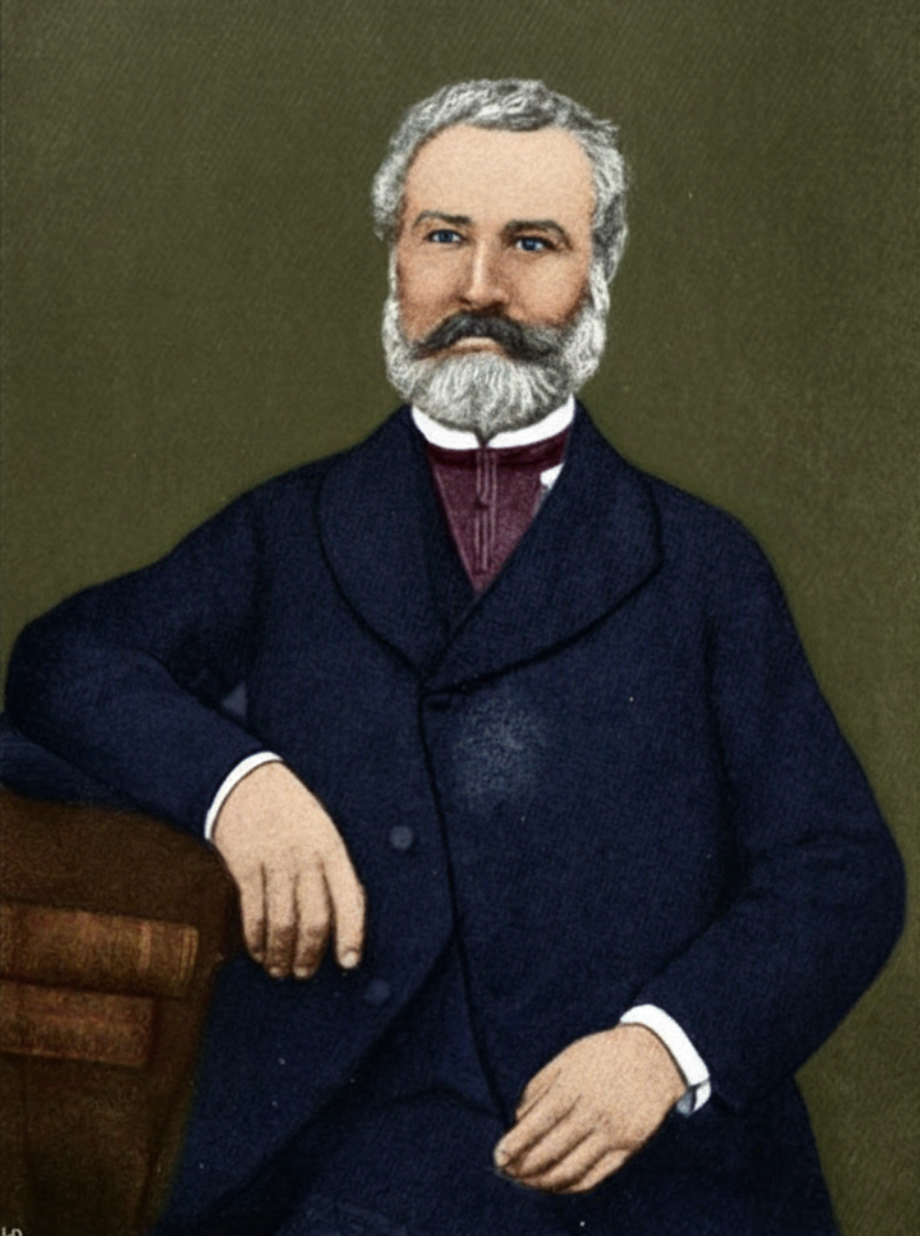
- Years of Life: 1825-1883
Early Life, Family, and Education
Teodorico Pietrocola Rossetti was born on 26 November 1825 at Vasto, into a deeply pious Roman Catholic family. His parents, Luigi Pietrocola and Cleofe Marchesani, raised him with strict religious devotion, and from childhood he was regarded as unusually earnest. More than one Catholic acquaintance predicted that the boy would one day become a saint—a prophecy that proved true, though not in the sense they imagined.
He showed exceptional intellectual ability and made rapid progress in classical studies, delighting in Latin and Italian poetry. Poetry, for Rossetti, was not acquired but innate; even in youth his compositions revealed a rich and natural poetic gift that would later be consecrated to Christian worship.
First Crisis of Faith within Roman Catholicism
At the age of nineteen, Rossetti experienced the first decisive shock to his confidence in Roman Catholic teaching. One Sunday morning, intending to accompany a young priest friend to Mass, he arrived early and was scandalised to find the priest eating a full breakfast of ham, figs, and wine.
When Rossetti protested that eating before communion was a mortal sin, the priest dismissed the objection and challenged him directly from Scripture—quoting Luke 22:19 and questioning the doctrine of transubstantiation with striking clarity. He argued that remembrance presupposes absence, and that Christ could not have multiple bodies simultaneously. These remarks deeply unsettled Rossetti and planted the first seeds of serious doubt regarding the authority of the Church of Rome.
Political Awakening, Exile, and Literary Development
In 1846, aged twenty-one, Rossetti entered the University of Naples, during a period of intense political agitation connected with the Risorgimento. Like many gifted young Italians, he was swept into the liberal and nationalist movement opposing Bourbon rule.
His zeal soon made him a target of the government of Ferdinand II, and after participating in the revolutionary movements of 1848, he was condemned to death. He fled first to Livorno, where he published a pamphlet and adopted the surname Rossetti, in honour of his uncle Gabriele Rossetti, the celebrated poet and patriot. He later escaped to France, becoming involved in workers’ movements in Lyon, but the Bonapartist coup of 1851 forced him once more into exile.
By the end of 1851, he reached England, where he found refuge, freedom, and a remarkably rich cultural environment.
England: Conversion and Spiritual Transformation
In England Rossetti was warmly welcomed by his uncle Gabriele and became closely associated with the extended Rossetti circle, including Dante Gabriel Rossetti, Christina Rossetti, William Michael Rossetti, and Maria Rossetti. He also met leading literary figures such as Lewis Carroll, for whom he later translated Alice in Wonderland into Italian.
Yet the most decisive influence came through his meeting with Piero Guicciardini, whom Rossetti later regarded as his spiritual father. While teaching at Teignmouth, the two Italian exiles met, and during a walk along the shore Guicciardini asked him a simple but searching question:
“If you were to die to-night, what would become of you?”
Rossetti’s inability to answer, contrasted with Guicciardini’s calm assurance, left him deeply troubled. The arrow lodged in his soul.
Soon after, while giving Italian lessons in London, a Christian pupil proposed reading the New Testament in Italian. During a lesson in Ephesians, the words “by grace ye are saved” were explained to him, and the work of grace truly began.
Rossetti came to a personal faith in Christ, believing on Him “who was delivered for our offences and raised again for our justification” (Romans 4:25). The doctrine of free, unmerited grace became the dominant truth of his life.
Fellowship, Calling, and Return to Italy
Rossetti began attending a simple Scripture meeting in Orchard Street, London, where believers gathered to read and meditate upon the Word of God. He never departed from what he learned there. Among those whose fellowship shaped his early Christian life were George Müller, Robert Cleaver Chapman, Lord Radstock, Lord Congleton, and others.
When religious liberty was granted in Piedmont, the call to return to Italy came with irresistible force. Though he had prospects of a brilliant literary career in England, he obtained a passport signed by Cavour, explicitly authorising him “to preach the Gospel”, and left England amid a deeply moving farewell meeting.
Evangelical Pioneer in Italy
Rossetti’s first centre of labour was Alessandria, a strategic city in Piedmont. There his ministry flourished, and the city became one of the principal centres of evangelical testimony in Italy. He gathered and trained bands of young Italian evangelists, instilling confidence and developing their gifts for service.
He was instrumental in the formation of what later became known as the Free Christian Churches, today part of the Churches of the Brethren. His work extended along railway lines, where railway workers often became evangelists to their colleagues.
Despite fierce opposition—including preaching monks sent from Rome, imprisonment threats, and violent assaults—Rossetti remained steadfast. On one occasion he was stoned, yet preached the same evening. On another, he narrowly escaped a planned ambush of two hundred men by arriving secretly in a carriage.
In 1868, he convened the first Agape gathering at Spinetta, an annual fellowship meeting that has since encouraged thousands of Italian believers.
Literary, Hymnological, and Educational Work
Rossetti wrote around two hundred hymns, many of which were sung by early Italian assemblies. He also participated in the translation of the Bible from the original Hebrew and Greek into Italian, founded schools where possible, and in 1870 began publishing the evangelical periodical La Vedetta Cristiana.
In 1872, he published the Italian translation of Alice in Wonderland, reflecting his enduring literary gifts.
In 1874, he received believer’s baptism in his Evangelical Church, consciously rejecting the validity of infant baptism.
Final Years and Death
In 1866, Rossetti and his wife settled in Florence. Though struck by paralysis in 1881, he continued serving as strength permitted.
On Sunday, 3 June 1883, though physically weak, he attended the morning meeting in Florence. He read from Acts, Hebrews, and Revelation, speaking with remarkable power of the joy and glory of Heaven. Those present later said:
“He transported us to Heaven.”
As he sat down, about to propose a hymn, he peacefully passed into the presence of the Lord, aged 58.
Legacy
Teodorico Pietrocola Rossetti is remembered as:
-
a poet turned evangelist
-
a patriot transformed into a preacher of grace
-
a pioneer of Italian evangelical Christianity
-
a founder of enduring Brethren assemblies
-
a man whose life united culture, courage, suffering, and Christ
From exile to evangelist, from revolutionary to redeemer’s servant, his life stands as a powerful testimony that true liberty is found only in Christ.