
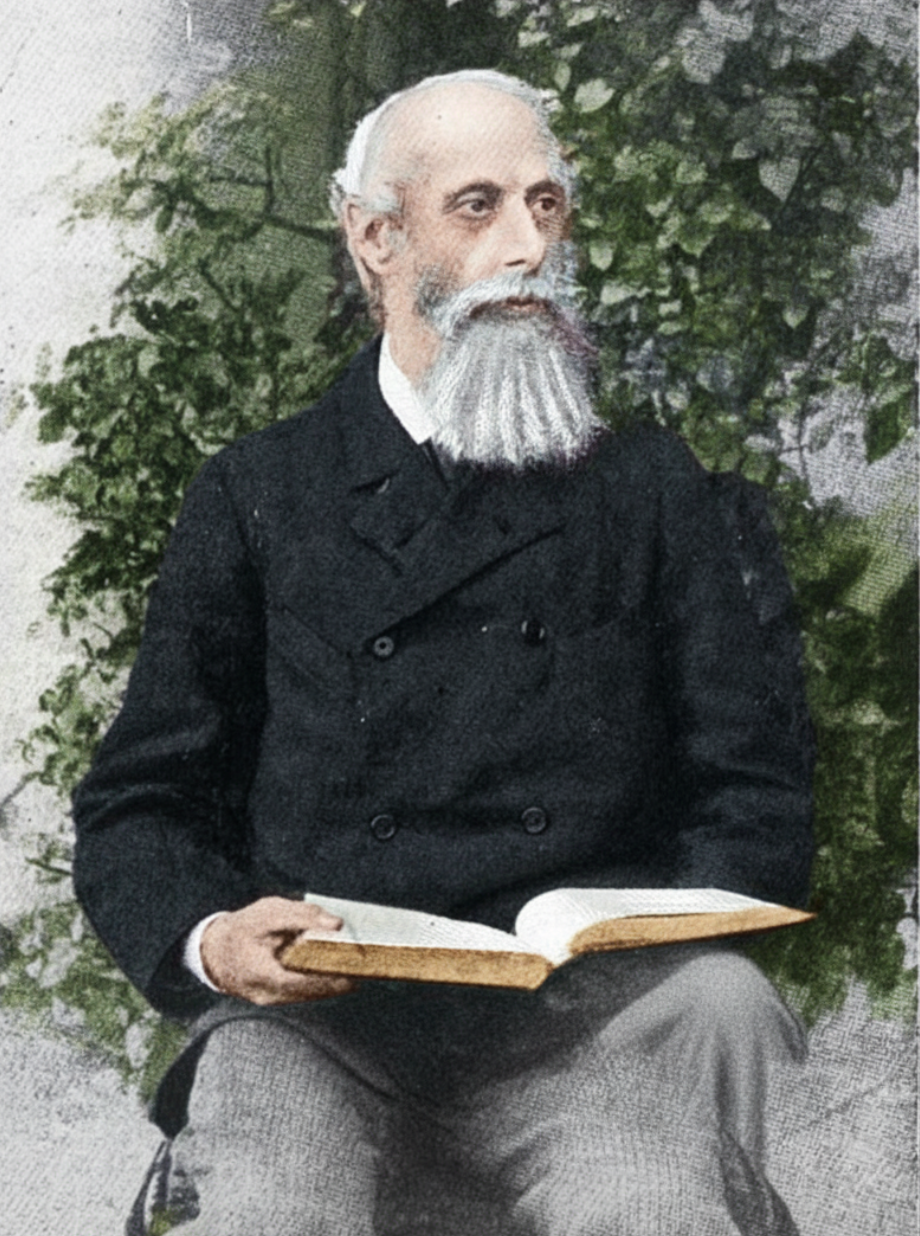
- Years of Life: 1835-1901
Early Life and Noble Inheritance
Somerset Arthur Butler was born on 30th January, 1835, into one of Ireland’s historic noble families. He succeeded to the titles and estates of Earl of Carrick and Viscount Ikerrin at the early age of eleven, following the death of his elder brother in 1846. His upbringing combined aristocratic responsibility with careful education, and he was sent to Harrow School, where the formative years of his youth were marked by both privilege and trial.
From his earliest days, however, his life was not free from sorrow. The burdens of inheritance, long-standing family encumbrances, and personal health difficulties would cast shadows across his path—trials which God later used for deep spiritual formation.
Military Service and the Crimean War
In 1853, Lord Carrick entered military service, joining the 1st Battalion Grenadier Guards as ensign and lieutenant. Two years later he took part in the Crimean campaign, serving at the siege of Sebastopol in 1855. For this service he received the Crimea Medal with clasp.
During this period, the Prince of Wales, later King Edward VII, joined the regiment and was placed in Lord Carrick’s company—an association that speaks to his standing and trustworthiness as a young officer.
He retired from the army in 1862, holding the rank of lieutenant and captain.
Country Life and Public Responsibilities
After leaving military service, Lord Carrick devoted himself to managing his estates and fulfilling numerous trusteeships in Ireland and Yorkshire. He also took a keen interest in local affairs and public responsibilities. Like many men of his class and time, he enjoyed fishing, shooting, hunting, yachting, and country pursuits, living outwardly the life expected of one in his position.
Yet beneath this active and respectable exterior, God was preparing him for a far deeper work.
Conversion and Spiritual Awakening (1869)
Lord Carrick’s conversion occurred in 1869, and was remarkable in that it came, by his own testimony, “apart from any human instrumentality or any writing of man.” The Spirit of God dealt directly with his soul, bringing him to saving faith in Christ.
Following this decisive change, he gave himself earnestly to the study of the Word of God, spending hours daily searching the Scriptures, especially prophecy. His faith was no mere sentiment; it demanded obedience, however costly.
Separation from Unscriptural Church Systems
The disestablishment of the Church of Ireland in 1869 became a turning point in his spiritual journey. Throwing himself wholeheartedly into attempts at reform, he served for several years on committees seeking to revise the Prayer Book according to Scripture.
Despite prolonged labour and sincere effort, he came to a solemn conclusion: the entire ecclesiastical system, from top to bottom, was unscriptural and incapable of reform. In obedience to conscience and the Word of God, he came completely out, though at the time he knew nothing of Brethren distinctions, whether Open or Exclusive.
Seeing denominationalism as of man rather than of God, he sat alone on the Lord’s Day, waiting upon God for further light. During this season, Jeremiah 33:3 was pressed upon his soul. He pledged before God that if shown hidden truth, he would walk in it regardless of cost.
Gathering Simply to the Name of the Lord
In answer to prayer, God taught him the Scriptural pattern of believers meeting each Lord’s Day to break bread in remembrance of the Lord Jesus. Acting on this light, he and three or four others began to meet in this simple way. A gathering thus commenced in his own house, and continued for eighteen years until his death.
His principle of fellowship was clear and consistent: wherever believers were gathered to the Name of the Lord, seeking to carry out Scriptural church order, there was his place. He earnestly sought to maintain “the unity of the Spirit in the bond of peace”, recognising that all born-again believers are one in Christ.
Ministry and Testimony
Though naturally shy and reserved, Lord Carrick was greatly used of God in ministry. Many had reason to thank God that they ever heard him preach. His addresses were marked by Scriptural depth, prayerful preparation, and spiritual authority, and were reinforced by a life that was truly “an epistle of Christ, read and known of all men.”
His influence reached far beyond formal preaching. One well-known Christian worker in Dublin testified that it was observing his holy life and uncompromising acknowledgment of Christ’s claims that led her to decide for Christ decades earlier.
He was especially kind to children and young people, winning their confidence and affection. He believed firmly in the verbal inspiration of Scripture, waited much upon God in prayer, and spoke only what he believed God had given him.
Love for the Lord’s Coming
In his later years, the Coming of the Lord was a frequent theme in his ministry. His final addresses returned repeatedly to this blessed hope. On 15th December, 1901, he spoke at Bray on that very subject. Shortly afterward, at Mount Juliet, he expounded 2 Corinthians 5, dwelling on Paul’s “I know,” explaining the judgment-seat of Christ as pertaining to believers, and earnestly beseeching any unsaved hearers to be reconciled to God.
He remarked that he did not wish to die, but rather looked for the Lord to come for His people.
Trials and Sufferings
Despite his rank, Lord Carrick’s life was marked by deep trials. His health was long unsatisfactory, and he endured much physical suffering. Financial grief from the forced sale of heavily encumbered estates in his youth weighed heavily upon him. The brutal murder of his wood-ranger—a Christian in fellowship—caused him profound sorrow.
Yet these trials softened and enriched his ministry, making it deeply sympathetic, and magnifying the grace of God in his life.
Home-Call and Funeral
In December 1901, while visiting his half-sister, the Dowager Countess of Clancarty, in County Galway, he caught a chill which developed into congestion of the lungs. On the evening of 21st December, he realised he was dying and calmly said, “I will be in the glory land before the morning.”
At 3:30 a.m. on December 22nd, 1901, he quietly fell asleep in Jesus.
His funeral took place on 27th December at Mount Juliet, County Kilkenny, and was attended by large numbers from all classes of society, including both Protestant and Roman Catholic clergy, bearing witness to the universal respect in which he was held.
Legacy
Somerset Arthur Butler, fifth Earl of Carrick, stands as a striking example of a man who surrendered rank, comfort, and tradition to walk in obedience to Christ and His Word. A nobleman by birth, he became a servant by choice—faithful, prayerful, and uncompromising in truth, yet gentle, sympathetic, and Christlike in spirit.
Though now “with Christ,” he still speaks—through his testimony, his example, and the enduring fragrance of a life wholly yielded to the Lord.