- Years of Life: 1803-1902
Early Life and Education
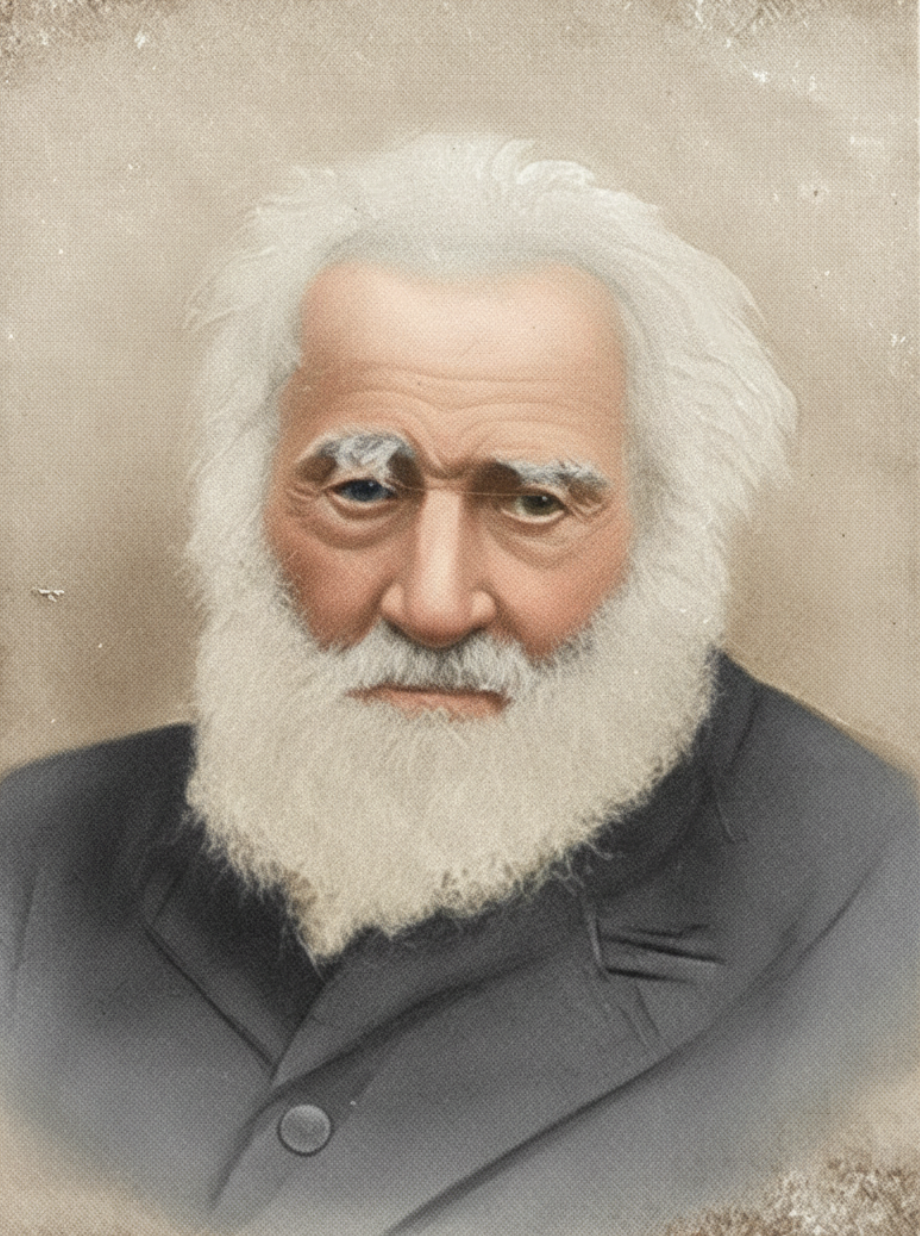
Robert Cleaver Chapman was born on 4 January 1803, in Denmark, where his parents were residing at the time. His early upbringing was strongly shaped by his mother, who believed deeply in the formative importance of a child’s earliest years. Until Robert was nine or ten, she personally educated and trained her children, seeking to instil high moral principles, intellectual discipline, and a love of learning.
While still in Denmark, Chapman received instruction from a French abbé, and later he was sent to a school in Yorkshire, where he made steady progress. He showed early aptitude for languages, studying several European tongues and even aspiring to acquire Eastern languages. Literature was his passion, and he longed to devote himself entirely to it.
However, family circumstances changed. Though the Chapmans had once been wealthy, his father Thomas Chapman experienced a decline in financial position. Practical necessity therefore required Robert to pursue a profession that would provide security, and—though reluctantly—he trained as a solicitor. In this field he advanced rapidly, occupying a strong professional position and giving every indication that he might rise to high distinction.
Yet, as later became evident, God had honours prepared for him of a far greater and more enduring kind.
Conversion and Decisive Consecration
The decisive turning point in Chapman’s life came when he was about twenty years old. Through the invitation of John Whitmore, an elder and respected Christian worker at John Street Chapel, Bedford Row, Chapman went to hear the preaching of James Harington Evans. Within days, a profound change became evident to all who knew him.
Chapman took his stand immediately and openly as a confessor of Christ, acknowledging Him as Lord. Convinced from Scripture that believers’ baptism was the will of God, he sought it without delay. When Evans advised caution, Chapman replied memorably:
“I will make haste, and delay not, to keep His commandments.”
This resolve marked his entire life. What he embraced at conversion, he maintained consistently for more than seventy years.
He soon felt called by God to the ministry of the Word, though friends discouraged him, saying he would never make a preacher. His response revealed the governing aim of his life:
“There are many who preach Christ, but not so many who live Christ; my great aim will be to live Christ.”
By the grace of God, that aim was fulfilled.
Barnstaple and Fellowship with Like-Minded Servants
In 1832, Chapman settled at Barnstaple, determined to learn and carry out all the will of God as revealed in Scripture. In that same year, George Müller and Henry Craik began their work in Bristol, while believers in Dublin and elsewhere were likewise being exercised to abandon tradition and obey Scripture alone.
When these servants of Christ were brought together by God’s providence, they found themselves of one mind in many essential truths, and enduring spiritual bonds were formed. Chapman welcomed fellowship wherever there was room for the whole Bible and a sincere readiness to obey it.
He utterly rejected sectarian titles, saying that denominational names “grated upon his ears.” Yet his heart embraced all who belonged to Christ, regardless of label. In prayer, hospitality, and fellowship, he consciously embraced the whole Church of God.
Views on Baptism, Fellowship, and the Church
Chapman consistently upheld the importance of believers’ baptism as the Scriptural expression of burial and resurrection with Christ, baptising converts in the River Taw at Barnstaple until he was eighty years old. At the same time, he firmly resisted any teaching that attributed saving power to baptism itself.
In matters of church life, he sought neither looseness nor rigidity, but obedient simplicity, guided solely by Scripture and the Holy Spirit.
Life at New Buildings, Barnstaple
Chapman lived for decades at No. 6 New Buildings, later also using No. 9, simple homes that became renowned worldwide for hospitality, prayer, and spiritual warmth. No servant of Christ ever came there without receiving a loving welcome and genuine sympathy, and few left without a deeper sense of trusting God and seeking first His kingdom.
When offered a better residence, Chapman declined, explaining that he wished to remain where even the poorest Christian could come without hesitation. It was in one of the modest rooms at No. 6 that he later breathed his last.
His daily life was marked by order, discipline, and joy:
-
He rose early and retired early.
-
After breakfast, he conducted a Scripture exposition, preceded by a hymn and followed by prayer.
-
Cheerfulness reigned at the table, but never frivolity.
-
A strict rule forbade speaking ill of the absent; any violation brought a gentle but firm reproof.
-
Nothing was wasted, though provision was always generous.
Preaching, Conferences, and Character
From early adulthood into extreme old age, Chapman was diligent in open-air preaching, especially during the annual fair at Barnstaple and throughout the surrounding countryside. Yet it was his life, even more than his preaching, that left its mark on the town.
He possessed remarkable self-control. Despite provocation and opposition over many decades, he never responded with harshness. Those who knew him longest testified that they never heard an ungracious word from his lips. A frequent saying in his home was:
“It is better to lose your purse than your temper.”
Chapman’s influence in conferences and private gatherings of servants of Christ was immense. His spoken words were weighty, but even more powerful was the spiritual atmosphere his presence created. He valued small gatherings where genuine conference over Scripture was possible and continued attending such meetings until he was over ninety years old.
Missionary Vision and Wider Interests
Chapman carried a lifelong burden for the spread of the Gospel in all lands. Visitors from many nations passed through New Buildings, and he followed missionary work closely in prayer. Spain held a special place in his heart. In 1838, he visited the country with fellow labourers when it was still largely closed to the Gospel, praying earnestly for its opening. In 1863, he had the joy of guiding new workers into Spain.
Writings, Hymns, and Literary Legacy
Chapman’s written ministry was extensive and enduring. Among his most influential works were:
-
Choice Sayings
-
Helps in the Word
-
Letters
-
Select Addresses to Believers
-
Hymns and Meditations
-
Hymns for the Use of the Church of Christ
-
Seventy Years of Pilgrim Life (life of William Hake)
His hymns—such as “Oh, My Saviour Crucified,” “King of Glory, Set on High,” “O Happy Morn! The Lord Will Come,” and others—remain in use today. His writings combined deep Scripture knowledge, Christ-centred devotion, and pastoral wisdom, and they continue to nourish believers long after his passing.
Final Years and Home-Call
Chapman remained active in public ministry until near the end of his life. At the Barnstaple annual meeting in June 1901, he stood for a full hour, leading worship, reading Scripture, praying, and speaking with vigour.
On 2 June 1902, he rose as usual but appeared unwell. A slight paralytic stroke followed later that day. More serious symptoms appeared on 12 June, and at about 8:50 p.m., in his 100th year, Robert Cleaver Chapman quietly entered his rest.
Legacy
Robert Cleaver Chapman is remembered as:
-
a man who lived Christ more than he spoke of Him
-
a model of love, humility, and self-control
-
a spiritual father to generations of believers
-
a champion of Scriptural simplicity and unity
-
a servant whose influence flowed as much from character as from teaching
He awaits the resurrection in the presence of the Lord he loved and served so faithfully, to be fully conformed to His image.