
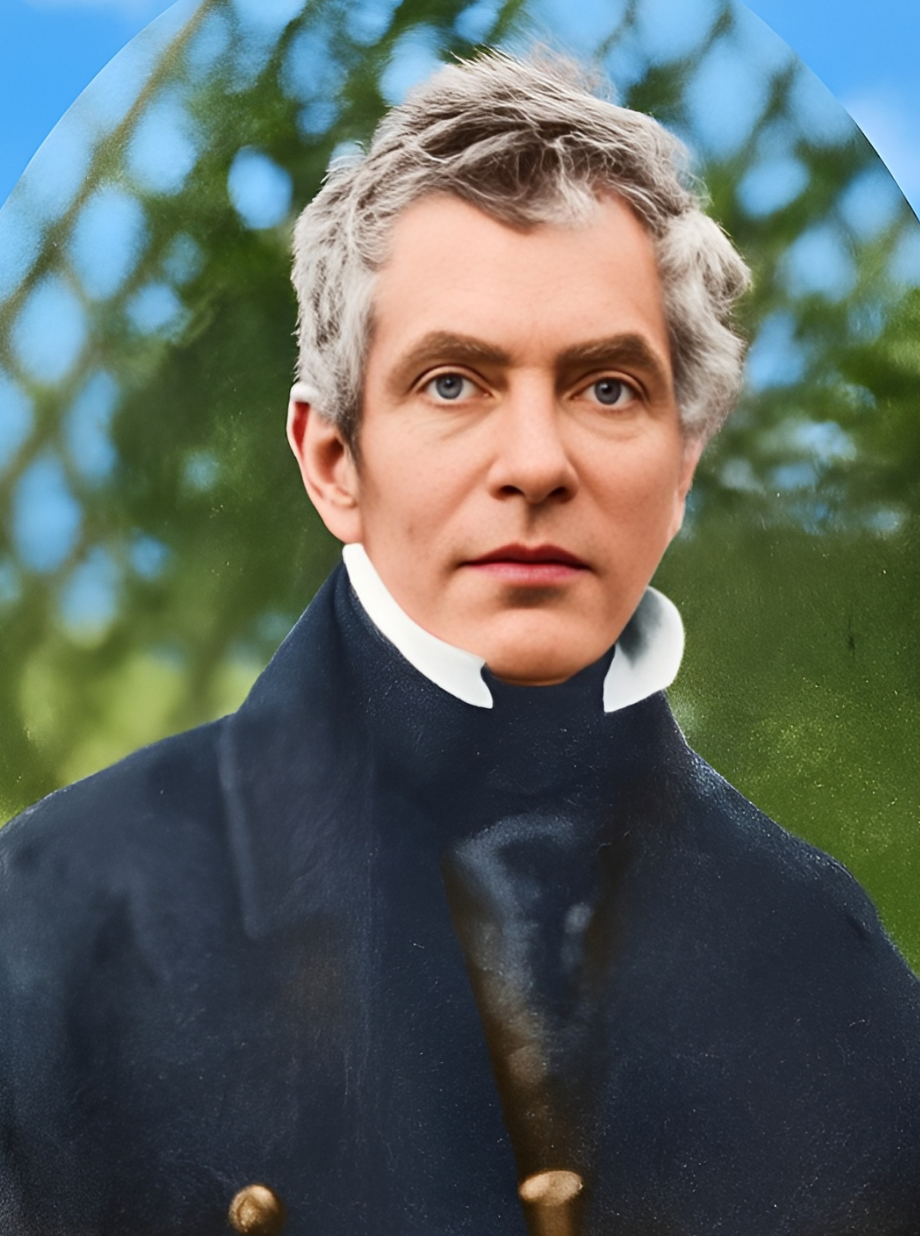
- Years of Life: 1800–1882
Early Life and Education
John Nelson Darby was born in 1800 in Westminster, London, into a distinguished Anglo-Irish family. He received an excellent education, studying at Westminster School and later at Trinity College, Dublin, where he excelled academically and became a classical scholar.
Darby initially pursued a legal career and was called to the Irish bar. However, he soon abandoned law, sensing a call to spiritual service. He was ordained as a clergyman in the Church of Ireland, serving in County Wicklow, where he labored among both landowners and the rural poor.
Spiritual Crisis and Separation from the Established Church
While serving as a clergyman, Darby became increasingly troubled by the union of church and state and the authority structures of the established church. A serious riding accident confined him to bed for an extended period. During this time, he devoted himself to Scripture and prayer.
This period proved decisive. Darby became convinced that:
-
The Church was a heavenly body, distinct from Israel
-
Christ alone is Head of the Church
-
Clerical systems were not taught in the New Testament
-
The Church’s true hope is the imminent return of Christ
As a result, Darby resigned his clerical position in the late 1820s, choosing separation from ecclesiastical systems in order to follow Scripture more faithfully.
The Dublin and Plymouth Gatherings
Darby soon joined believers meeting informally in Dublin, including Edward Cronin, John Gifford Bellett, and Anthony Norris Groves. These gatherings emphasized:
-
Weekly breaking of bread
-
Liberty of the Holy Spirit in worship
-
No ordained clergy
-
The unity of all believers
Later, Darby traveled to Plymouth, England, where assemblies grew rapidly. Though he did not found the movement, his strong teaching and tireless travel caused the movement to become widely known as the “Plymouth Brethren.”
Doctrinal Contributions
John Nelson Darby’s greatest influence lay in his systematic teaching of Scripture. His contributions include:
1. The Heavenly Calling of the Church
Darby clearly distinguished between:
-
Israel as an earthly people with earthly promises
-
The Church as a heavenly body united to Christ
This distinction shaped much later evangelical theology.
2. The Hope of Christ’s Coming
Darby emphasized the imminent return of the Lord, teaching that Christ could come at any moment. This hope shaped worship, holiness, and service.
3. Biblical Separation
Darby taught separation from religious systems that compromised truth, believing faithfulness to Christ required obedience even at personal cost.
4. Dispensational Understanding
Darby articulated a dispensational framework for Scripture, recognizing different administrations in God’s dealings with humanity while maintaining the unity of God’s purpose.
Literary and Translation Work
Darby was a prolific writer, producing:
-
Extensive Bible commentaries
-
Doctrinal tracts
-
Letters addressing church life and discipline
He was also a gifted linguist, translating the Bible into:
-
English
-
French
-
German
His English translation, while not widely used publicly, is still valued for its literal accuracy.
Global Ministry
Darby traveled tirelessly across:
-
The British Isles
-
Continental Europe
-
North America
-
The Caribbean
-
New Zealand
He often traveled alone, enduring hardship and opposition. His ministry helped establish assemblies worldwide and influenced many Christian leaders beyond Brethren circles.
Controversies and Divisions
Darby’s strong convictions sometimes led to sharp conflict. His uncompromising approach to discipline and separation contributed to divisions within the Brethren movement, most notably the 1848 split, which eventually led to the distinction between Open Brethren and Exclusive Brethren.
While admired for doctrinal clarity, Darby has also been critiqued for rigidity and severity. Even so, many acknowledge that his aim was faithfulness to Scripture rather than personal authority.
Personal Character
Darby was known for:
-
Deep devotion to Scripture
-
Intense personal discipline
-
Self-denial and tireless labor
-
Little concern for comfort or reputation
He lived simply and never married, devoting his entire life to ministry and study.
Later Years and Death
In his later years, Darby continued writing and correspondence despite declining health. He remained mentally sharp and spiritually earnest until the end.
John Nelson Darby went to be with the Lord in 1882, at the age of 81.
Legacy
John Nelson Darby is remembered as:
-
One of the most influential Bible teachers of the 19th century
-
A principal shaper of Brethren theology
-
A major influence on evangelical dispensational thought
-
A man whose teaching emphasized Christ’s coming and the Church’s heavenly calling
His legacy is complex—marked by both spiritual depth and division—but his impact on global Christianity is undeniable.