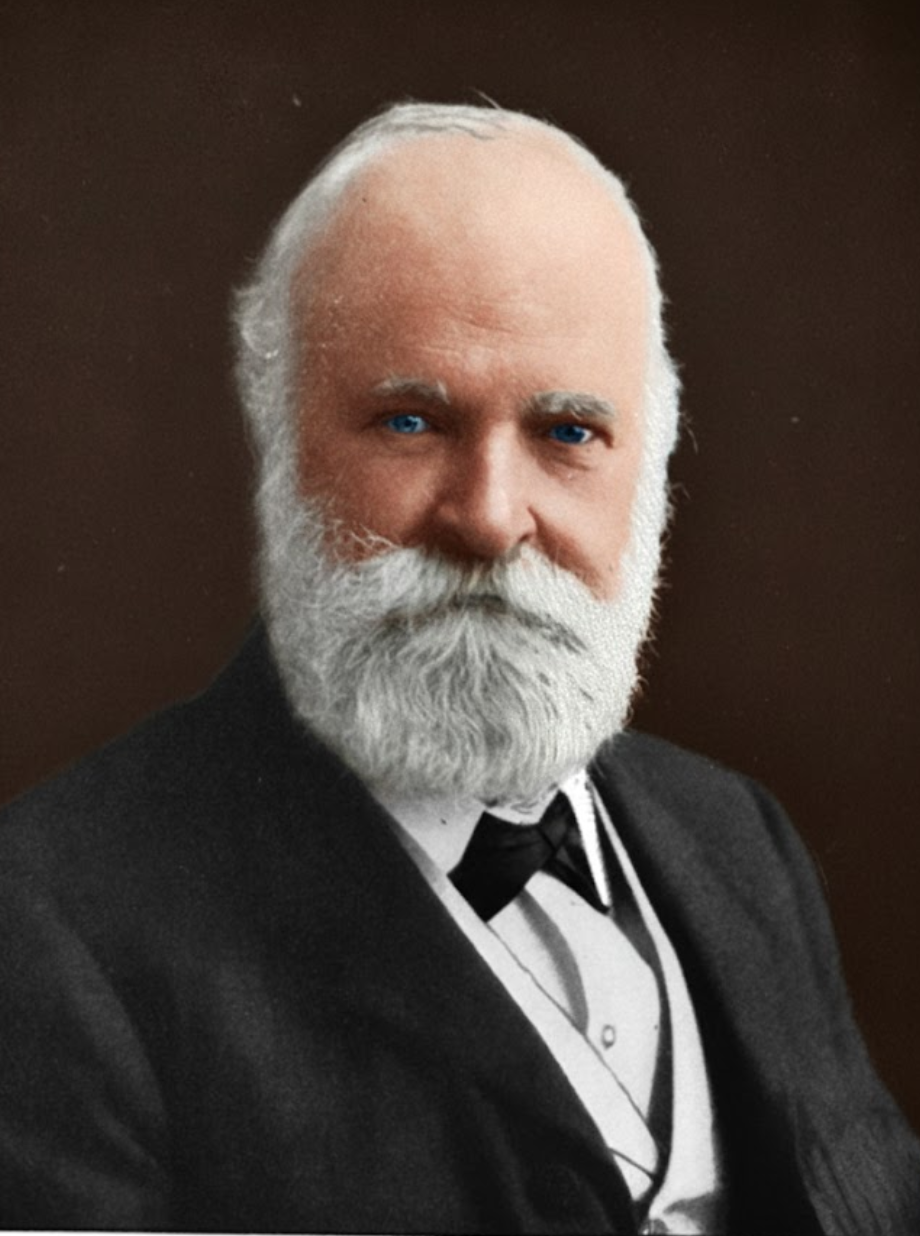
- Years of Life: 1843-1918
Early Life
James E. Hawkins was born in 1843 in Bitterley, Shropshire (Salop). He grew up in a godly Congregationalist home where the Scriptures were honoured and Christian living was taken seriously. In later years, his parents themselves came to embrace the New Testament principle of gathering simply in the Lord’s Name alone (Matthew 18:20) and built a meeting hall at Orleton, Hampshire, for worship and ministry on Scriptural lines.
From an early age, Hawkins showed both intellectual ability—especially with figures—and a sensitive conscience. His first serious spiritual concern was stirred by hearing William Yapp speak on the coming of the Lord, a truth that would remain central throughout his life and ministry.
Conversion and Early Christian Life
When James was fourteen, George Lawrence, a well-known evangelist in Britain and Spain, challenged him with a searching question:
“What shall it profit a man if he gain the whole world and lose his own soul?”
The words lodged deeply in his heart. Four years later, on 5 April 1861, while Lawrence was preaching in James’s town, the evangelist had the joy of pointing the troubled young man to Christ, concluding with 1 John 5:13. On that day, Hawkins entered into the clear assurance of eternal life—a certainty that never left him during the 57 years that followed.
The atmosphere of the 1859 Revival, still strongly felt at the time, shaped his spiritual zeal and outlook. In obedience to New Testament teaching, James and several others were baptised in the nearby river on 28 April 1861, publicly confessing their faith in Christ.
Early Service and Publishing Work
Just two days later, on 30 April, William Yapp invited the newly converted young man to London to assist in the Book and Tract Depot at 70 Welbeck Street. This marked the beginning of Hawkins’s lifelong work in Christian publishing.
The business later became Yapp & Hawkins, during which time many influential tract series were issued, including the well-known Clapton, Iron Room, and similar publications that shaped Brethren literature for decades.
In 1866, James married Clara Elizabeth Hunt, who proved to be a devoted and tireless partner in his work for the next 47 years, particularly in connection with the Golden Grain Almanack.
A Lifetime in Christian Publishing
When William Yapp retired in 1867, Hawkins took full responsibility for the business, operating for many years from Baker Street and Paternoster Row. His publishing work was marked by both spiritual discernment and exceptional artistic taste.
He introduced the famous Mildmay Cards and produced exquisite chromolithographed booklets such as:
-
Songs of the Dawn
-
The Homeward Journey
-
The Garment of Praise
-
The Master’s Presence
These publications were widely admired for their theological soundness, careful selection of Scripture, poetic beauty, and superb design—qualities that set a standard rarely equalled since.
Many treasured Christian classics first appeared under the imprint of J. E. Hawkins, including works by:
-
William Lincoln
-
Arthur Pridham
-
J. Denham Smith
-
D. L. Moody
He also served for many years as the London publisher for important Christian periodicals such as The Witness, Missionary Echo (later Echoes of Service), and others.
Editor, Author, and Poet
In 1869, Hawkins launched The Gospel Watchman, a penny Gospel magazine that he edited until 1895. Though its circulation varied, it faithfully proclaimed salvation through Christ for over a quarter of a century.
His most enduring editorial achievement was the Golden Grain Diary, first issued in 1868. It reached a circulation of 20,000 in its first year, rising in some years to 70,000, and became one of the most widely loved Christian devotional annuals of its time. A few years before his death, Pickering & Inglis acquired the rights and continued publication along the same trusted lines.
As an author, Hawkins wrote:
-
Short Papers on Prophecy
-
Lectures on the Tabernacle
-
Numerous smaller booklets, including The Blood of the Lamb, which was circulated in the thousands and used by God in many conversions.
He was also a gifted poet, composing hymns and spiritual songs of lasting encouragement. Many felt that even had he done nothing else, his verses alone would have secured his memory among God’s people.
Speaker and Encourager of the Saints
James E. Hawkins was also an able public speaker, and for nearly 60 years his voice was heard in gospel halls and public venues across Britain. One notable effort was a large evangelistic campaign at the Oxford Music Hall, London, assisted by John Hambleton, the converted actor, which resulted in much blessing.
A distinctive and much-loved feature of his London years was a monthly drawing-room meeting at 36 Baker Street, which brought together leading teachers and workers from across the country. These gatherings were remembered as seasons of genuine spiritual refreshment.
Later Years and Home-Call
In his later years, Hawkins faced serious business trials, yet he steadfastly refused to abandon the principles that had guided him from the beginning. His spiritual discernment, artistic excellence, and faithfulness to Scripture remained undiminished even after more than fifty years of labour.
His final public ministry took place at Ickenham, just three months before his death.
James E. Hawkins passed peacefully into the presence of the Lord on Sunday afternoon, 22 December 1918, and was laid to rest at Harrow, awaiting the day when, as Scripture promises,
“Each man shall have his praise from God.” (1 Corinthians 4:5)
Legacy
James E. Hawkins is remembered as:
-
a faithful steward of Christian truth
-
a pioneer of evangelical publishing
-
an encourager of saints and servants
-
a man who began well, continued well, and finished well
Through books, tracts, hymns, periodicals, and personal influence, his life continues to bear fruit long after his departure.