- Years of Life: 1817-1889
Early Life and Conversion
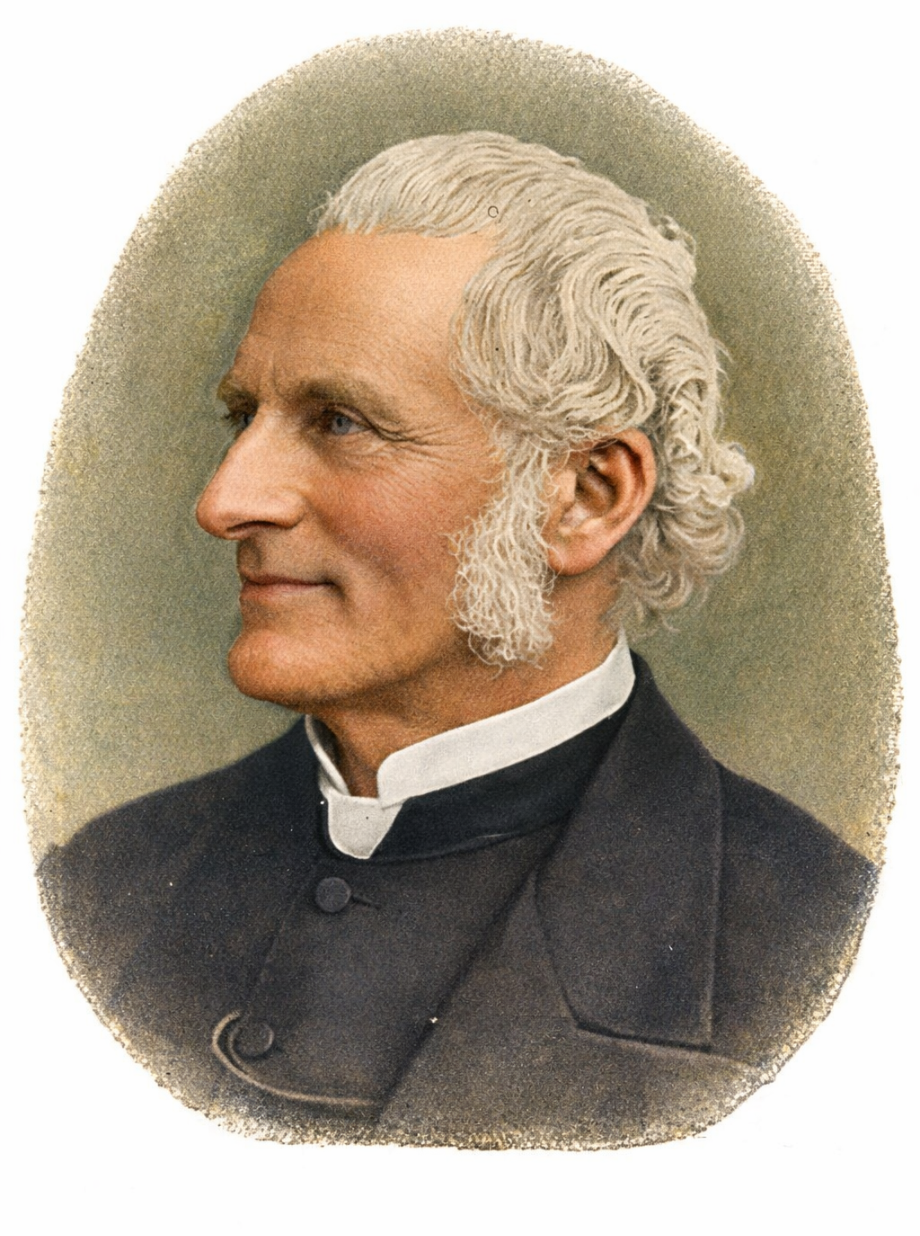
Joseph Denham Smith was born in July 1817 and enjoyed a notably happy childhood. A natural buoyancy of spirit and warmth of disposition characterised him from his earliest years and never wholly left him, even amid later bodily weakness. His mother, left a widow while he was still young, was a woman of deep piety and earnest faith. She longed intensely for her son’s early conversion, and her prayers were graciously and abundantly answered.
At the remarkably early age of sixteen, Denham Smith began to preach the Gospel. Even in these youthful efforts there was something arresting in his ministry: Christ was lifted up with simplicity, warmth, and spiritual attractiveness, and many were deeply moved. From the outset his preaching bore the marks that would later make it widely influential—clarity of Gospel truth, vivid imagery, and heartfelt earnestness.
Early Ministry in Ireland
Deeply impressed with the spiritual need of Ireland, Denham Smith resolved to settle there permanently. In 1841, at Newry, he entered upon what may be described as his first recognised public ministry. His work in that town was greatly owned of God, and his memory long remained cherished among those who had been helped through his labours.
In 1848 he removed to Kingstown (now Dún Laoghaire), where he devoted himself to the pastorate of a church he was instrumental in planting in Northumberland Avenue. This assembly soon became a remarkable centre of spiritual life, drawing believers and seekers from far beyond its immediate locality. Here Denham Smith laboured with untiring devotion, combining pastoral care with evangelistic zeal.
The Revival of 1859 and Its Aftermath
The Revival of 1859 proved to be a decisive epoch in his ministry. When the wave of blessing swept over the north of Ireland and spread southward, Denham Smith entered into the movement with joy and spiritual discernment. In August of that year, he accompanied Mr. and Mrs. John Morley of Clapton, London, on a tour to witness the revival firsthand in places such as Belfast and Ballymena.
The effect upon Denham Smith was profound. He returned to Kingstown with a fresh enduement of power from on high, and on September 9, 1859, an extraordinary outpouring of blessing took place in the church there. The work continued for many months, touching thousands of souls. Meetings were even held on board the express boats between Kingstown and Holyhead, and these also were signally owned of God.
The converts included people from every social class, many of whom later became prominent servants of Christ. Among them was T. Shuldham Henry, who was converted in January 1860 through Denham Smith’s ministry.
Dublin, Merrion Hall, and Wider Evangelistic Work
From Kingstown, Denham Smith’s heart expanded still further toward the masses. He commenced large-scale evangelistic services in Dublin, notably in the Metropolitan Hall, where scenes of deep spiritual exercise and lasting fruit were witnessed. People gathered early and remained for hours—often until late at night—many without food or rest. Careless sinners were awakened, anxious souls found peace, and believers rejoiced in renewed communion with Christ.
In view of such work, Denham Smith became increasingly conscious that he could no longer remain bound by denominational ties. He therefore resigned his pastorate at Kingstown, choosing instead to take his stand as a servant of the Church at large. This step was not taken lightly, but in obedience to conscience and to what he believed the Lord was teaching him.
To facilitate the continuance of his ministry in Dublin, Merrion Hall was erected. It was intended to be a centre for evangelising effort and a place where Denham Smith could labour in fellowship with other devoted servants of Christ. From this centre, his influence radiated widely.
Ministry in Britain and on the Continent
Denham Smith’s work soon extended beyond Ireland. He visited Paris and Geneva, where large and attentive congregations gathered to hear him. Subsequently he ministered extensively in London, holding meetings in Freemasons’ Hall, St. James’s Hall, Sadler’s Wells Theatre, and later in Upper Clapton. Eventually he settled in London, continuing a regular ministry in St. George’s Hall and Clapton Hall.
Everywhere he went, his preaching was marked by eloquence without artificiality, doctrinal depth without dryness, and a rare ability to present spiritual truth in memorable and luminous forms.
Literary and Hymnological Contributions
While Denham Smith was a powerful speaker, his influence was extended even more widely through his pen. He was a prolific author, producing works that combined literary grace with deep spiritual instruction. Among his best-known books are:
-
Life in Christ
-
The Gospel in Hosea
-
The Brides of Scripture
-
Green Pastures and Still Waters
-
Walk and Warfare
-
The Prophet of Glory
These writings are marked by a strong Christ-centred emphasis, rich use of Scripture, and a devotional warmth that made them accessible to a wide readership.
As a hymn-writer, Denham Smith occupies a lasting place in evangelical hymnody. His hymns are distinguished by the union of poetic beauty and doctrinal clarity, and many have found a permanent home in assemblies and hymnals. Among those most loved are:
-
“Rise, my soul! behold ’tis Jesus”
-
Hymns drawn from Times of Refreshing
-
Selections from Hymns of Life and Peace
Final Years and Home-Call
In the spring of 1886, Denham Smith’s health began to fail. Persistent attacks of indigestion gradually weakened his once vigorous constitution, and for several years he lived under increasing physical limitation. Yet his spirit remained bright, and his interest in the work of God never waned.
On March 5, 1889, in the presence of his wife and family, he quietly fell asleep in Christ.
Legacy and Character
Joseph Denham Smith’s ministry spanned nearly fifty years, and throughout that time he counted it his highest joy “to spend and be spent” in the service of his Lord. He was widely loved for his warmth of heart, admired for his spiritual insight, and valued for his unswerving devotion to Christ.
In his passing, the Church of God lost one of its brightest ornaments and one of its most faithful servants. Yet his voice still speaks through his writings and hymns, and the savour of Christ that marked his ministry continues to bless many thousands who never knew him personally.