
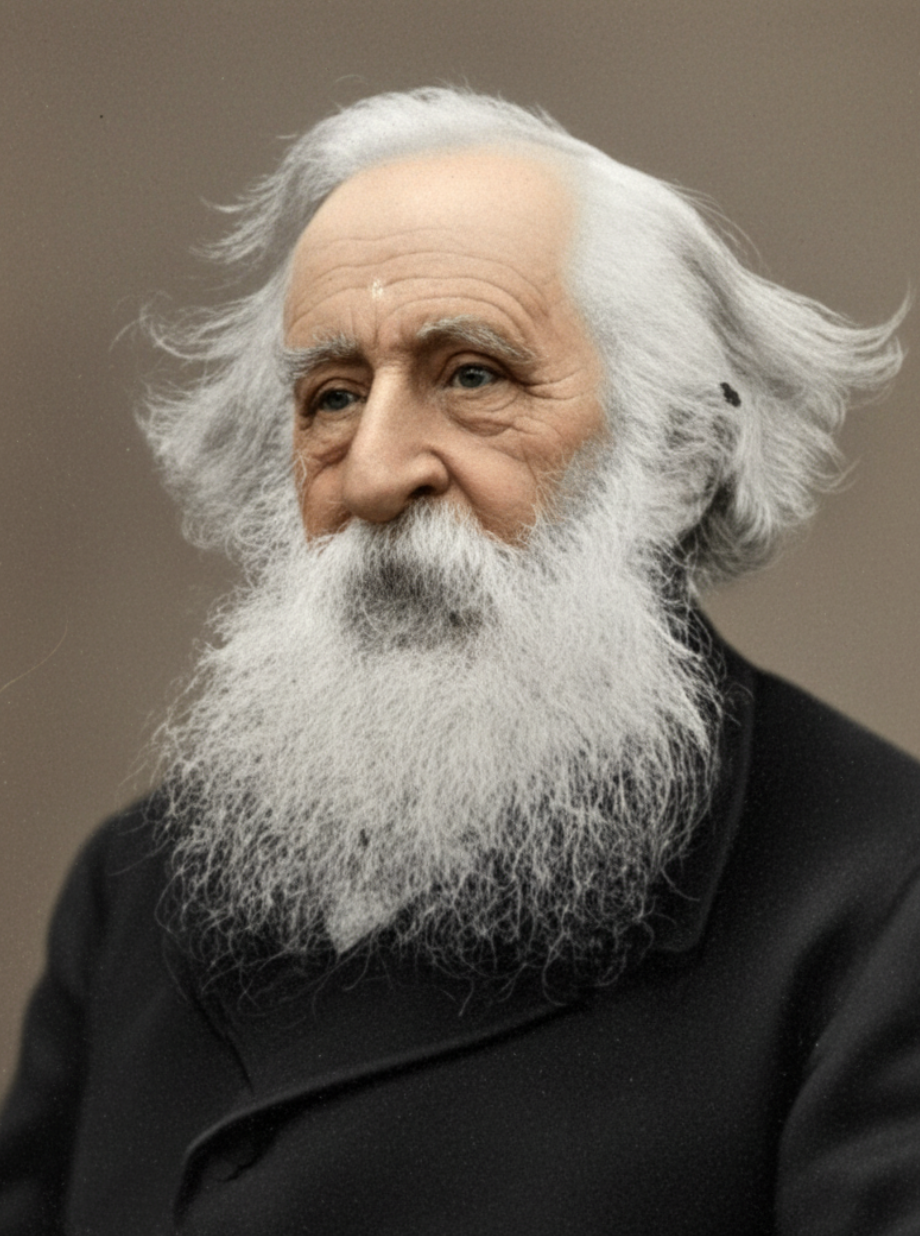
- Years of Life: 1818-1891
Early Life and Family Heritage (1818–1829)
Henry Groves was born in November 1818 at Exeter, the eldest son of Anthony Norris Groves, the pioneering missionary to Persia and India, often regarded as one of the spiritual forerunners of the Brethren missionary vision. From the outset, Henry’s life was marked by sacrifice, faith, and exposure to realities far beyond the experience of most English children of his generation.
Together with his younger brother Frank Groves, Henry received early instruction from Henry Craik, later so closely associated with George Müller of Bristol. Through family and spiritual connections, the brothers were also linked with devoted servants of God such as Lord Congleton and Dr. Cronin, placing them within a remarkable circle of early evangelical and Brethren testimony.
Childhood amid Missionary Hardship (1829–1834)
At the age of ten, Henry accompanied his parents, his brother, and John Kitto on an arduous journey through St. Petersburg and Moscow to Bagdad, beginning in May 1829. This journey alone would have been formative, but what followed shaped him permanently.
In April 1830, the plague broke out in Bagdad with appalling severity. Mortality often exceeded a thousand deaths a day. Streets were filled with unburied corpses, starving children, and scenes of devastation scarcely imaginable. During this period:
-
Henry’s mother died of the plague
-
A catastrophic flood of the river destroyed thousands of homes
-
The city was subsequently besieged by a Turkish army
-
Robbers repeatedly invaded their house
-
Food became scarce and dangerously expensive
The family survived only by extraordinary providence and endurance. Reflecting later, Henry remarked that after leaving England he could not remember ever being a boy at all—a striking testimony to how early suffering matured his character.
Persia and India: Missionary Experiment and Responsibility (1834–1857)
The Groves brothers continued in Persia until 1834, after which they joined their father in India, where Anthony Norris Groves sought to establish a self-supporting missionary model. Converts from Hinduism were social outcasts, and the family attempted to sustain them through farming, silk production, and other industries.
These ventures failed—not from lack of faith or effort, but largely due to:
-
inexperience,
-
economic realities,
-
and the impossibility of competing with native labour.
Despite these disappointments, the brothers gained invaluable experience in administration, labour, and responsibility. When their father’s health broke down, he returned to England in 1852, dying in the home of George Müller.
Henry and Frank were subsequently appointed joint superintendents of a sugar-refining factory in South India. For several years the enterprise prospered modestly, but after the Indian Mutiny of 1857, the price of raw materials doubled, making the work untenable.
Awakening to Full-Time Gospel Service (1857–1862)
In 1857, Henry visited England, Ireland, and America, where he witnessed first-hand the effects of revival. These experiences deeply stirred his heart. Though long exercised toward full-time Gospel service, he waited patiently for the Lord’s direction.
That direction became unmistakably clear in 1862, when the Indian factory was sold to a native firm without loss to shareholders. Freed from business responsibility, Henry Groves was now able to give himself entirely to the ministry of the Word.
Ministry in Britain and Settlement at Kendal (1863–1891)
In 1863, Henry commenced his public ministry in Bristol, where he soon became widely known for his pastoral depth, spiritual discernment, and sober teaching. In 1868, he visited Kendal, intending to stay only a few weeks; instead, it became his home for the remaining twenty-three years of his life.
From Kendal, Henry Groves:
-
travelled extensively throughout the United Kingdom,
-
ministered at conferences and assemblies,
-
wrote books, pamphlets, and periodical articles,
-
and gave steady pastoral oversight wherever he was welcomed.
Though often absent on service, Kendal remained his base, and he was deeply loved by the believers there.
Writings and Spiritual Emphasis
Henry Groves’ writings reveal a man shaped by suffering, experience, and Scripture. Among his best-known works are:
-
Echoes: A Memorial of the Late Henry Groves
-
Paths of Righteousness for Pilgrims Heavenward
-
God’s Unknown Church
-
Fundamental Truths (addresses at Clapton Hall)
He also contributed regularly to periodicals such as Echoes of Service, The Missionary Echo, and The Golden Lamp.
His ministry emphasised:
-
the Person of the Lord Jesus Christ,
-
the unity and spiritual nature of the Church of God,
-
pilgrim character and heavenly calling,
-
and faithfulness amid increasing ecclesiastical confusion.
Illness, Home-Call, and Character
In May 1890, Henry Groves caught a chill that revealed serious internal weakness, resulting in a sudden paralytic condition. For fourteen months, he endured illness with patience and faith, continuing what pastoral and teaching work he could from within the circle of family life.
He fell asleep in Christ on Thursday afternoon, 2 July 1891, at Kendal.
Those who knew him remembered:
-
his quiet authority,
-
deep spirituality,
-
gentleness combined with firmness,
-
and a life shaped from childhood by the realities of eternity.
Legacy
Henry Groves stands as a bridge between:
-
the heroic missionary pioneering of the earliest Brethren generation, and
-
the conference and teaching ministry that shaped later evangelical testimony.
Born into hardship, matured through suffering, and refined by Scripture, his life illustrates the fruit of a calling that was not chosen lightly but embraced steadily, patiently, and wholly.
He truly “finished his course” as one who had begun it early—under the hand of God—amid trial, loss, and unshakeable hope in Christ.