
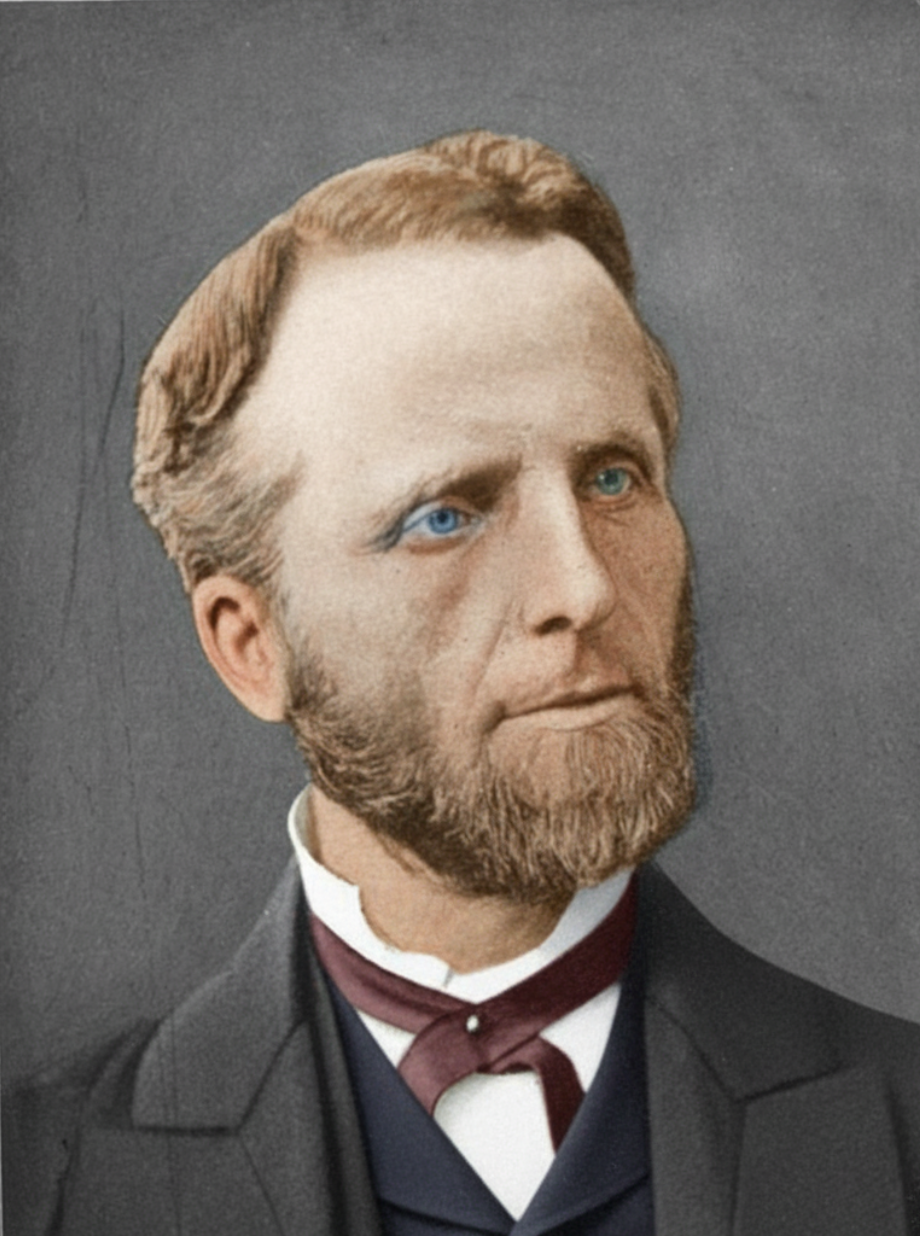
- Years of Life: 1822-1896
Early Life and Conversion
Henry Dyer was brought to the Lord at an early age, and from the outset his Christian life was marked by seriousness of purpose and affection for the Word of God. About 1846, while still a young man, he first met with Christians assembling simply in the Name of the Lord Jesus in London. This step decisively shaped the direction of his life and ministry.
From those early years, his faith was not merely doctrinal but deeply practical, expressed in service, pastoral care, and a quiet devotion to Christ.
Early Christian Formation and Associations
Soon after his first contact with Brethren gatherings, Henry Dyer spent several years at Wellington, Somerset, and Weymouth, living in the household of James George Deck, whose hymns would later become treasured expressions of worship among many believers. This period proved formative, grounding him in both Scripture and the devotional life of the assemblies.
He later spent time at Sherborne, Dorset, and was increasingly drawn into active Gospel labour.
Family Influence and Move to Yeovil
Henry’s elder brother, William B. Dyer, was a man of exceptional preaching gift and had gone to Yeovil around 1848, where God used him powerfully. Henry, considerably younger, frequently visited him and eventually settled in Yeovil around 1860, after his brother moved on to Kendal.
Yeovil became the scene of some of Henry Dyer’s earliest and most tender pastoral labours.
Conferences, Prayer, and Early Ministry
Sensing the spiritual value of united prayer and conference over the Scriptures, at a time when such gatherings were still rare, Henry Dyer began a quarterly meeting for servants of Christ in Yeovil. Though small, it was deeply valued and proved to be the forerunner of the larger annual conferences later held in the town.
His service during these years was marked by:
-
diligence in street-corner Scripture reading and Gospel speaking
-
personal evangelism leading many to Christ
-
faithful care for assemblies in surrounding towns and villages
He loved to recall individuals brought to God through these simple, often unseen labours.
Pastoral Heart and Character
Wherever Henry Dyer laboured, he was pre-eminently a pastor. His tenderness toward the suffering and sorrowful was deeply felt, and his earnest pursuit of the wandering revealed how truly he watched for souls.
A particularly striking feature of his character was his readiness—at personal cost—to help break down barriers between believers. His longing for unity was not theoretical, but born of a genuine possession of the mind of Christ.
Care for His Brother and Wider Service
During the final illness of his brother William B. Dyer, Henry ministered to him with great devotion. After William’s death in June 1865, Henry remained for a time in Kendal, where he was later followed in service by Henry Groves.
In subsequent years he ministered in Exeter, Bath, and Malvern, and while many assemblies profited greatly from his visits, the chief sphere of his later service became the expanding network of Bible conferences.
Conference Ministry and “The Three Henrys”
From the earliest Leominster Conferences, Henry Dyer became closely associated with Henry Heath and Henry Groves—the three often affectionately referred to as “the three Henrys.” Together they laboured in true fellowship to sustain conferences held annually or half-yearly at Dublin, Belfast, Glasgow, and many other locations.
Henry Dyer’s ministry at these gatherings was:
-
scriptural, marked by careful exposition
-
searching, applying truth directly to conscience
-
warm, carrying pastoral sympathy
His presence was widely sought and deeply valued.
Overseas Journeys and Missionary Burden
In later life, weakness in his chest and throat led medical advisers to recommend winters in a warmer climate. This became, in God’s providence, the means of extending his ministry far beyond Britain.
Accompanied by Mrs. Dyer, he travelled to many countries across the world, visiting scattered and isolated believers who were greatly refreshed by their presence. These journeys deepened his long-held concern for Romish and heathen lands, and enabled him to speak with renewed urgency about the spiritual needs of those regions.
South Africa and Final Years
Henry Dyer’s last extended journey was to South Africa, which he reached in February 1895. He ministered in Cape Town, Durban, and Johannesburg, and undertook long, arduous journeys to visit believers in remote places.
During the political troubles of early 1896, he and Mrs. Dyer were confined in Johannesburg, where his calm faith, ministry, and example greatly strengthened many at a time when warfare seemed imminent.
Though the climate brought some relief, the strain told upon him. Returning to England in May 1896, he was extremely weak, though hopes of recovery briefly revived.
After attending the Leominster Conference in June, he became seriously ill at Malvern, later moving to Bournemouth, and finally to Barnstaple, via Exeter. There, on 15 November 1896, he peacefully fell asleep in Christ, in the 75th year of his age.
Spiritual Qualities and Legacy
Henry Dyer was widely known as a “ready scribe”—a teacher of the Word—because, like Ezra, he prepared his heart to seek the law of the Lord, and to do it, and to teach it. Yet those who knew him closely testify that an even more striking characteristic was his intense sympathy, aided by a remarkable memory and expressed through faithful correspondence.
A man of prayer, he rose early and habitually brought many before God at the mercy seat. His letters were often a source of encouragement and direction, and the fragrance of his life remains vivid in the hearts of many.
Conclusion
Henry Dyer is remembered as:
-
a faithful pastor of souls
-
a powerful yet tender teacher of Scripture
-
a bridge-builder among believers
-
a tireless servant of Christ at home and abroad
-
a man whose ministry flowed from prayer, sympathy, and obedience
Like David, “after he had served his own generation, by the will of God, he fell on sleep”—but the influence of his life and ministry continues to bear fruit.