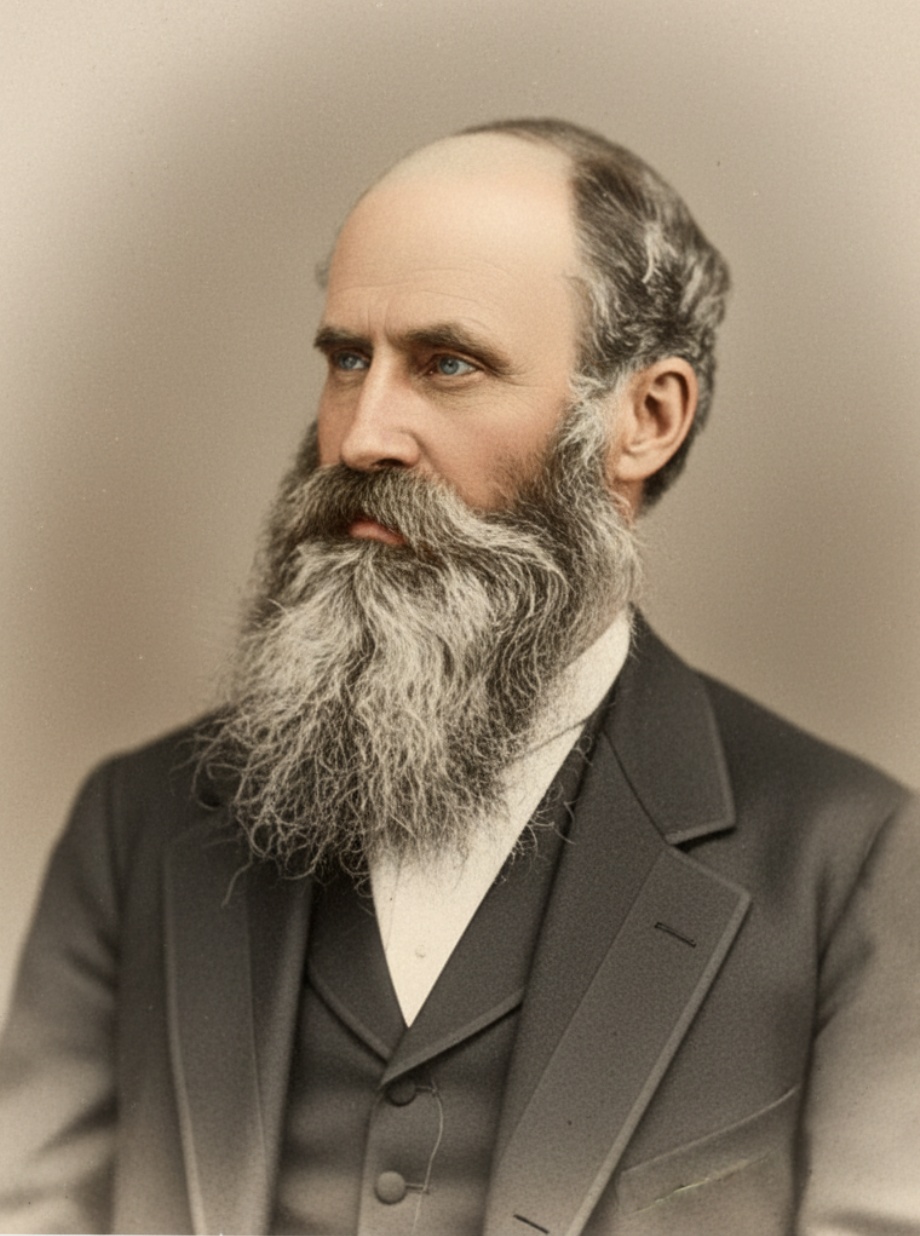
- Years of Life: 1817-1892
Early Life and Conversion
Hugh Henry Snell was born in 1815, at a time when evangelical awakening and renewed interest in prophetic truth were beginning to stir many hearts in Britain. He was converted early in life, and from the outset his Christian profession was marked by seriousness of purpose, reverence for Scripture, and a strong sense of responsibility toward the people of God.
By profession he was trained as a medical doctor, and for a number of years practised medicine at Lifton, on the banks of the River Tamar in Devon, and later at Launceston, in Cornwall. Even during these early years, while engaged in his secular calling, he was far from being absorbed by it. His heart was already deeply exercised with spiritual things, and he frequently preached the Word of God at the small meeting of believers at Launceston—one of the many humble gatherings that were springing up in those formative days of the Brethren movement.
Association with Early Brethren Leaders
After removing to Plymouth, Mr. Snell became closely associated with J. L. Harris and Henry Bulteel, both formerly clergymen of the Church of England, who had separated from ecclesiastical systems in order to gather simply to the Name of the Lord Jesus Christ. With them he laboured for many years in preaching and teaching, sharing in the distinctive testimony that was being borne in that city during a critical and formative period.
As the burden of spiritual service increasingly pressed upon his soul, Mr. Snell ultimately gave up his medical practice, surrendering a respectable and stable profession in order to devote himself entirely to the work which he believed God had unmistakably committed to him. This step was not taken lightly, but in quiet dependence upon the Lord, and it characterised the rest of his life.
While residing at Plymouth, his home became a place of open-hearted hospitality to the servants of God. Many itinerant preachers and teachers found welcome and refreshment under his roof. R. C. Chapman of Barnstaple was a frequent guest, and John Hambleton, in his well-known book Buds, Blossoms, and Fruits, records with appreciation that he himself stayed with “Brother Snell” during his labours in Plymouth. Such testimonies reveal not only Mr. Snell’s generosity, but also the confidence and affection with which he was regarded among his fellow-labourers.
A Ministry of Teaching, Travel, and Confirmation
In later years Hugh Henry Snell travelled widely throughout England and Ireland, ministering both in large cities and in many smaller towns and villages. He was especially exercised about strengthening and confirming the newly formed meetings of believers that were arising in many districts. This “confirmation,” as he understood it in the Scriptural sense, was not ceremonial, but pastoral and doctrinal—establishing saints in the truth of Christ, the authority of the Word of God, and the privileges and responsibilities of assembly life.
Much of this labour was quiet, unseen, and unrecorded. Eternity alone, as his biographers have rightly observed, will fully declare the value of these journeys, conversations, meetings, and prayers, by which many believers were helped, steadied, and encouraged in difficult days.
Gifted Expositor and Prolific Author
Mr. Snell was equally gifted with his pen as with his voice. His writings covered a wide range of subjects, but he was especially known for his prophetical teaching, combined with pastoral warmth and practical application. Among his best-known works are:
-
Streams of Refreshing from the Fountain of Life (a work that passed through twelve editions, testifying to its wide usefulness)
-
Notes on the Book of Revelation
-
Prophetical Outlines: Seven Lectures on the Second Coming and Kingdom of our Lord Jesus Christ
-
Pasture for the Flock of God
-
The Deity of the Son
-
The Day of Atonement
-
The Way of Faith in an Evil Time
These writings reflect a man deeply grounded in Scripture, jealous for the honour of Christ, and alive to the dangers and declensions of Christendom, yet always seeking to feed rather than merely to warn.
Prophetic Conferences and Wider Influence
Hugh Henry Snell was a much-valued speaker at the well-known Meetings on Prophecy held at Freemasons’ Hall, London, in 1864—gatherings that exerted a far-reaching influence on prophetic study among evangelicals of that generation. His fellow speakers on those occasions included many notable men, such as L. Strong, J. L. Harris, H. W. Soltau, Lord Cavan, P. H. Gosse, William Lincoln, and others who ranked among the leading teachers of their day.
His presence among such company is itself a testimony to the esteem in which his ministry was held. He combined clarity of exposition with sobriety of judgment, avoiding sensationalism while firmly maintaining the hope of the Lord’s coming and the certainty of His kingdom.
Closing Years and Home-Call
In his later years Mr. Snell continued to minister as strength allowed, still caring deeply for the flock of God and the testimony of Christ. His faith remained simple, his hope bright, and his confidence unshaken.
He fell asleep in Jesus very happily at Stafford in 1891, closing a life marked by sacrifice, diligence, hospitality, and unwavering devotion to the Word of God and the Person of Christ.
Legacy
Hugh Henry Snell may not be as widely remembered today as some of his contemporaries, yet his influence was deep and enduring. As a physician turned servant of Christ, a teacher of prophecy and pastor of souls, and a writer whose works refreshed and nourished thousands, he stands worthily among the “Chief Men Among the Brethren.” His life exemplified the union of truth and grace, of doctrinal firmness and brotherly love, and his works continue to speak, long after he himself has entered into rest.