
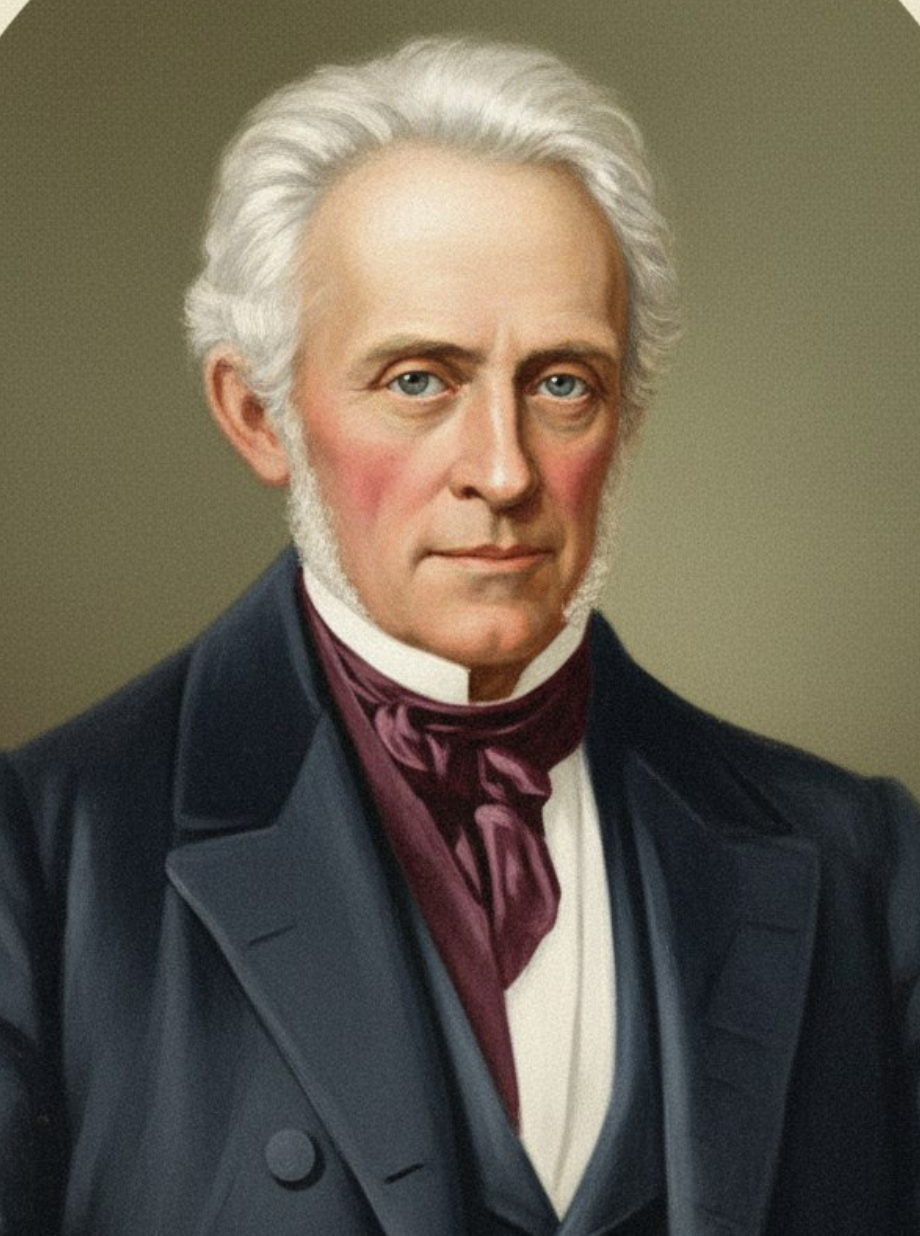
- Years of Life: 1805–1879
Early Life and Background
George Vicesimus Wigram—usually known as G. V. Wigram—was born in 1805 in London, England, into a well-connected and affluent family. He was the youngest of ten children, and his unusual middle name Vicesimus reflects his position as the twentieth child in extended family counting.
Wigram received a good education and initially pursued a military career, serving as an officer in the British Army. During these early years, however, he became increasingly dissatisfied with worldly ambition and formal religion.
Conversion and Spiritual Awakening
Wigram’s conversion came through exposure to evangelical preaching and serious engagement with Scripture. He was brought under deep conviction of sin and came to a clear faith in the Lord Jesus Christ.
Following his conversion, he left the army—an act that demonstrated his desire to live fully for Christ rather than personal advancement. This decision marked the beginning of a life devoted to Christian service and fellowship.
Early Fellowship and the Rise of the Brethren
In the late 1820s and early 1830s, Wigram became associated with believers gathering simply as a church, without denominational structure. These gatherings, first in Dublin and Plymouth, later became known collectively as the Brethren movement.
Wigram quickly emerged as one of the most practical and energetic organizers among them. While others focused on theology and exposition, Wigram devoted himself to:
-
Assembly logistics
-
Communication between gatherings
-
Publishing and distribution of literature
The Powerscourt Conferences
One of Wigram’s most significant contributions was his role in the Powerscourt Conferences (1831–1833), held at the estate of Lady Powerscourt in Ireland.
At these meetings:
-
Key prophetic truths were discussed
-
The hope of Christ’s return was emphasized
-
Fellowship developed among early Brethren leaders
Wigram’s organizational skill helped make these gatherings effective and influential in shaping early Brethren thought.
Publishing and Literary Work
G. V. Wigram recognized early the importance of sound literature. He devoted great energy to printing, organizing, and distributing writings that supported the spread of truth.
His most enduring literary contribution was the Englishman’s Hebrew and Greek Concordance, a monumental work that enabled ordinary believers to study Scripture more carefully using the original languages.
This work:
-
Encouraged personal Bible study
-
Reduced dependence on clerical interpretation
-
Remains in use to this day
Support of Ministry and Practical Service
Wigram used his personal wealth generously for the Lord’s work. He:
-
Supported traveling teachers and evangelists
-
Financed printing efforts
-
Provided housing and meeting spaces
-
Helped struggling assemblies quietly
He sought no recognition, believing practical service to be as vital as public ministry.
Relationship with John Nelson Darby
Wigram was a close early associate of John Nelson Darby and supported Darby’s itinerant ministry extensively. Though Darby was the principal theological voice, Wigram supplied much of the organizational backbone that allowed the movement to function effectively.
Their partnership illustrates the diversity of gifts within the early Brethren—doctrinal teaching alongside administrative service.
Later Years and Challenges
In later life, Wigram experienced personal and financial difficulties. His health declined, and some of his earlier prosperity was lost. Despite this, he remained steadfast in faith and continued to value fellowship and Scripture until the end of his life.
He did not seek prominence and gradually withdrew from public activity as younger men assumed leadership roles.
Death and Homegoing
George V. Wigram went to be with the Lord in 1879. His passing received little public notice compared to more visible teachers, yet his influence remained deeply embedded in the foundations of the Brethren movement.
Legacy
George Vicesimus Wigram is remembered as:
-
A tireless servant behind the scenes
-
A pioneer of Christian publishing
-
A champion of accessible Bible study
-
A faithful steward of material resources
Without men like Wigram, much of the early Brethren movement’s teaching and fellowship would not have spread as effectively.