
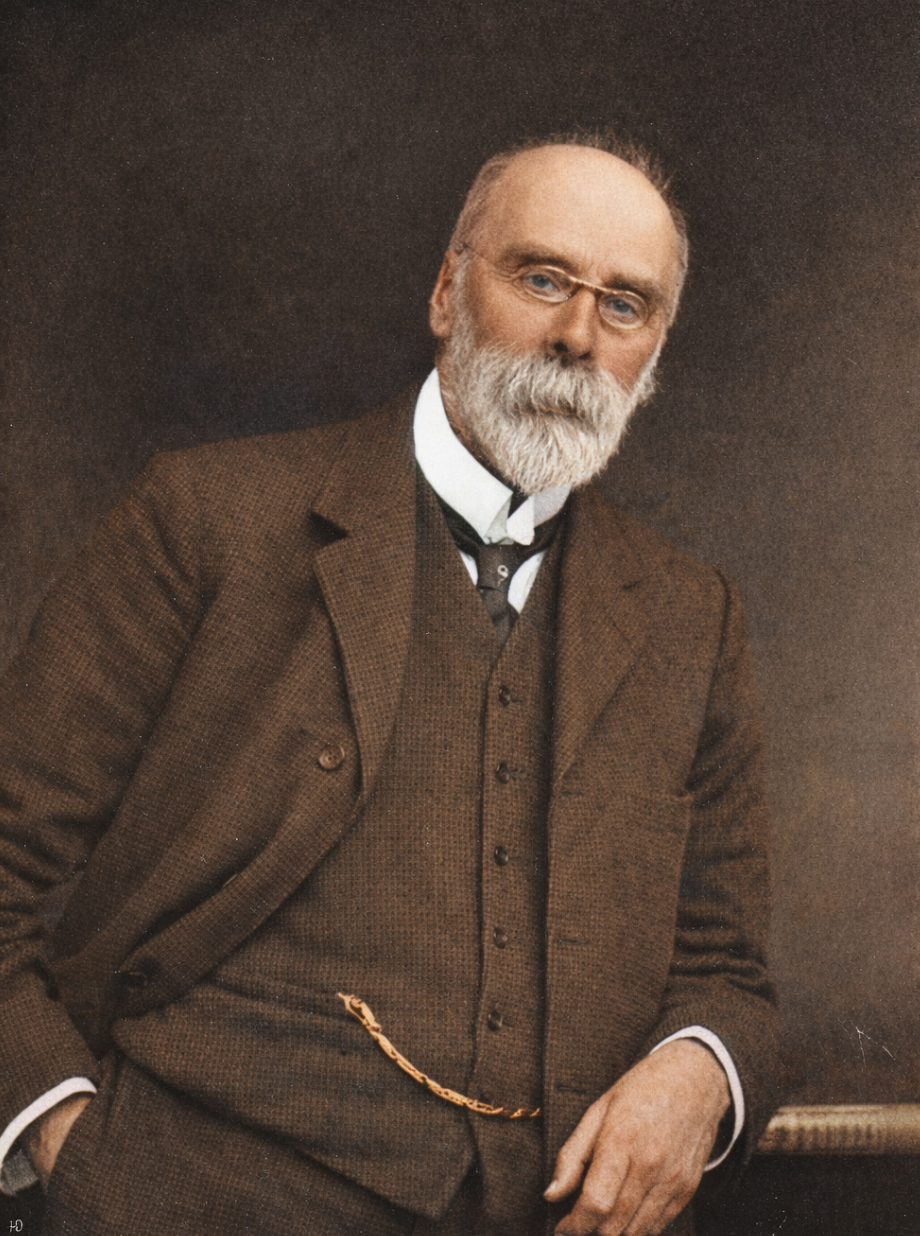
- Years of Life: 1841-1915
Family Background and Early Life
George Frederick Trench was born in 1841 at Kildare, Ireland, into a family of education, culture, and public service. His father, Frederick Fitz-John Trench, had formerly served as a cavalry officer in India, and later became Rector of Staplestown, Ireland. From this background George Trench inherited both discipline and a deep respect for spiritual things.
While being prepared for Confirmation, he was profoundly awakened to his soul’s need. A searching address by Grattan Guinness, founded on John 3:7 (“Ye must be born again”), brought him under deep conviction of sin. Soon afterwards he found peace with God through faith in Christ, an experience that marked the decisive turning-point of his life.
University Years and Lifelong Friendships
Mr. Trench proceeded to college, where he obtained his B.A. degree. During his student years he formed a close friendship with a fellow undergraduate who later became Sir Robert Anderson, K.C.B., LL.D. This friendship endured without interruption for more than fifty years, and deeply influenced both men. Through this connection Trench was brought into close association with thoughtful evangelical and prophetic circles in Britain and Ireland. His second wife, Edith Anderson (married 1910), was a niece of Sir Robert Anderson, further strengthening this bond.
Evangelistic Labours after the Revival of 1859
The Irish Revival of 1859 left a deep and permanent impression upon Mr. Trench. The early 1860s were remembered by him as “days of unleavened bread,” not only in Ulster but throughout the south and west of Ireland. During these formative years he and his university friend united in evangelistic labour across many districts of the country.
They laboured alongside many of the best-known servants of God of the period, including F. C. Bland, J. Denham Smith, R. J. Mahony, T. Shuldham Henry, Lord Congleton, and others. Visiting evangelists such as Richard Weaver, Henry Moorhouse, Reginald Radcliffe, and John Hambleton left lasting impressions wherever they went. Mr. Trench stood shoulder to shoulder with these men, sharing fully in the spirit and burden of those remarkable days.
Marriage and Work in County Kerry
In 1868, George Trench married Frances Charlotte Talbot-Crosbie, a member of a family long honoured in the south-west of Ireland. They made their home at Abbeylands, Ardfert, County Kerry, where for many years Mr. Trench exercised a wide and gracious influence for Christ.
Regular meetings were held in the Granary at Ardfert, where both believers and the unconverted were reached. Many were led into the light of salvation, and others helped forward in “the ways that be in Christ.” His ministry in Kerry was marked by spiritual clarity, personal kindness, and moral courage. Even during periods of political unrest, he was so highly respected that he was rarely bothered—though on one occasion, the horse he was riding was stabbed from under him.
Principles and Public Ministry
Having received early and clear light on the evil of sectarianism, Mr. Trench remained consistent to the end in his refusal to be identified with any denominational system. He was loyal in heart and practice to the truths cherished by those who sought to gather simply to the Name of the Lord Jesus Christ alone.
When Moody and Sankey visited Ireland, Mr. Trench threw himself wholeheartedly into the work, recognising in it the same evangelistic spirit that had animated the revival years. He was an ardent worker, a diligent student of Scripture, and an able minister of the Word, equally at home in private counsel and public teaching.
He showed a special interest in young people, particularly young men, as well as in policemen, soldiers, and others whose callings exposed them to spiritual dangers. His sympathetic heart and practical wisdom made him a trusted friend and counsellor.
Literary Labours
Although widely known as a speaker, Mr. Trench’s influence was extended even more broadly through his pen. For more than forty years, articles bearing the initials “G. F. T.” appeared in The Witness, The Christian, and other periodicals, consistently marked by sound doctrine, spiritual warmth, and pastoral insight.
Among his principal writings were:
-
The Life that is Life Indeed – a balanced and helpful exposition of abundant Christian life
-
The New Birth and the Life Eternal
-
Opening the Title Deeds
-
The Person and Work of the Holy Spirit of God
-
After the Thousand Years – a prophetic work much read, though not universally accepted
His writings reveal a man deeply grounded in Scripture, cautious in speculation, and earnest in his desire to promote holy living and clear Gospel truth.
Later Years and Home-Call
After the death of his first wife, Mr. Trench remarried in 1910, taking Edith Anderson as his wife. His later years were marked by increasing physical weakness, though his spiritual peace remained unbroken.
He passed quietly into the presence of his Lord on 11 November 1915, at his residence, 74 Lower Baggot Street, Dublin. He was laid to rest in Mount Jerome Cemetery, Dublin, to await the resurrection morning.
Legacy
George Frederick Trench left behind him:
-
a testimony of steadfast devotion to Christ,
-
a lifetime of unsectarian Gospel service,
-
a body of sound, edifying literature,
-
and a memory cherished by believers across Ireland and beyond.
His life exemplified the union of clear doctrine, warm affection, and practical godliness, and his influence continues through his writings and the many lives shaped by his faithful ministry.