
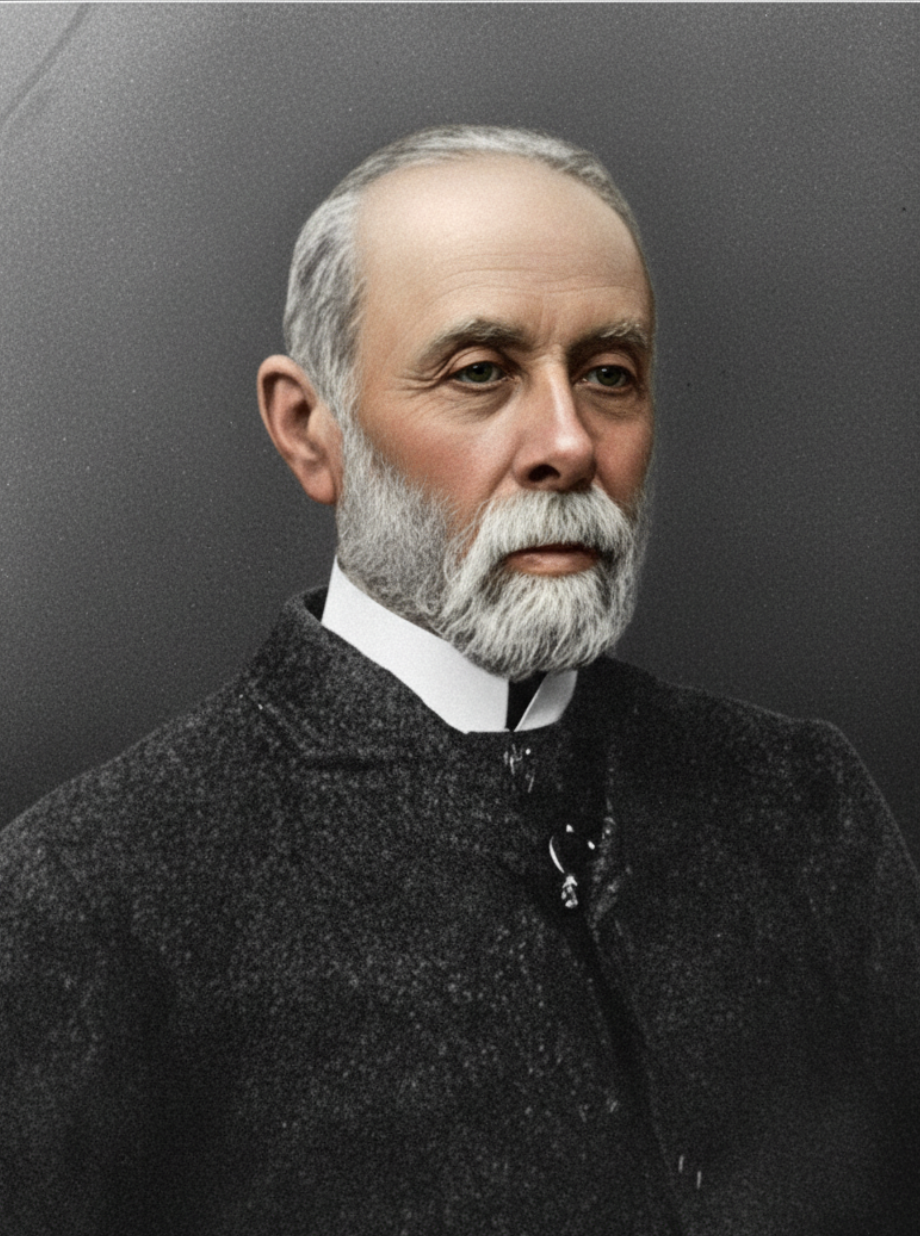
Early Life and Conversion
Edward Dennett was born in 1831 at Bembridge, Isle of Wight, into a family thoroughly connected with the Church of England. His upbringing was marked by religious observance, yet, as was so often the case in that period, profession preceded personal faith. In his youth, however, God graciously intervened. Through the instrumentality of a godly Anglican clergyman, Dennett was brought to a genuine conversion, passing from formal religion into a living knowledge of Christ.
From early days he displayed intellectual ability and a serious, reflective temperament. He matriculated at London University, and with an increasing desire to serve the Lord devoted himself to Christian ministry.
Baptist Ministry and Early Pastoral Work
Leaving the Church of England on grounds of conviction, Edward Dennett became minister of a Baptist chapel in Greenwich. His preaching soon marked him out as a man of clear doctrinal grasp, pastoral sympathy, and spiritual depth. He gave diligent attention both to public ministry and to personal pastoral care, and his people held him in high esteem.
During this period, Dennett’s theological convictions continued to deepen, particularly in relation to the Church, Christian standing, and the authority of Scripture. He was already known as a careful student of the Word, and the foundations were being laid for the extensive literary ministry that would later follow.
Crisis, Illness, and Spiritual Transition
In 1873, while visiting one of his parishioners, Mr. Dennett contracted a severe illness. His condition became so serious that his congregation sent him abroad for a year to recuperate. He spent the winter at Veytaux, where a providential circumstance profoundly influenced the remainder of his life.
At the pension where he stayed were several Christians associated with those commonly known as “Brethren.” Through prolonged fellowship, conversation, and study of Scripture, Dennett found many long-standing questions brought into clearer light—especially concerning the nature of the Church, the Lord’s Table, and gathering unto the Name of the Lord alone.
Importantly, he did not act hastily. On returning to England, he laid his convictions openly before his congregation and resigned his pastoral charge, choosing obedience to Scripture over position or security. Shortly afterward, he broke bread for the first time with believers gathered simply to the Lord’s Name, a step that marked a decisive turning point in his Christian course.
Ministry Among the Brethren
From that time forward Edward Dennett devoted himself wholly to teaching, pastoral ministry, and writing, without formal denominational ties. His sphere of labour included England, Ireland, and Scotland, with additional visits to Norway, Sweden, and the United States. Wherever he went, he was welcomed as a teacher of unusual balance, spiritual discernment, and Scriptural accuracy.
Mr. Dennett was especially gifted as a pastor-teacher. His ministry combined:
-
doctrinal clarity without harshness,
-
spiritual depth without mysticism,
-
and pastoral warmth without sentimentality.
He had a particular concern for young believers, Christian households, and those newly awakened to the truth of salvation.
Literary Ministry and Expository Work
Edward Dennett possessed what contemporaries described as “the pen of a ready writer.” His literary output was extensive and enduring. Few among the Brethren have left behind a more comprehensive body of expository and practical Christian literature.
His writings covered:
-
Fundamental truths of salvation (Fundamental Truths of Salvation, A Letter to a Young Believer Upon Peace with God),
-
Christian living and devotion (Occupation with Christ, The Ideal Christian, Death and Resurrection with Christ),
-
Christian family life (Heavenly Laws for Earthly Homes, The Christian Household),
-
Church truth and prophecy (The Seven Churches, The Blessed Hope, The Rapture, the Appearing of Christ, and the Eternal State),
-
and major Old and New Testament expositions, including Exodus, Ezra, Nehemiah, Zechariah, Malachi, Daniel, and The Apocalypse.
Among his most influential works were Typical Teachings of Exodus, Unsearchable Riches, and The Name Above Every Name, which displayed his ability to combine typology, doctrine, and Christ-centered devotion with sobriety and restraint.
Even late in life, his pen remained active, as seen in Recovered Truths (1906), where he addressed doctrinal questions with calm firmness and spiritual wisdom.
Character and Spiritual Legacy
Edward Dennett was marked by quiet faithfulness rather than public prominence. He did not court controversy, though he did not avoid it when truth was at stake. His spirit was gracious, his teaching measured, and his aim always the edification of the saints and the honour of Christ.
He exemplified a ministry that flowed from deep personal communion with Christ, sustained by careful study of Scripture and dependence on the Holy Spirit. His works continue to nourish believers long after his voice has been silenced.
Home-Call
Edward Dennett was taken ill after many years of fruitful service and passed peacefully away in Croydon in October 1914, following a short illness. Thus ended a life marked by obedience to Scripture, devotion to Christ, and steadfast service to the people of God.
Assessment
Edward Dennett stands among the most reliable and balanced teachers raised up among the Brethren in the latter half of the nineteenth century. He was neither an innovator nor a mere traditionalist, but a careful steward of truth, whose writings remain a safe and fruitful guide for believers seeking to grow “in grace and in the knowledge of our Lord and Saviour Jesus Christ.”