
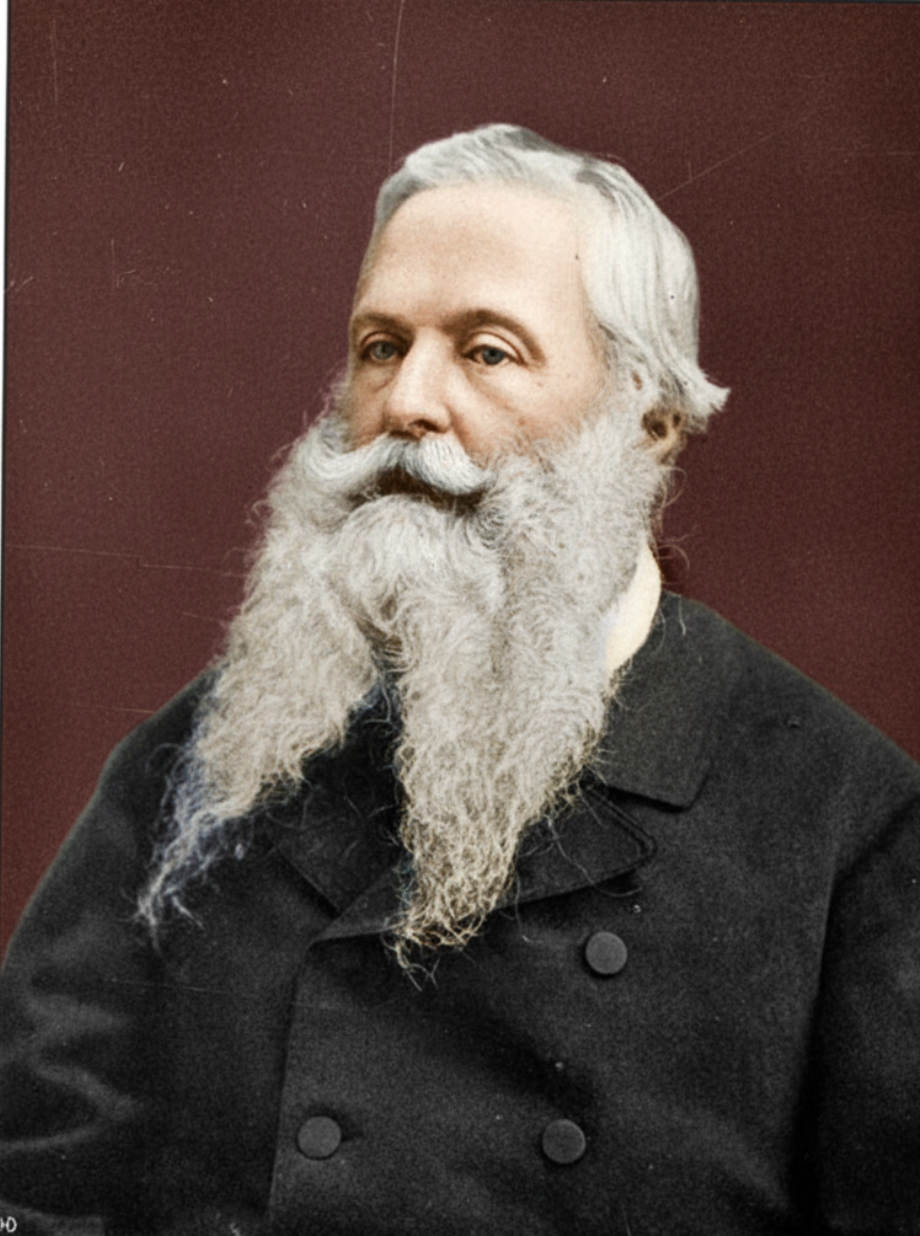
- Years of Life: 1808-1886
Early Life, Education, and Public Responsibility
Count Guicciardini was born on 21 July 1808 into one of the historic noble families of Tuscany. He received the highest possible education available to a man of his rank and ability, and among his fellow-students was one who would later become Grand Duke of Tuscany. From an early age he was marked out for public responsibility and influence.
When the Count had reached his twenty-fifth year, a movement for educational reform arose in Tuscany. Leopold II, then Grand Duke, sought to elevate the intellectual and moral standard of education and invited his friend Count Guicciardini to undertake the organisation of a new and improved educational system for the state.
This task proved demanding. The Count soon realised that reform would require not only better methods but a new class of teachers, trained with particular attention to the moral character of education. Books addressing such principles were scarce, and it was while searching for a suitable textbook that events were set in motion which would change his life forever.
Encounter with Scripture and Spiritual Awakening
In quest of a morally sound guide for teaching, Count Guicciardini consulted a well-known literary friend. After reflection, the friend gave a startling answer:
“Take the Gospel.”
Though abrupt, the advice lodged deeply in the Count’s mind. On examining his extensive library, he discovered that he possessed no Italian Bible. He did, however, own the Latin Vulgate, and he began reading it—initially with the intention of translating material useful for education.
Day by day he read on, and gradually his educational pursuits gave way to spiritual enquiry. As he studied the Scriptures, he became increasingly aware of serious divergences between the teaching of the Bible and the doctrines and practices of his Church.
The Italian Bible and Conversion
One day, while descending the grand staircase of his palace, the Count noticed his caretaker hurriedly concealing a book. Questioning him closely, Guicciardini learned—under a promise of secrecy—that the hidden volume was an Italian Bible.
“Do you understand it?” asked the Count.
“Yes, some of it,” replied the servant.
Taking the Bible, the Count invited him upstairs, and soon master and servant were shut together in a room, reading and meditating upon the Word of God. This practice continued daily for some time and proved instrumental in bringing the Count to clarity and peace.
While the truth of the Gospel was ripening in his heart, an incident occurred that brought conviction to a head. As he was reciting the creed and came to the words “the communion of saints,” he suddenly stopped and asked himself:
“Who are these saints in whose communion I believe? They must be saints on earth.”
Before long, Count Guicciardini found his all in Christ. His conversion was unmistakable. He rejoiced to know that Christ was made unto him wisdom from God, righteousness, sanctification, and redemption, and he no longer gloried in his own righteousness, but in the Lord alone (1 Corinthians 1).
Persecution and Conflict with the Tuscan Government
By this time the Grand Duke had fallen entirely under the influence of the Jesuits, and a determined effort was made to suppress evangelical worship in Tuscany. In January 1851, Italian services held in the Swiss Church were forbidden. One hundred and twenty worshippers received official notices—under threat of imprisonment—to abandon all evangelical meetings, whether public or private. A special prohibition was sent to Count Guicciardini himself.
With the nobility of character that marked him throughout life, the Count resented this tyrannical decree. He informed the authorities that if the order were enforced, he would consider himself compelled to go into voluntary exile. He was prepared to sacrifice position, homeland, and comfort for conscience’ sake.
On 3 May 1851, believing exile to be imminent, he wrote a letter to his small circle of Christian brethren—a document regarded as one of the noblest in the history of Italian evangelical testimony.
Arrest and Imprisonment
On the evening of 7 May 1851, Count Guicciardini went to the house of Fedele Betti, a Christian brother, to say farewell. He was accompanied by a young Italian he had met on the way. Four others arrived independently. The gathering was informal, yet deeply spiritual.
Before parting, Signor Betti proposed reading John 15. Verse by verse, the group shared simple and comforting reflections. Suddenly the bell rang. Seven gendarmes entered and arrested all seven believers.
That night, at 11:30 p.m., they were taken to the Bargello prison and confined together in a damp and filthy cell. Yet even there they continued their meditation on John 15, for the Count carried a small New Testament in his pocket.
They were sentenced to six months’ imprisonment in different parts of Tuscany. Through diplomatic and personal intervention, the sentence was soon modified, allowing Count Guicciardini and three others to leave for Genoa and Turin.
Exile in Britain and Gospel Fruit
From Italy, Count Guicciardini eventually reached Britain, where he received a warm welcome from devoted Christians. His exile proved to be “a link in God’s golden chain.” While in England, he met Signor Rossetti, a young Italian, and was privileged to lead him to Christ.
Return to Italy and Later Ministry
When liberty later dawned upon Italy, Count Guicciardini returned to his native land. He devoted his time, influence, and means to the spread of the Gospel, visiting believers in their homes and meetings. He never allowed social rank to become a barrier to Christian fellowship.
From the palace that bore his name, he continued quietly in testimony until the end of his life. There he peacefully passed to be with the Lord, for whom he had suffered the loss of all things, counting them as nothing that he might gain Christ.
Legacy
Count Guicciardini stands as a striking example of faith triumphing over rank and privilege. Remembered as:
-
a nobleman who bowed willingly to the authority of Scripture
-
a reformer whose search for moral education led him to the Gospel
-
a confessor of Christ who endured imprisonment and exile
-
a servant who used wealth and position for the spread of truth
His life may well be summed up by the words of Scripture:
“By faith he chose rather to suffer affliction with the people of God than to enjoy the pleasures of sin for a season… for he had respect unto the recompense of the reward.” (Hebrews 11:25–26)