
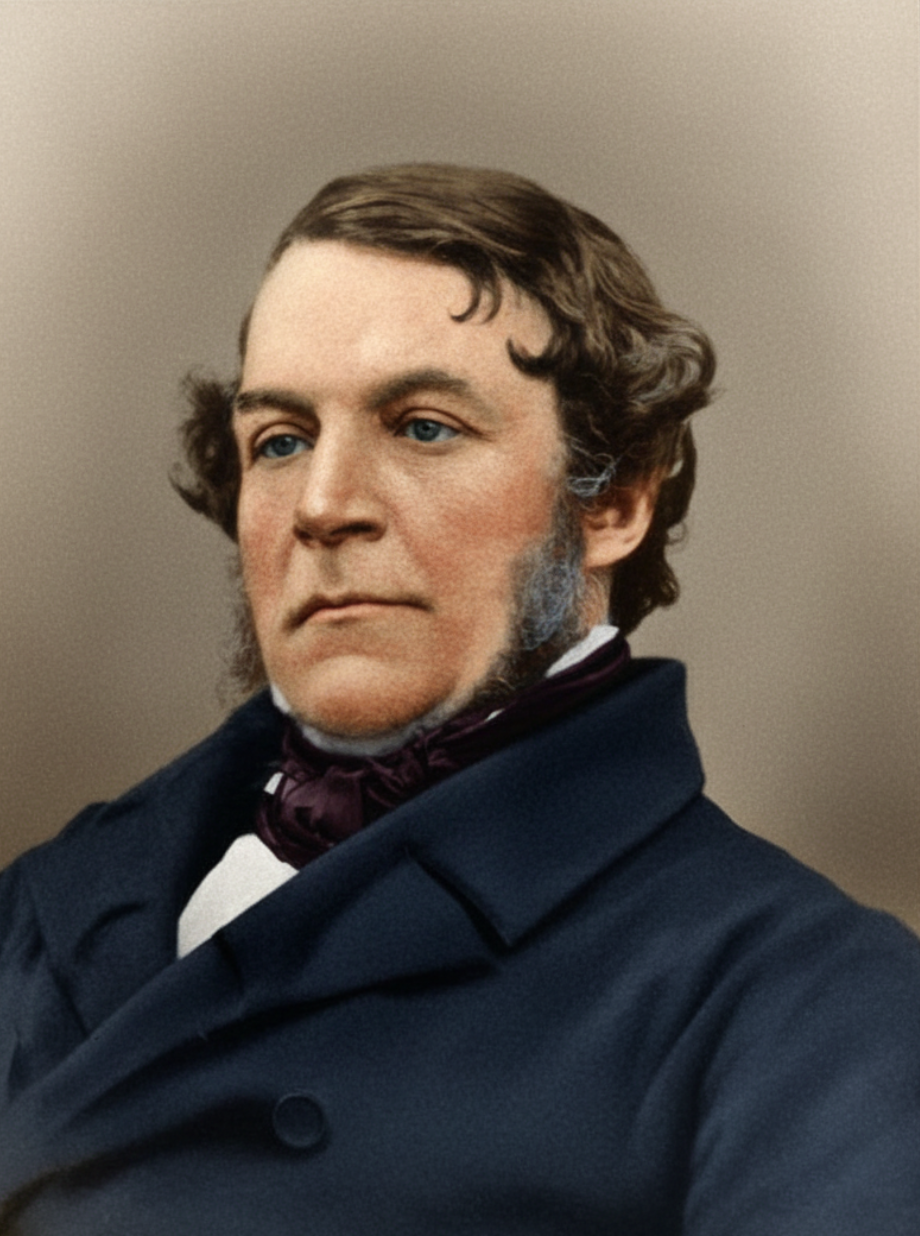
- Years of Life: 1806-1875
Family Background and Early Life
Captain the Honourable William Henry George Wellesley was born in 1806, the second son of the first Baron Cowley. He belonged to one of Britain’s most distinguished families and was a nephew of Arthur Wellesley, the Duke of Wellington, the famed “Iron Duke.” From birth he stood among the aristocracy, surrounded by privilege, influence, and prospects of honour in public life.
Educated and trained for service, he entered the Royal Navy, attaining the rank of Captain. In every natural sense, he possessed what the world values—rank, means, intellect, and social standing.
Spiritual Awakening and Separation from Worldly Distinction
Like a number of earnest Christians in the early nineteenth century, Wellesley became weary of sectarian strife and party spirit and deeply dissatisfied with forms of religion that lacked living power. A profound longing grew within him to conform in life and practice to the Apostolic ideal revealed in Scripture.
As described by Mrs. E. Trotter, the spiritual movement that affected him did not arise from mass excitement or public agitation, but from a personal and inward revelation of Christ Himself—“a new illumination of the Personality of Jesus Christ.” In that light, all other ambitions faded.
For Captain Wellesley, this meant a costly choice. As a man of rank and birth, he suffered greatly for the Master’s sake, deliberately forsaking worldly greatness, taking up the Cross, and following the Lord in a path of reproach and simplicity.
Association with the Early Brethren Movement
In the earliest days of the Brethren movement, Captain Wellesley’s name appears frequently at conferences and special gatherings. He stood among those whom God raised up from every walk of life—men of intellect, scholarship, wealth, and influence—yet who willingly laid these things aside for Christ.
Despite his background, Wellesley never sought prominence. His ministry was characterised by:
-
weighty and thoughtful teaching
-
earnest, affectionate gospel preaching
-
deep spiritual understanding rather than display
Those who heard him testify that his words consistently appealed to the conscience and the heart.
Hospitality and Service to the Saints
One of the most striking features of Captain Wellesley’s Christian life was his open-handed hospitality. As noted by John Hambleton, God raised up men of affluence to receive poor labourers of Christ—men who had neither social standing nor worldly recommendation.
Hambleton wrote of Wellesley:
“One honourable gentleman, Capt. Wellesley, who had forsaken this world’s wisdom and greatness that he might become wise in Christ, received me into his house.”
This hospitality was not mere generosity; it flowed from spiritual discernment and brotherly love. Wellesley recognised Christ in His servants, regardless of their outward position.
Doctrinal Insight and Ministry Emphasis
Captain Wellesley was well taught in the Word of God. Those closest to him observed that he grasped a central truth that shaped all his ministry:
Death and resurrection are the key of the whole Scriptures.
He understood that:
-
Christ died for our sins
-
He was buried
-
He rose again the third day according to the Scriptures
And beyond this, he looked forward to the full redemption of creation itself, which will yet rise with Christ from groaning into glory.
This Christ-centred, resurrection-anchored gospel formed the substance of his preaching and teaching.
Writings on the Lord’s Supper
Captain Wellesley also contributed in writing, particularly on the subject of Christian worship and remembrance. His known publications include:
-
The Lord’s Supper: To the Children of God (1850)
-
An expanded edition of the same work (30 pp)
These writings reflect his concern that the Lord’s Supper be understood and practised in simplicity, reverence, and spiritual reality, as a privilege belonging to all the children of God, rather than as a ritual controlled by clerical systems.
Later Years and Death
Captain Wellesley continued in fellowship, ministry, and service for many years. Though never seeking public recognition, he remained a steadfast and honoured figure among the Brethren.
He died in 1875, having lived nearly seven decades marked by:
-
costly obedience
-
humility of spirit
-
devotion to Christ
-
generosity toward the saints
Legacy
William Henry George Wellesley is remembered as:
-
a man of rank who chose reproach for Christ
-
a naval officer who embraced spiritual warfare instead of worldly honour
-
a host and helper of gospel labourers
-
a teacher grounded in death and resurrection truth
-
a living witness that Christ is worth more than position, name, or wealth
His life stands as a powerful testimony that true nobility is found not in birth, but in following the crucified and risen Lord.