
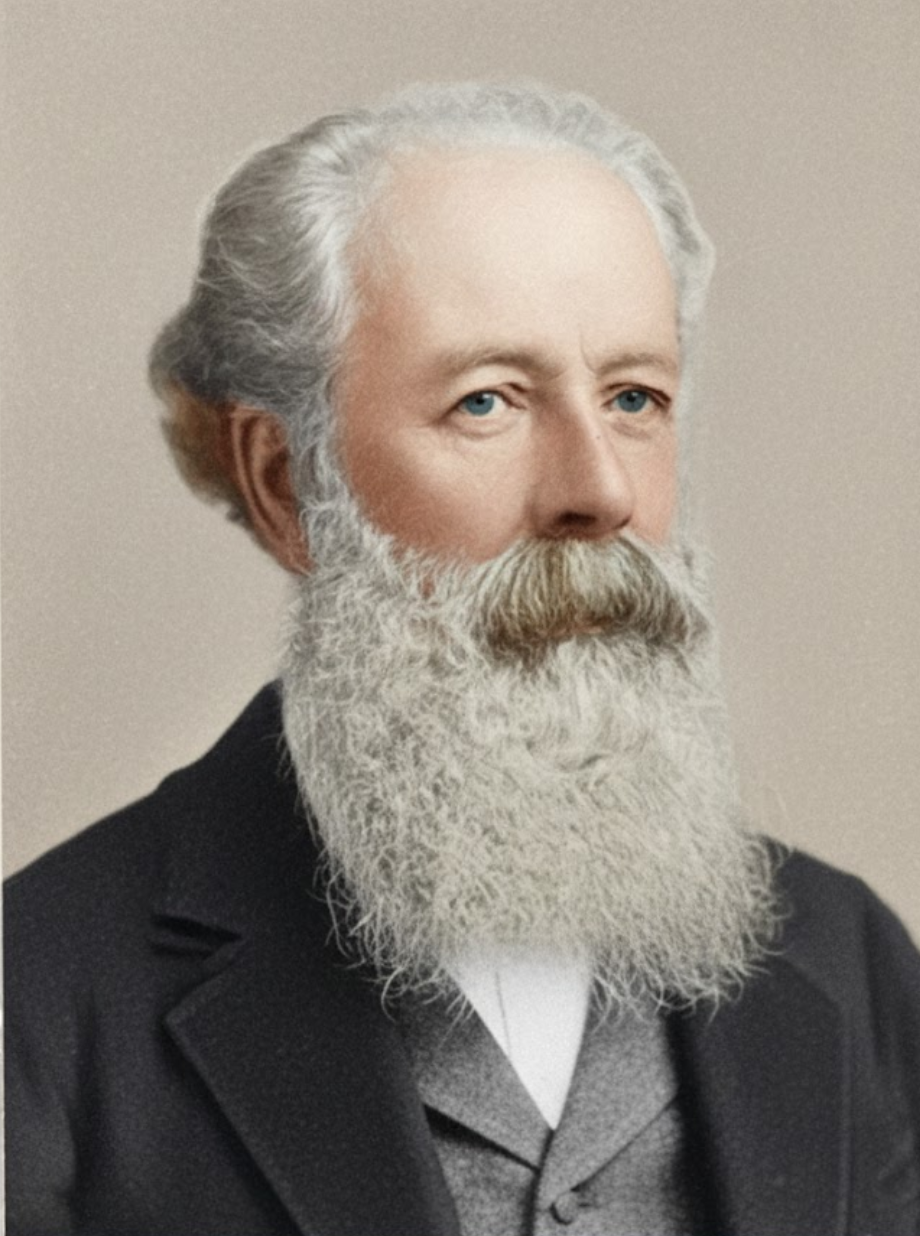
- Years of Life: 1832-1896
Early Life
Albert Robert Fenn was born in London in 1832, a native and free-born citizen of the city. His early childhood was cheerful and secure, but as he grew older a series of family trials cast a shadow over his youth and early manhood. In God’s providence, these hardships became the means by which he was prepared for deep spiritual blessing.
At about the age of eighteen, Fenn entered Borough Road Training College, intending to become a schoolmaster. Part of his training took place in Bristol, where a visit to George Müller’s New Orphan Houses at Ashley Down made a lasting impression on him. He purchased and read a report of Müller’s faith-based work, which stirred his heart profoundly. After completing his training, he was appointed to the charge of a school in Lincolnshire.
Conversion and Assurance of Salvation
During a holiday visit home, Fenn made a remark to his father that revealed his spiritual unease:
“We have been calling ourselves ‘miserable sinners’ all these years, and I never felt miserable about my sins.”
Unsatisfied with the reply he received, he turned directly to God in prayer, asking—very honestly—that God would make him feel his sin. This prayer was answered with deep conviction. For weeks he struggled under a heavy burden of guilt, unable to find peace.
One night, after his housekeeper had retired, he resolved to make a final, earnest attempt to obtain salvation. If this failed, he felt he would despair altogether. Kneeling in prayer, he cried out in the words of the leper in Scripture:
“Lord, if Thou wilt, Thou canst make me clean.”
Immediately, the Spirit of God brought the answer to his heart with power:
“I will; be thou clean.”
Rising from his knees filled with joy and peace, Fenn searched the Scriptures and found the very passage that had been spoken to his soul. His assurance of salvation was so overwhelming that he longed to depart and be with Christ. Soon afterward, the Wesleyans, eager to engage new converts in service, encouraged him to begin preaching.
Early Christian Convictions and Personal Discipline
From the beginning of his Christian life, Fenn determined to take the New Testament as his rule for faith and practice. The command “Owe no man anything” deeply affected him. Having purchased furniture on credit, he paid off the debt as quickly as possible and resolved never again to buy anything he could not immediately pay for.
Another guiding principle came from 1 Corinthians 16:2, concerning systematic giving. Once free from debt, he set aside a portion of his income regularly for the Lord’s work. Though his salary was small, his giving steadily increased as his faith grew, enabling him also to help needy neighbours freely and cheerfully. This pattern of proportionate giving continued throughout his life.
He also wrestled with questions of believers’ baptism and the Lord’s Supper, troubled by the participation of unconverted people in church ordinances. Seeking counsel, he consulted Andrew Jukes, who warmly welcomed him and wisely reminded him that maintaining a healthy spiritual condition was even more important than finding the perfect ecclesiastical position.
Temperance and Moral Conviction
Early in his Christian walk, Fenn became a committed abstainer from alcohol. Though accustomed to moderate use at home, he concluded that alcohol was unnecessary and a great social evil. His resolve was strengthened by the tragic example of two brothers whose lives and families were ruined through drink.
Even in Spain, where wine was universally consumed with meals, he proved that abstinence was both possible and practical. Throughout his life, he urged Christian parents to banish alcohol from their homes.
Call to Full-Time Christian Service
A renewed reading of George Müller’s reports awakened in Fenn a desire to take part in that faith-based work. He soon accepted a teaching position in Bristol, supported by Müller himself. Alongside his school duties, he led Bible classes for young men, preached in the open air during summer evenings, and evangelised surrounding villages on weekends.
During this period, he became convinced that God was calling him to devote himself entirely to evangelistic and pastoral work. Successive fields of service followed—Yatton, Weston-super-Mare, and Kingsbridge—each bringing fruit and preparing him for wider missionary labour.
Missionary Work in Spain
Fenn was frequently burdened in prayer for Austria, Italy, and Spain. When Spain opened remarkably to Protestant mission work in 1868, he recognised this as a clear call from God. Together with Mr. and Mrs. Henry Payne, he set out in October 1869.
Six months were spent in Madrid learning Spanish. In 1870, the team moved to Barcelona, where day and night schools were established, with George Müller supporting rent and teachers’ salaries. A small church was formed from those who gave clear evidence of new life in Christ.
The work was severely disrupted by the Second Carlist War, and on two occasions Fenn narrowly escaped assassination. Despite danger and opposition, the Gospel continued to take root.
In 1874, he returned to Madrid, where he laboured faithfully for the next twenty-one years. Progress was often slow—converts usually came “by twos and threes”—but the consistent witness of a godly family life, honest business dealings, and Scriptural education deeply influenced many. Parents were drawn by the moral improvement of their children and came to hear the preaching of the Gospel.
Final Years and Death
In April 1895, Albert and his wife bade farewell to Spain after more than two decades of faithful service. His health had been declining, and while still abroad he suffered several mild seizures. Before dawn on 29 July 1896, he experienced a severe attack in his sleep.
He passed peacefully on 3 August 1896, remaining conscious almost to the end. Shortly before losing the power of speech, he summed up his faith in simple words that reflected his entire life:
“I have no other hope but in Christ.”
Legacy
Albert Robert Fenn is remembered as a man of:
-
deep personal conviction
-
disciplined Christian living
-
faithful generosity
-
courage in missionary service
-
quiet perseverance in difficult fields
His life illustrates the lasting power of simple obedience, patient labour, and unwavering trust in Christ, even when visible results are small.