
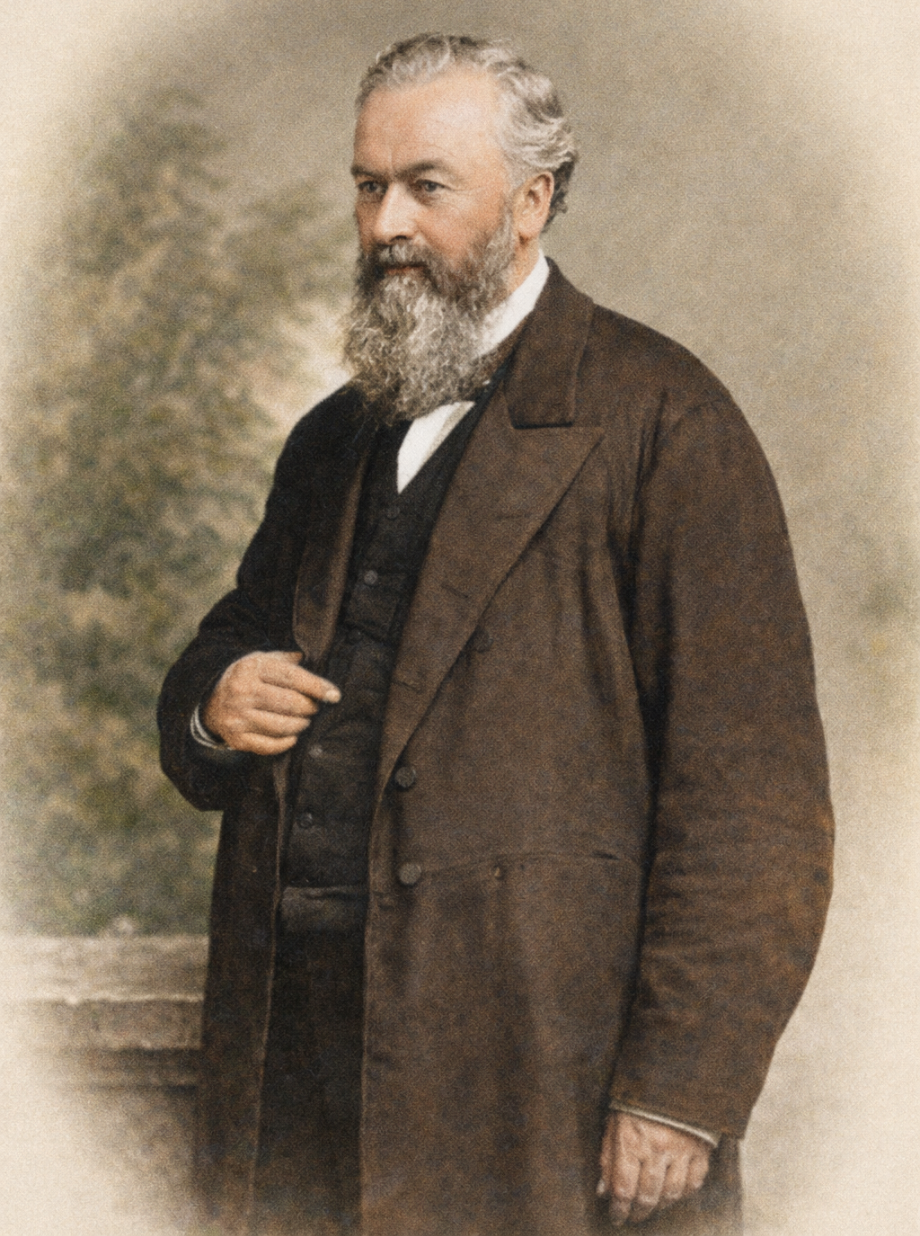
- Years of Life: 1821-1890
Early Life and Conversion
Charles Stanley, widely known simply by the initials “C.S.”, was born in a small Yorkshire village and was left an orphan at the tender age of four. His childhood was marked by hardship and early responsibility. By the age of seven he was earning his living, working in the fields during the summer months and attending the village school in winter. These formative years bred in him independence, endurance, and a deep sympathy with the poor and labouring classes—traits that later marked his evangelistic ministry.
When he was about eight years old, a gentleman who observed his character made the striking remark: “You will either be a curse or a blessing to mankind.” By the mercy of God, that prediction was fulfilled in the latter sense.
Stanley was converted at the age of fourteen, and almost immediately he began to speak to others of the Saviour he had found. From boyhood onward, testimony flowed naturally from him; evangelism was not adopted later as a vocation, but sprang spontaneously from a heart newly won to Christ.
Business Life and Early Evangelistic Work
At twenty-three years of age, Charles Stanley commenced business on his own account in the hardware trade in Sheffield. For many years he travelled extensively throughout England as a commercial traveller, and at the same time carried on indefatigable Gospel labour. Business never displaced service; rather, it provided the means and the opportunities for it.
Through the influence and help of a godly Captain W., the Scriptures became to him an entirely new book. He studied the Bible daily with growing delight, and thus “grew in grace and in the knowledge of our Lord and Saviour Jesus Christ.” His theology was shaped not by systems, but by constant, prayerful reading of the Word of God.
Though he possessed only limited capital, he managed to devote large portions of time to preaching the Gospel and teaching believers across the country. Looking back some forty years later, he testified:
“Seldom in those days did the Lord open my lips without some soul being converted. Not that this appeared at the time, but I have met them everywhere—ten, twenty, or thirty years after.”
God repeatedly proved His faithfulness to Stanley in times of business difficulty, confirming in his experience the truth of the promise: “Them that honour Me I will honour.”
Evangelistic Ministry and Guidance of the Spirit
Charles Stanley firmly believed in the direct and personal guidance of the Lord in the movements of His servants. Again and again he felt deeply impressed to go to places where he had never previously preached—and on arriving, often found hearts already prepared.
One notable example occurred at Leamington. Three brethren, believing themselves led of the Lord, arranged a prayer meeting in the Music Hall at three o’clock, inviting Christians to seek God’s blessing on the Word to be preached that evening. About two hundred gathered in united, expectant prayer. At seven o’clock the hall was filled, and that night many were brought to peace with God. Stanley later described it as “the birth-night of many precious souls.”
His evangelistic labours knew few boundaries. He preached:
-
by roadsides and riversides
-
in railway carriages and steamboats
-
at balls, fairs, and racecourses
-
in theatres, concert halls, chapels, kitchens, and drawing-rooms
He was fearless, adaptable, and wholly given to the proclamation of Christ.
The “C.S.” Tracts and Literary Ministry
Charles Stanley’s name became known far beyond the reach of his voice through the circulation of the famous “C.S.” tracts. Their origin was simple. After preaching in a town, a brother suggested that he should print some of the incidents he related of Gospel work in railway carriages and other unexpected places. Stanley had not considered this, but acted upon the counsel—and thus began a literary ministry that spread across continents and languages.
He stated clearly the principles governing his writing:
-
to look to God alone for guidance
-
to write plainly, without adornment
-
to avoid all party spirit
-
to write for the whole Church of God, or for every sinner
-
to record incidents as faithfully and accurately as possible
Among his most widely used tracts and booklets were:
-
Incidents of Gospel Work
-
Mephibosheth, or The Kindness of God
-
Christ the Centre
-
I Have My Ticket
-
That I May Win Christ
-
Naaman the Leper
-
Plain Dialogues on Solemn Subjects
Of Mephibosheth, he wrote:
“I believe the Lord rarely ever led me to preach from Mephibosheth without souls being converted.”
The tract was repeatedly used in ministry to the sick and dying and was preached widely, including throughout the cities and towns of America, often with manifest blessing.
Spirit, Counsel, and Character
Though doctrinally clear and uncompromising, Charles Stanley was remarkably free from sectarian spirit. He deliberately wrote and preached for the benefit of all God’s people. His own testimony is deeply instructive:
“I have always found blessing and results in proportion to communion with Christ in His love to the whole Church, whether in writing or preaching; and no Christian can prosper in his own soul unless he is seeking the welfare of others.”
This catholicity of spirit, united with bold Gospel faithfulness, gave his ministry a breadth and usefulness few attain.
Last Days and Home-Call
Charles Stanley spent his later years at Rotherham, still active in Gospel testimony and tract distribution. In 1888, he was called from his earthly home to the presence of his Lord. His closing days were marked by peace and assurance, and his testimony remained unclouded to the end.
Legacy
Though no monument marks his resting place, Charles Stanley’s true memorial lives on in the countless tracts bearing the simple initials “C.S.” Through them, and through the many souls converted or helped by his preaching, “he being dead yet speaketh.”
His life stands as a compelling witness to what God can do through a man of humble origin, unwavering faith in Scripture, and wholehearted devotion to Christ and the Gospel.