
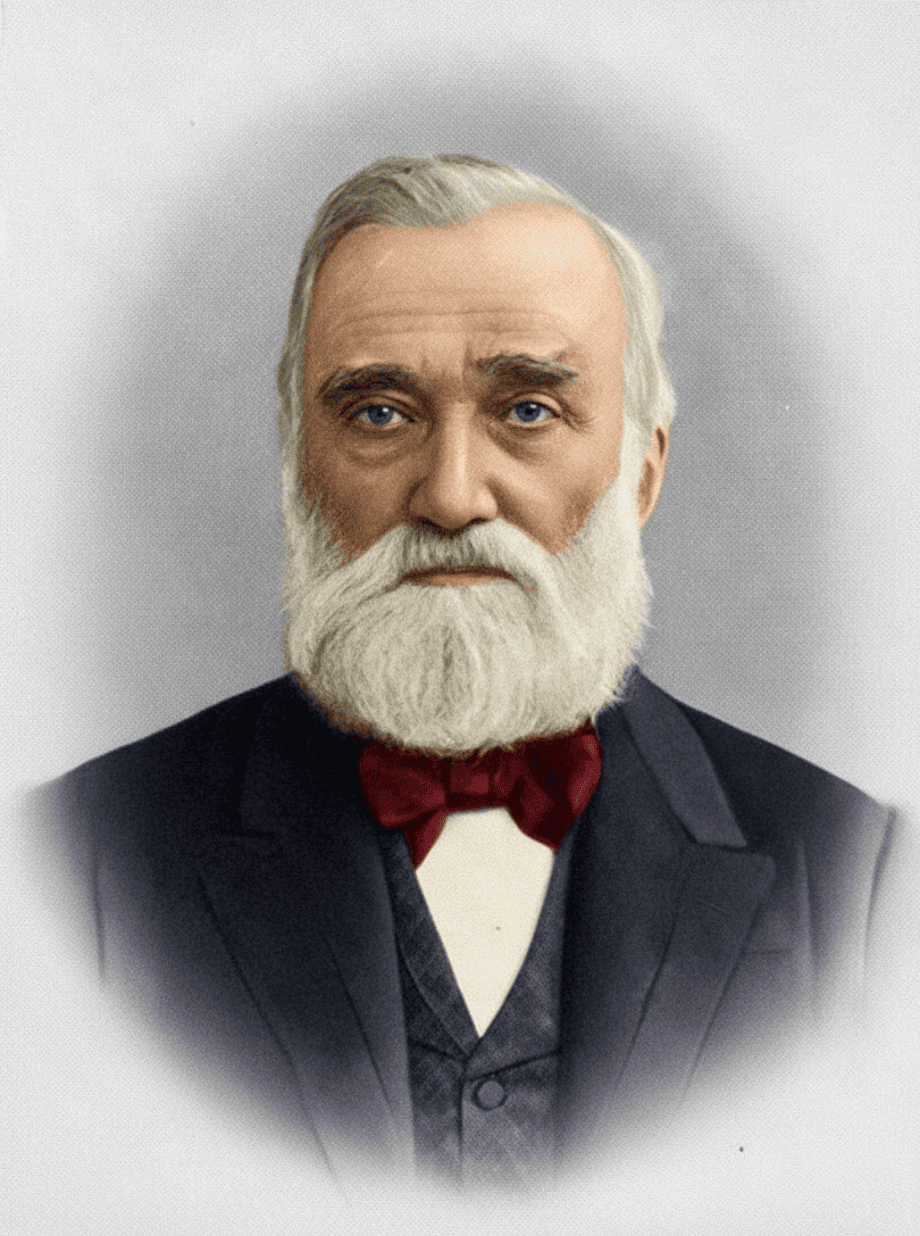
- Years of Life: 1826-1900
Early Life and Education
John G. M’Vicker was born in Belfast on 15th March, 1826, into a society deeply shaped by Presbyterianism, theological seriousness, and intellectual discipline. From his youth he possessed a strong and well-balanced mind, capable of exact thought and careful expression. He was thoroughly educated and early gave himself to the study of Scripture and theology, preparing for the Presbyterian ministry, in which he was formally engaged during his earlier years.
Even at this stage, those who knew him remarked on his large-hearted sympathy, moral earnestness, and deep concern for souls. Yet, though outwardly religious and active in service, he had not yet entered into the settled liberty and assurance that afterwards marked his entire life and ministry.
Conversion and the Revival of 1859
The decisive turning point in M’Vicker’s spiritual history came during the great Irish Revival of 1859. In that widespread awakening, God brought him personally into the full light of the Gospel—light which, once received, never faded for the remainder of his days.
From that time onward he knew that God was his salvation, not merely in doctrine, but in living, sustaining reality. This assurance became the foundation of his character and service. The Gospel he preached was no longer second-hand truth but the outflow of personal communion with God. Though the step involved cost and misunderstanding, he ceased to be a Presbyterian minister, and from that point disclaimed every denominational name, desiring to preach nothing and no one but Jesus Christ.
Ministry Without a Name
For more than forty years, John G. M’Vicker served the Lord in this simplicity of faith and devotion. His early labours were chiefly in the North of Ireland, where he became widely known as a preacher of grace, comfort, and holiness grounded in Christ. Later, a large portion of his ministry was exercised in London, especially in connection with meetings such as those held at Clapton Hall, Stoke Newington.
He was not a controversialist, nor a partisan. His ministry was marked rather by moral weight, spiritual tenderness, and deep sympathy with tried and burdened believers. Having himself known much suffering, both inward and outward, he possessed an unusual capacity to console others. God, who “acquaints His comforters with grief,” had made him such a comforter in no ordinary measure.
Character of His Ministry
Perhaps no single Scripture more perfectly expressed both the man and his ministry than the words he once expounded with great power:
“Sirs, be of good cheer: for I believe God, that it shall be even as it was told me.”
(Acts 27:25)
“I believe God” was the secret of his personal life. “Be of good cheer” was the keynote of his public ministry. He delighted to assure tried saints that not one word of God could fail, because the certainty of fulfilment rests upon the character of God Himself.
His addresses were not marked by rhetorical flourish, but by exact thought, precise language, and spiritual gravity. His prayers, especially remembered by those who heard him in Scotland, were deeply affecting—calm, reverent, believing, and full of confidence in God. Many who listened to him pray never forgot the experience.
Love for Scotland and Wider Influence
M’Vicker cherished a particular affection for Scotland, which he visited frequently. In Glasgow and other centres his ministry was highly valued, and his presence among the saints was always welcomed. Wherever he went, he left behind him strengthened believers, comforted hearts, and a deeper sense of the faithfulness of God.
Though not prolific as an author in the popular sense, his writings were weighty and enduring. After his death there appeared Selected Letters with Brief Memoir of J. G. M’Vicker (1902), which preserves much of his spiritual insight and pastoral wisdom. His articles—such as “God For Us and In Us,” “Holiness Not Hopeless,” and writings on revival—reflect the same balance of grace, truth, and experiential Christianity that marked his spoken ministry.
Personal Appearance and Disposition
Physically, Mr. M’Vicker was strongly built, compact rather than tall, giving an impression of solidity and endurance. In youth he had been black-haired and black-bearded; in later years his hair turned iron-grey and his beard white. His large, dark eyes, shaded by heavy eyebrows, gave depth to a face that, when at rest, often bore the expression of one who had known sorrow.
Yet beneath this seriousness lay a heart of remarkable warmth. He had a ready appreciation of what was good, beautiful, or well expressed, and a brief, hearty laugh would often break forth when something pleased him. His intellect was strong and disciplined; his habits orderly; his dress plain; and his handwriting, even to the end, marked by clerkly neatness and clarity.
Above all, God was in all his thoughts. The Word of God, constantly meditated upon, was his daily food, and by continual recourse to God in prayer his strength was renewed again and again.
Closing Days and Home-Call
In December 1899, Mr. M’Vicker was preaching at Clapton Hall, Stoke Newington, bringing his service there to a close at the end of the month. On Sunday morning, 31st December, he gave out a hymn whose opening verse seemed unconsciously prophetic:
“Away with our sorrow and fear,
We soon shall have entered our Home;
The City of saints shall appear,
The day of eternity come.”
On Friday, 5th January, 1900, after spending the afternoon visiting, he returned home, took tea, and retired to his room. There, suddenly and quietly, at about eight o’clock in the evening, the end came. Without prolonged illness or suffering, he fell asleep, and entered into the presence of the Lord whom he had so simply trusted and faithfully served.
Legacy
John G. M’Vicker was not a man of noise or display, but of depth, faith, and love. The loving are the beloved, and such he was. Those who knew him felt keenly the loss of one so tender-hearted and steadfast; yet they also felt themselves lastingly enriched by the memory of what he was through grace.
Others have been gifted, and many more will yet serve the Church of God; but those who walked with him will readily agree that they will not see one exactly like him again—a man who believed God, comforted the saints, and quietly finished his course in faith and peace.