- Years of Life: 1825-1888
Early Life and Conversion (1825–1844)
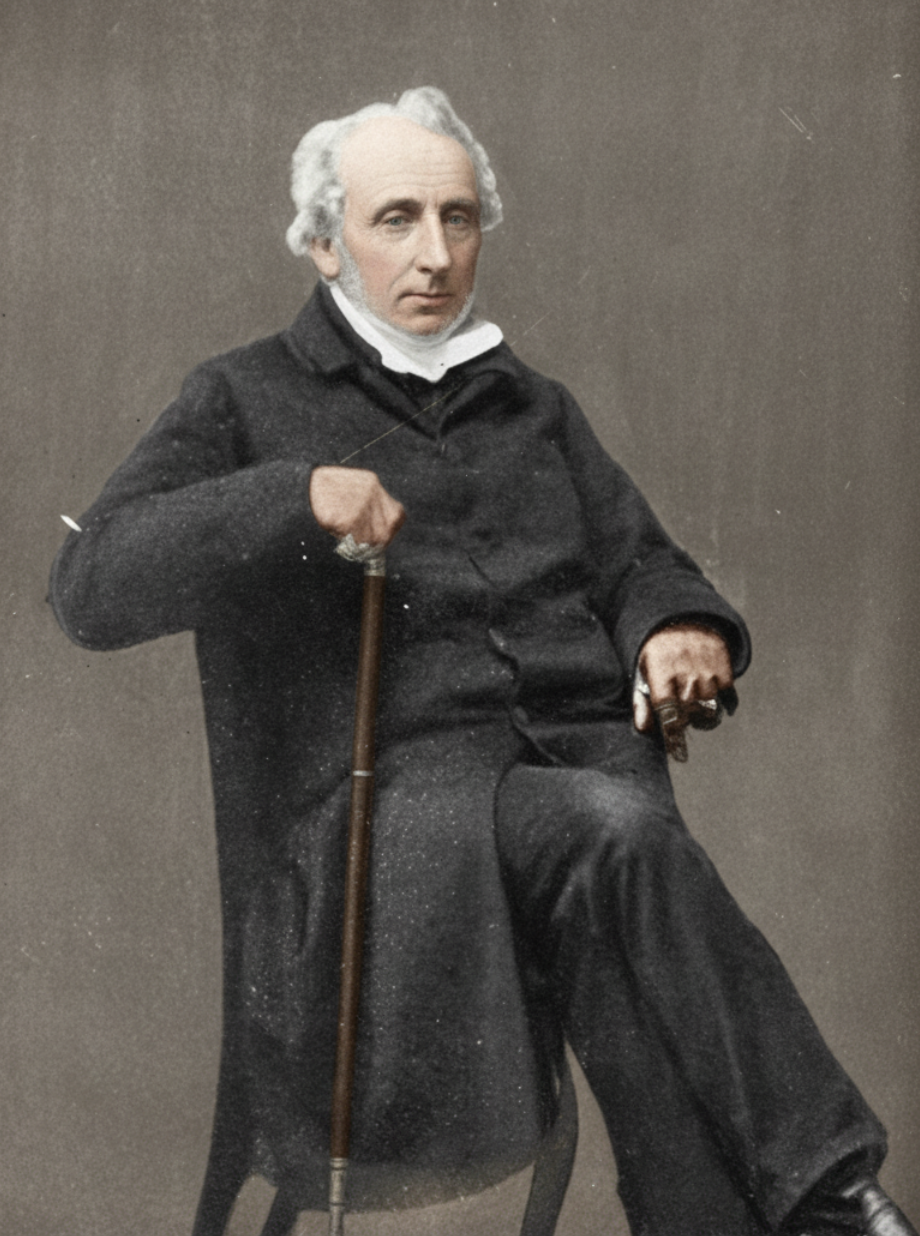
William Lincoln was born in 1825 in the east of London. At the age of seventeen he was brought under deep conviction of sin through reading Philip Doddridge’s Rise and Progress of Religion in the Soul. Though the book awakened his conscience, it did not immediately bring him into settled peace. Nevertheless, it marked the beginning of a lifelong concern for truth, holiness, and fidelity to God.
From his earliest Christian days, Lincoln possessed an earnest desire to serve the Lord. Initially, he contemplated missionary service, and accordingly spent a year studying under the Church Missionary Society. This path, however, was closed to him when he was refused acceptance on medical grounds, his parents having both died of consumption.
Anglican Ministry and Growing Exercise of Soul (1844–1862)
Following this disappointment, Lincoln entered King’s College, London, becoming an associate of the institution. In 1849, he was ordained at Preston by the Bishop of Manchester, and subsequently laboured in the Church of England at Preston and Pudsey. Later, he moved to London, serving as curate at St. George’s, Southwark.
While in Southwark he preached frequently at a district church in the London Road, drawing very large congregations. His preaching gifts soon led to his appointment in 1859 as minister of Beresford Chapel, Walworth, where his ministry proved exceptionally attractive and the building was rapidly filled to overflowing.
Yet even as outward success increased, Lincoln’s conscience became increasingly troubled. Questions regarding the position and principles of the Church of England pressed upon him. He attempted, for a time, to justify his position, even preaching and publishing a sermon on Infant Baptism in opposition to Charles Spurgeon’s discourse on Baptismal Regeneration. But light continued to grow, and with it the painful conviction that his ecclesiastical position was untenable. Eventually, the remaining copies of that sermon were deliberately destroyed.
Separation from the Establishment (1862)
In 1862, after prolonged exercise of soul, Lincoln took a decisive step. On a Sunday evening, before a congregation that crowded Beresford Chapel to its utmost capacity, he publicly read his reasons for leaving the Church of England. The immediate result was a sharp decline in attendance, though a substantial number continued with him, and others followed more gradually.
This act of obedience involved the surrender of worldly prospects and emoluments of no ordinary character, but Lincoln counted allegiance to Christ and submission to His Word as of infinitely greater worth.
“The Javelin of Phinehas” and Testimony against Church–State Union
Immediately following his secession, Lincoln published his most controversial and influential work, The Javelin of Phinehas (1863). In this extensive volume he exposed, from Scripture, what he believed to be the evil and unscriptural nature of the union between Church and State, and pronounced Christ’s judgment upon Christendom.
The book brought him into prominence—and opposition—but it also firmly established his testimony as one grounded uncompromisingly in Scripture.
The Work at Beresford Chapel (1862–1888)
The work at Beresford Chapel continued for twenty-eight years, despite early predictions that it would not last even a year. Change came gradually, step by step, as light was received from the Word of God. Lincoln resolutely refused to join any denomination, often stating his determination “never to join anything or any party,” but to cleave to the Lord alone.
Central to his testimony was the truth of gathering to the Lord’s Name alone, making Christ the sole centre, and going forth “unto Him, without the camp.” No one preached more faithfully the doctrine of separation to God, and none more consistently sought to practise it.
Under his ministry:
-
The saints came together weekly to break bread, in obedience to the Lord’s command.
-
Worship was marked by Scriptural simplicity and dependence upon the guidance of the Holy Spirit.
-
Godly order was carefully maintained; Lincoln firmly opposed any intrusion of democratic or communistic principles into the church of God.
-
Open ministry was valued, yet alongside a clear recognition of God-given teachers and the place of doctrinal instruction.
To safeguard both worship and teaching, the meeting time was arranged so that worship and the breaking of bread preceded, followed by a distinct opportunity for ministry of the Word—a practice that proved of lasting benefit.
Character of His Ministry
William Lincoln’s power lay not in rhetoric, but in his grasp of Scriptural principles. He presented truth in its broad outlines, equipping believers to work out details for themselves from the Word. His ministry was thus formative rather than merely instructive.
He was especially used in:
-
Prophetic teaching, particularly concerning the Lord’s coming and the apostasy of Christendom
-
Pressing the imminence of Christ’s return, which he feared was being neglected
-
Warning against growing spiritual darkness in the professing church
Always approachable, he devoted much time to helping believers with difficulties and questions. His replies were marked by clarity, balance, and a consistent appeal to fundamental principles.
Though widely read, he described himself simply as “a man of one Book.” Whatever he gave to others, he drew directly from Scripture itself.
Writings
Among his principal writings are:
-
Joseph and Jesus
-
Sermons on the Second Advent
-
The Javelin of Phinehas
-
Lectures on Hebrews
-
Lectures on the Epistles of John
-
Lectures on the Book of the Revelation
-
Typical Foreshadowings in Genesis
-
Numerous lectures and leaflets on fundamental truths
These works, though not extremely numerous, were marked by depth, sobriety, and fidelity to Scripture.
Suffering, Last Days, and Home-Call (1887–1888)
For nearly twenty years, Lincoln endured severe and largely hidden physical suffering, particularly affecting his nervous system. It was remarkable that he was able to continue studying and teaching as long as he did.
His last public address was given on 18 September 1887, on the opening verses of 2 Corinthians 5. His final attendance at the breaking of bread was on 11 December 1887. As he left the meeting that day, he quietly remarked:
“It is all well; the Lord reigneth.”
Though the outward man perished, his inward joy remained unclouded. Frequently he could say, even near the end, “I’m full of praise and joy.”
On the morning of 25 April 1888, he peacefully fell asleep in Christ. When asked shortly before his departure whether he was happy, his last earthly answer was:
“Yes, in the Lord.”
Legacy
William Lincoln stands as a striking example of unswerving faithfulness to truth, combined with balance, humility, and pastoral care. When convinced that something was right, he followed it regardless of cost—yet he consistently warned against pressing one aspect of truth at the expense of another.
His life’s aim is beautifully summed up in the verse he once passed on to a fellow labourer:
“Lord Jesus! make Thyself to me
A living, bright reality;
More present to faith’s vision keen
Than any outward object seen;
More dear, more intimately nigh,
Than e’en the sweetest earthly tie.”
In this spirit he lived, laboured, suffered, and passed to be “with Christ, which is far better.”