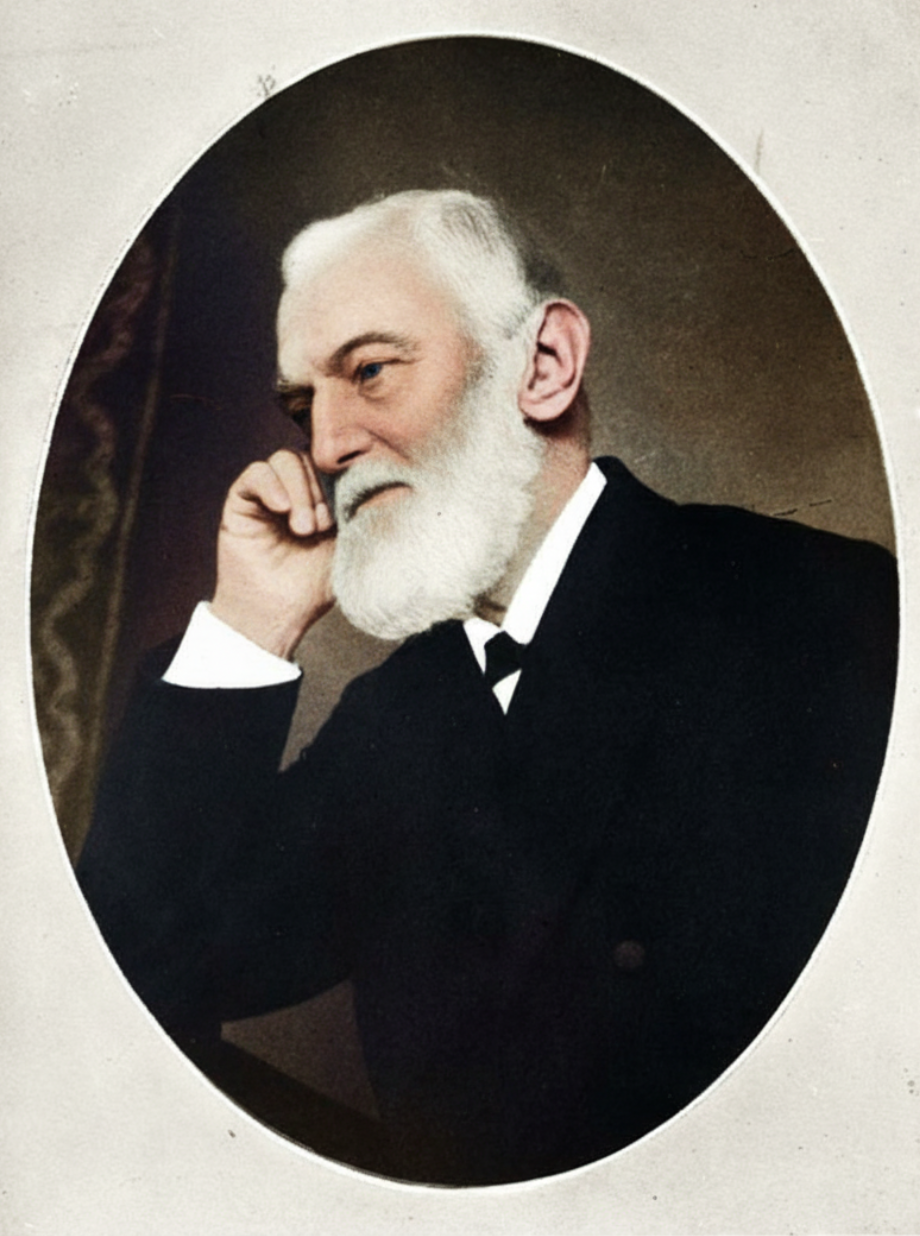
- Years of Life: 1819-1903
Early Life and Education (1819–1837)
William Collingwood was born on 23 April 1819 at Greenwich, into a cultivated and intellectually distinguished family. His father, Samuel Collingwood, was an architect, and his wider family included Samuel Collingwood, Printer to the University of Oxford and proprietor of the Oxford University Press. From childhood, William showed marked intellectual ability, particularly in classics and Greek.
He was educated at Christ Church School, Oxford, where he proved a precocious scholar and was even offered a junior studentship. However, due to scruples concerning the Thirty-Nine Articles, he declined the offer and did not matriculate. This decision foreshadowed the strong anti-creedal and nonconformist convictions that would later shape both his religious life and his separation from established ecclesiastical systems.
On leaving Oxford, his family placed him in the office of Rudolf Ackermann, the influential publisher and art dealer in the Strand. Here Collingwood began to draw “untaught,” though he soon received guidance from James Duffield Harding, a close friend of his father, as well as from Samuel Prout and his cousin William Collingwood Smith.
Early Artistic Career and Formation (1837–1839)
In 1837, Collingwood won two prizes for landscape at the Society of Arts, and in 1838 he began exhibiting at Suffolk Street with the British Artists. During this period he moved to Hastings, where he formed close artistic friendships with Samuel Prout and William Henry Hunt, both of whom left a discernible influence on his technique, particularly in watercolour.
His early work was characterised by brilliant, energetic handling, with subjects drawn from English landscapes, antiquarian architecture, and historical interiors. Even at this stage, his approach to art showed a seriousness and reverence that distinguished him from many contemporaries.
Liverpool Years: Art and Assembly Life (1839–1884)
In January 1839, Collingwood accepted a teaching appointment in Liverpool, a city he would call home for the next forty-five years. He joined the Liverpool Academy in 1842 and became associated—though never fully integrated—with the Liverpool School of Painters. His reserved, deeply religious nature limited social intimacy with other artists, yet his artistic reputation steadily grew.
Artistic Output
Over the course of his career, Collingwood exhibited more than 850 works, including:
-
Landscapes of England, Wales, Scotland, and especially Switzerland
-
Alpine scenes, which became his most commercially successful works
-
Antiquarian and historicist interiors (e.g., Haddon Hall, Cotehele, Levens)
-
A smaller, deeply significant body of vernacular Lake District interiors, now valued for their documentary insight into regional domestic life
In 1856, a Swiss subject (The Jungfrau at Sunrise) was mentioned by John Ruskin, marking Collingwood’s recognition beyond regional circles. As his career progressed, his style shifted from the vigorous handling of his youth to a more refined, delicate manner, combining softness with breadth.
Religious Convictions and the Brethren
Collingwood was an intensely religious man, serious, reserved, and deeply reverent. In the early 1840s he became associated with the Plymouth Brethren, drawn by their insistence on Scriptural simplicity, rejection of clericalism, and freedom of ministry. In 1844, he joined with John Price, John Plunkett, Thomas Porter, and others in meeting simply in the Lord’s Name at Back Canning Street, Liverpool.
Later, he built Crown Street Hall at his own expense, where he took a leading role in the assembly’s practical life. Though Brethren assemblies recognised no formal ministry, Collingwood effectively functioned as:
-
preacher,
-
Bible teacher,
-
Sunday School organiser,
-
visitor and pastor.
He conducted Sunday and weekday meetings and devoted substantial portions of his income to furthering the work. When travelling—particularly in Switzerland—he actively sought opportunities to preach, conducting services in French, and to a lesser degree in German.
He remained committed to the original, open principle of receiving believers as such, maintaining fellowship with evangelical Christians beyond strict Brethren boundaries.
Marriage, Missions, and Wider Horizons
In 1851, Collingwood married Marie Elizabeth Imhoff, daughter of a Swiss notary from Arbon, in the canton of Thurgau. Switzerland thereafter held a special place in his life, both artistically and spiritually, not least because of the presence of Brethren assemblies there.
Before marriage, Collingwood had cherished a serious ambition to go to China, hoping to combine missionary work with painting Chinese subjects. Though this plan was never realised, his home in Liverpool became a gathering place for missionary enthusiasts, including:
-
T. Pietrocola Rossetti, cousin of Dante Gabriel Rossetti,
-
Lord Congleton, former missionary to Baghdad, who influenced Collingwood’s early ecclesiastical decisions.
Collingwood regarded landscape painting as a sacred calling, akin to worship, an attitude shared by artists such as A. W. Hunt. Art, for him, was never merely aesthetic but devotional.
Later Years: Bristol and Literary Service (1884–1903)
In 1884, Collingwood left Liverpool. After a year abroad and a period at Hastings, he settled in Bristol in 1890, where he became associated with Bethesda Chapel and renewed close fellowship with George Müller.
In his later years, failing strength curtailed his artistic output, but he devoted increasing time to writing and teaching. His publications included:
-
Man’s Future in God’s Word (1871),
-
The Brethren: A Historical Sketch (1899),
-
numerous doctrinal and devotional articles in The Witness.
He also delivered and published lectures entitled “The Value and Influence of Art in General Education,” reflecting his lifelong concern that art should serve truth, reverence, and moral formation.
Character and Final Testimony
Collingwood was known for:
-
deep reverence for Scripture,
-
gentleness of spirit,
-
avoidance of controversy unless conscience demanded engagement,
-
quiet perseverance and contentment in the will of God.
Even in his final weeks, he remained devoted to the assembly. On Whit Sunday, 31 May 1903, he attended the morning meeting at Bethesda, though too weak to participate audibly. Shortly afterwards, he suffered a stroke of paralysis. His mental clarity remained, his faith unshaken.
On 25 June 1903, William Collingwood fell asleep in Christ, aged 84.
Legacy
William Collingwood occupies a unique place at the intersection of:
-
Victorian British art,
-
vernacular and antiquarian documentation,
-
and the spiritual history of the Brethren movement.
He left behind:
-
a substantial and varied artistic corpus,
-
a quiet but enduring influence on evangelical Christianity,
-
and a family legacy continued by his son William Gershom Collingwood, artist, scholar, and biographer of John Ruskin, and by his grandson R. G. Collingwood, philosopher and historian.
Collingwood’s life stands as a testimony to art consecrated to God, lived with integrity, restraint, and unwavering devotion to Scripture.