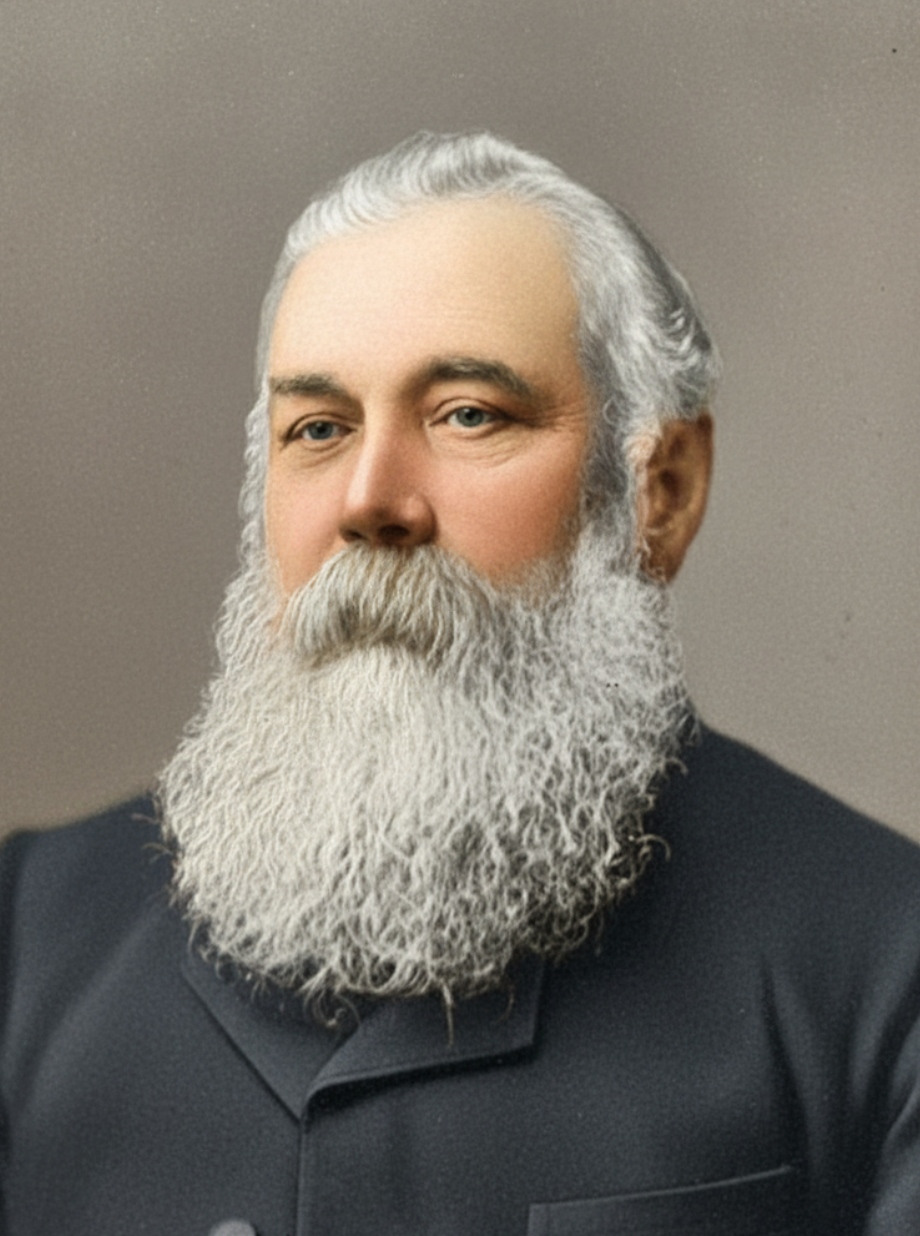
- Years of Life: 1823-1888
Early Life and Background (1823–1841)
George Brealey was born on 4 September 1823 at North Tawton, Devonshire, into a poor but respectable Christian home. His parents were sincere believers, and from them he received early religious impressions; yet these were soon counteracted by adverse influences.
At the age of fifteen, he was apprenticed to an infidel uncle, a country shoemaker who also kept a public house. In this environment Brealey learned habits utterly opposed to his upbringing—drinking, swearing, and fighting—and his moral condition rapidly deteriorated. Ill-health eventually compelled him to return home, but spiritually he remained far from God.
Conversion: A Mother’s Prayers Answered (1841)
The decisive turning point came on Whit Sunday, 1841, at three o’clock in the afternoon. George was found by his mother in a public house, playing cards with two companions. Earlier that day they had mocked him as a “Methodist,” and to disprove the charge he had beaten them in a fight and then taken them drinking.
His mother, broken-hearted, fell on her knees in the public house and pleaded with God for her son. The power of her prayers overwhelmed him. Turning to his companions, George said quietly but firmly that he would never again enter such a place as he had done.
Mocked again for “turning Methody,” he replied with words that revealed deep conviction:
“I am afraid of God and of my sins. Will either of you go to hell for me?”
When they refused, he answered:
“Then don’t laugh at me for turning round and trying to escape.”
He left with his mother, and soon afterward found peace with God. This conversion was real and lasting, though for many years it bore limited outward fruit.
Early Adult Life and Spiritual Slumber
At twenty-one, Brealey married, and later settled in Exeter, commencing business on his own account. For a considerable period his spiritual life stagnated. Though a believer, he lacked power, liberty, and fruitfulness in service.
God, however, was preparing His servant through solemn discipline.
Restoration and Full Consecration
The Lord aroused him through two providential means:
-
A conversation with a devoted Christian in a railway carriage, which stirred his conscience.
-
The suicide of a godless man, “Old Evans,” who lived near him, and to whom Brealey had never spoken about eternity.
Helping to cut down the lifeless body, Brealey was crushed by the sense of his responsibility to God and to men. On the spot he resolved to give himself wholly to Christ and His service—without reserve and without retreat.
He later described this experience as a kind of “second conversion”:
“His love had killed my earthly desires, and I was ready to be His slave because He had made me His free man.”
From that moment he became an “out-and-out Christian.”
Evangelistic Zeal in Exeter
Brealey now gave himself fervently to evangelistic labour while still engaged in business. He limited himself to five hours of sleep, devoting the remainder of his time to:
-
house-to-house visitation,
-
personal dealing with souls,
-
open-air preaching, and
-
distributing Gospel tracts.
With the help of Christian friends, he distributed tens of thousands of tracts at fairs and races—places then rarely entered by evangelists. He faced opposition but remained undaunted, boldly carrying the Gospel into the enemy’s strongholds.
He preached in streets, lanes, and public houses, speaking tenderly to drunkards and sinners, urging them to flee to Christ. Increasingly exercised before God, he began to consider leaving business entirely for Gospel work.
Call to the Blackdown Hills (1864)
After prayerful consideration, Brealey intended to sail to Demerara to preach among the negro population. Berths were taken in a sailing vessel. But God had other plans.
A “Macedonian cry” came from the Blackdown Hills of East Devon—a region covering nearly 400 square miles, dotted with isolated farms, hamlets, and villages. The moral and spiritual condition of the people was described as deplorable.
In 1864, Brealey moved there, and the work for which he is best remembered began.
The Blackdown Hills Revival
Initially supported by gifts from Christian friends, Brealey laboured tirelessly. Conversions multiplied. As new believers searched the Scriptures, they saw that:
-
believers were baptised,
-
assemblies gathered on the first day of the week,
-
the Lord’s Supper was observed simply and scripturally.
When Brealey helped them obey Scripture, some of his supporters objected and threatened to withdraw financial aid. Faced with a crisis of conscience, he asked himself:
“If I teach absolute submission to Scripture, must I hinder them from obeying it?”
He chose obedience to God over human support. He relinquished his salary and trusted the Lord alone—a step he never regretted.
The work flourished:
-
cottages were enlarged,
-
140 believers were baptised within two years,
-
assemblies were formed,
-
schools and Gospel halls were built.
Many converts went on to serve Christ in China, India, Africa, America, and throughout Britain.
Character, Power, and Endurance
Brealey once prayed for “a body of iron and a soul of fire”, and for nearly twenty-five years God granted his request. He preached:
-
in tents and open air during summer,
-
in halls, schools, cottages, and barns during winter.
He possessed an intense passion for souls, a tireless constitution, and fearless devotion. In later years he evangelised widely across England, often saying:
“My parish is the world… anywhere for Jesus, provided I may take the Truth—the whole Truth—and nothing but the Truth.”
He was also a gifted tract writer, and the “Blackdown Tracts” were widely circulated and richly blessed.
Final Testimony and Home-Call (1888)
In early March 1888, George Brealey was taken home to be with the Lord. In his last address, he spoke movingly of the Cross:
“We shall never get out of the sight of the Cross, and can never do without the Blood… Never was the Cross of Christ or the Blood of the Lamb more precious to my soul than now.”
He fell asleep in Jesus, but his voice still speaks.
Legacy
George Brealey stands as:
-
one of the great evangelists of rural England,
-
a model of obedience to Scripture at personal cost, and
-
a man whose life demonstrated the power of whole-hearted consecration.
The work on the Blackdown Hills continues to this day, bearing witness to the grace of God that transformed a once wayward youth into a mighty instrument for the salvation of souls.
“He being dead yet speaketh.”