
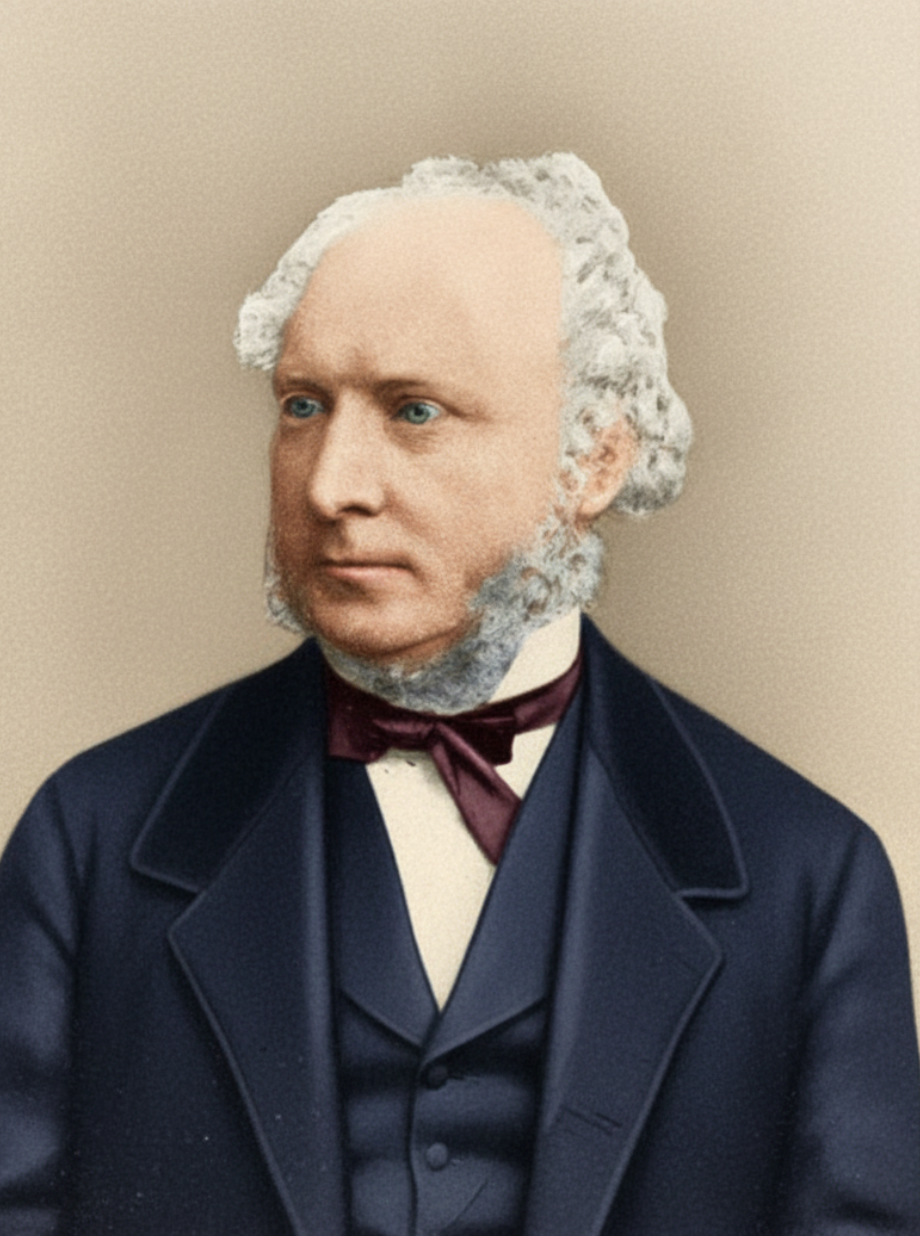
- Years of Life: 1814-1897
Early Life and Family Background (1814–1830)
James Butler Stoney was born on 13 May 1814 at Portland, County Tipperary, Ireland. He came from a household marked by strong moral discipline and intellectual cultivation. His father was a strict Puritan in temperament, while his mother, from the Butler family, possessed equal firmness of principle, expressed through refinement of mind and manners. Her four sons were shaped by her culture, displaying unusual grace of address, discipline of thought, and seriousness of life.
The boys were educated privately in a rural setting, largely removed from city distractions. Their upbringing combined classical learning with country pursuits, forming both intellect and character.
A decisive early spiritual impression came during childhood when Rev. Baker Stoney, Rector of Castlebar and associate of Edward Nangle of Achill, visited Portland. During family prayers he read Acts 9, speaking of the heavenly light that arrested Saul of Tarsus and revealed a glorified Saviour to the chief of sinners. That image—a Man in glory revealed to a man on earth—never left young James’s mind. Though youthful ambition later pushed such thoughts into the background, the seed had been sown.
Academic Brilliance and Early Ambitions (1830–1831)
Stoney entered Trinity College, Dublin, at the exceptionally young age of fifteen. Among ninety-two students he ranked seventieth, but quickly distinguished himself. By nineteen he had become Senior Freshman, excelling in Classics and Law, and setting his sights firmly on a successful career at the Bar. His future appeared secure; worldly success and professional distinction seemed well within reach.
Conversion Through Crisis (1831)
In 1831, Dublin was ravaged by a cholera epidemic. Death was all around. Stoney himself was suddenly struck down with severe illness. Convinced that he was dying, his first conscious thought was:
“How can I meet a holy God?”
The terror of his soul far exceeded the pain of his body. Calling his servant Thomas, he said, “I am afraid I am dying.” The servant’s blunt reply—“Surely you are, sir”—left him utterly alone with God.
Throwing himself face down, Stoney cried to the God of his childhood impressions—the God who could save the chief of sinners because the Crucified One was now seated in glory. When the doctor arrived, Stoney appeared near death, yet in perfect calm he said:
“Jesus will have me. Lord Jesus, receive my spirit.”
After a prolonged sleep, he recovered physically. Spiritually, everything had changed. He had been born again. From that hour he declared:
“No more law for me. I’ll be a witness to grace.”
Grace revealed from glory—not law addressed to flesh—became the keynote of his entire life and ministry.
Break with Career Ambitions and Call to Ministry (1831–1838)
Though restored, Stoney returned to his studies deeply altered in purpose. He joined the Divinity Class at Trinity College, where there were genuinely godly men at that time. Yet ecclesiastical rules required him to wait until the age of twenty-four for ordination. His family was indignant. An uncle cut him off entirely, convinced that a brilliant legal career was being sacrificed for a meagre curate’s income.
But Stoney had learned that unseen things are eternal, while earthly prospects pass away. During these four years of waiting, he gave himself intensely to Scripture study, especially the Epistles. There he discovered what became foundational to his teaching: that gifts for ministry are bestowed directly by the ascended Christ, not mediated by ecclesiastical appointment (Ephesians 4).
Refusing to wait for ordination, he resolved to act at once on what he found written. He would go into the highways and hedges, proclaiming:
“Come, for all things are ready.”
Evangelistic and Teaching Ministry
Stoney began a life of constant itinerant service, travelling widely and speaking almost daily. He preached with fervour, clarity, and solemnity, carefully avoiding rhetorical eloquence, believing that the Holy Spirit alone must be the power in divine things.
He wrote early works such as “Discipline in the School of God,” drawing lessons from Old Testament figures, and contributed regularly to Christian periodicals. Over time his ministry developed a distinctive character: deeply experimental, Christ-centred, and heavenly.
His teaching emphasized:
-
the believer’s acceptance in Christ
-
deliverance from law as a rule of life
-
Christ’s present ministry in glory
-
the moral condition of the Church in days of decline
-
personal communion with Christ as the source of power
Association with the Brethren Movement
James Butler Stoney became closely identified with the Brethren movement, particularly in its more exclusive phase. His home at Lonsdale Square, London, placed him near J. N. Darby, and later at West Park Terrace, near C. H. Mackintosh. His influence through letters, lectures, and books was immense.
His many writings—especially Letters on Subjects of Interest, The Closing Testimony, Acceptance and Deliverance, The Secret of Power, and Christ Triumphant—were valued for their searching insight into the soul’s condition and the Church’s spiritual state. Few writers spoke more penetratingly about decline without lapsing into despair; for Stoney, Christ in glory was always the remedy.
Character and Spiritual Mark
Stoney was known for:
-
intense personal devotion to Christ
-
spiritual discernment combined with tenderness
-
uncompromising faithfulness to truth as he saw it
-
deep concern for the moral condition of believers
Though firm, he was not harsh. His letters reveal a shepherd’s heart, burdened for souls rather than systems. He was deeply experimental, speaking from inward knowledge rather than theory.
One of his most enduring hymnic lines expresses the secret of his pilgrimage:
“’Tis the treasure I found in His love
That has made me a pilgrim below.”
Final Years and Death (1897)
In his later years Stoney’s physical strength declined, but his joy in God never faded. He continued ministering almost to the end, often speaking of Christ with quiet rapture.
On 1 May 1897, just twelve days short of his eighty-third birthday, James Butler Stoney gently fell asleep while speaking of God—his heart full, his testimony complete.
Legacy
James Butler Stoney remains one of the most influential experimental teachers among the Brethren. His writings continue to challenge believers concerning:
-
the difference between standing and condition
-
spirituality versus position
-
power through communion with Christ
-
faithfulness in days of ecclesiastical ruin
He was not merely a theologian, but a spiritual physician, probing the heart so that Christ might become everything. His life stands as a witness that grace revealed from glory can free a soul entirely from self and law, and bind it forever to Christ.