
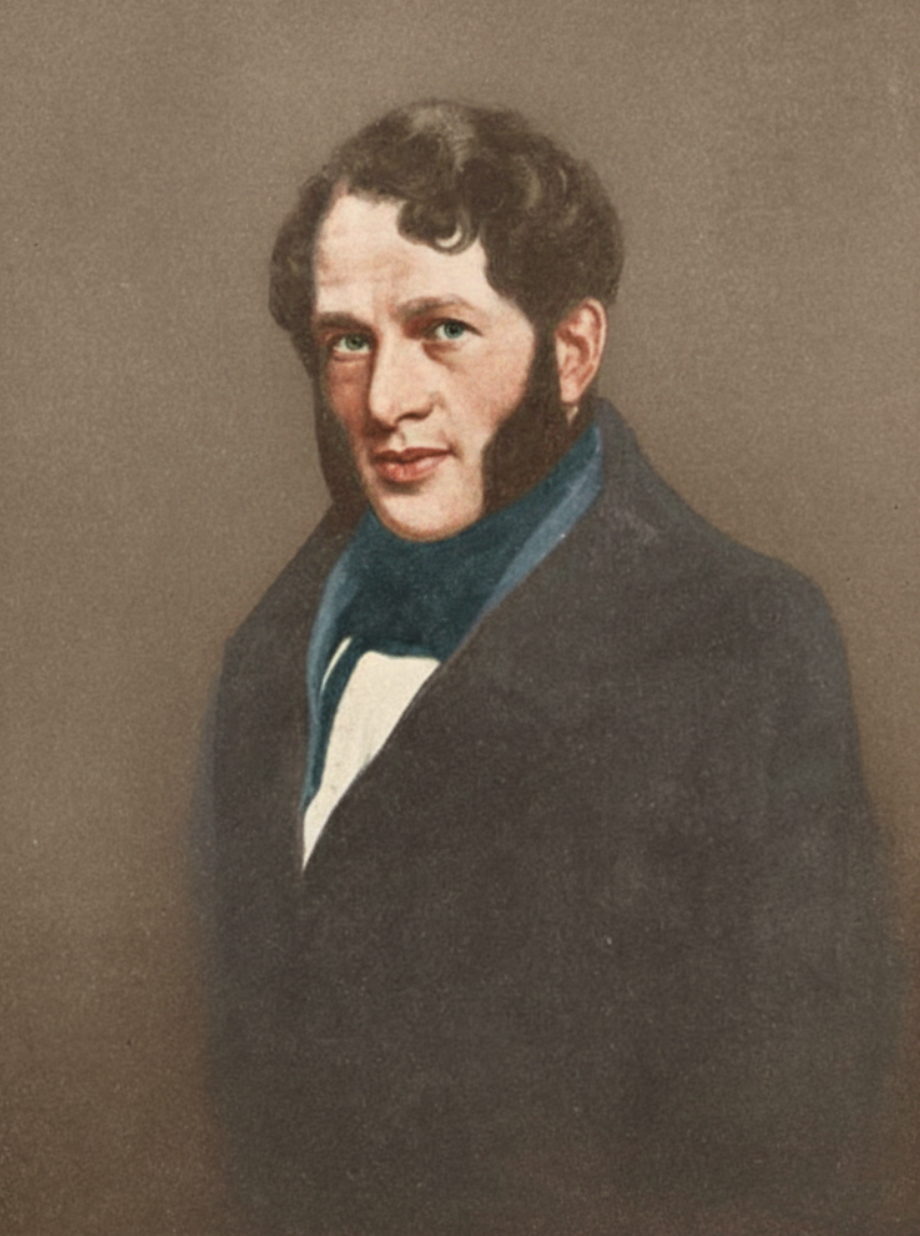
- Years of Life: 1803-1883
Early Life and Background
John Nsticke Scobell was born in 1803, into an ancient Devon family of considerable standing. He was educated to university level, becoming a Bachelor of Arts, and later served as a Justice of the Peace for Somerset and Cornwall. His social position was reflected in his ownership of country seats at Hallatrow Court, Somerset, and Nancealorne, Cornwall.
Despite these privileges, Scobell was marked by personal modesty and spiritual seriousness. Like a number of men of similar rank during the early nineteenth century, he was deeply exercised by the condition of the Church and the spiritual needs of ordinary believers.
Spiritual Awakening and Brethren Associations
Scobell became associated with the early Brethren movement during its formative years, when believers in many parts of Britain were separating from sectarian systems to gather simply in the name of the Lord Jesus Christ, owning Scripture alone as their rule.
He was not primarily known as a preacher or controversialist. Rather, his service lay in a quieter but highly influential sphere: the encouragement of worship through sound, scriptural hymnody. He moved among assemblies largely composed of humble believers, particularly in the West of England, and was deeply concerned that their worship should be both joyful and doctrinally sound.
Compiler of “Scobell’s Hymn Book”
Scobell’s enduring legacy is inseparably linked with the hymn book universally known as “Scobell’s Hymn Book”, though its full title was:
Hymns and Spiritual Songs for the Children of God (published 1863)
Though modestly described by Scobell as merely:
“the result of the communion of many Christians with a desire to promote the joy and edification of the Church of God,”
there is no doubt that the book owed its existence largely to his personal enthusiasm, patience, perseverance, and generosity. He undertook the work at a time when few assemblies possessed adequate hymn collections, and when much evangelical hymnody was either unavailable or scattered across many sources.
The volume quickly became widely used among Brethren assemblies, especially in Devon, Somerset, Cornwall, and the South-West, and was frequently issued with an appendix, expanding its usefulness.
Reception and Influence
The hymn book achieved remarkable circulation and influence. It was used not only among Brethren, but was admired by Christians across denominational lines.
Dr. A. R. Short, in his historical writings, referred to:
“Scobell’s well-known Hymns with Appendix,”
adding that “it contains very many magnificent hymns to which compilers of all evangelical denominations might well pay attention.”
Likewise, F. T. Bullen, in The Apostles of the South East, mentions a small Brethren assembly whose worship was enriched by the use of this very hymn book, testifying to its penetration into even the humblest gatherings.
The book combined:
-
Strong evangelical doctrine
-
A clear heavenly hope
-
Deep affection for Christ
-
Practical suitability for congregational singing
In this way, Scobell quietly shaped the worship language of thousands of believers, many of whom would never know his name.
Character and Personal Traits
Though a man of position, John Scobell deliberately placed his resources at the service of the Church of God. He did not seek prominence. His name was attached to the hymn book not through self-assertion, but through affectionate usage among believers who recognised his labour.
He exemplified a rare combination of:
-
Refinement without pride
-
Means without self-indulgence
-
Leadership without domination
His willingness to underwrite publication costs and bear practical burdens reflected a heart deeply invested in the spiritual prosperity of others.
Final Years and Death
Scobell lived to the age of 80, passing away in 1883. By the time of his death, his hymn book had already become a fixture in Brethren worship, particularly in rural and working-class assemblies.
Though he left no theological system, movement, or personal following, his contribution endured—and continues to endure—wherever believers lift their voices in simple, scriptural praise.
Legacy
John Nsticke Scobell’s legacy is best measured not in monuments or titles, but in corporate worship:
-
He helped give the early Brethren movement a shared voice of praise
-
He strengthened unity through sound hymnody
-
He demonstrated how quiet service can have lasting spiritual impact
His life stands as a reminder that some of the most fruitful servants of Christ are those who labor behind the scenes, content that God alone should receive the glory.