
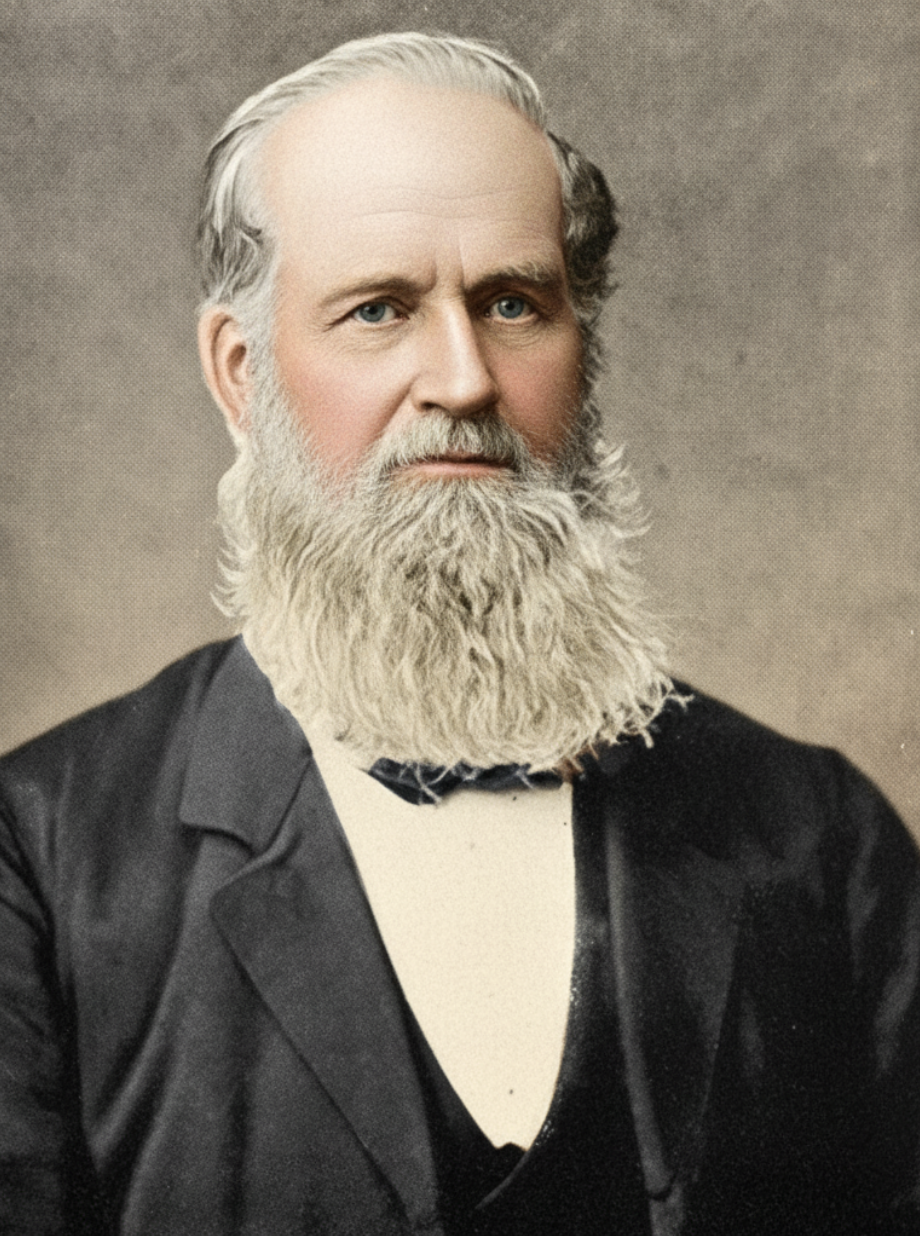
- Years of Life: 1818-1893
Early Christian Life and Gifted Ministry
Joseph Stancomb was brought to the Lord at an early age, and from the outset of his Christian life he took a firm and conscientious stand for Christ. The spiritual gift bestowed upon him was unmistakable and steadily developed, being richly used for the help, instruction, and edification of the saints wherever he ministered. His service in the Word of God was marked by depth, sobriety, and a spiritual tone that flowed from a life of prayer and meditation.
Position During the Division of 1848
In the solemn divisions that arose among the brethren in 1848, Mr. Stancomb, under a deep conviction of conscience, aligned himself with J. N. Darby and others. He believed that some had failed to act with sufficient promptness in investigating teachings that were alleged to be dishonouring to Christ. Convinced that such matters should be firmly judged, he maintained this position for approximately twenty years, doing so in sincerity and integrity before God.
Family Life and Settlement at East Coker
Left a widower with six children, Mr. Stancomb married in 1854 Miss Martha Murly of East Coker, near Yeovil. She had herself been mightily used of God after her conversion in the commencement of a gracious work in that village. Mr. Stancomb went to reside at East Coker and soon became the chief helper in the work that had already been ongoing for nearly two decades.
The Murly home had long been open to visiting servants of Christ, and under Mr. Stancomb’s ministry the work in East Coker continued to flourish. He was much used of God for the blessing of many both locally and in the surrounding districts, while also travelling more widely, where his ministry was greatly appreciated.
Exercise of Conscience and Restoration of Fellowship
Mr. Stancomb was distinguished by a singular integrity of conscience before God, and it was this very quality that ultimately made it impossible for him to continue in the position he had long maintained. A little over thirty years before his death, he became deeply exercised—along with other discerning brethren—by certain teachings of Mr. Darby, which they judged to be contrary to the truth and desired to bring to the test of Scripture.
When inquiry was refused by some, Mr. Stancomb asked himself searching questions: how could he remain separated from those charged with sheltering unsound doctrine through non-investigation, while continuing with others who permitted similar teaching and refused examination? Careful investigation convinced him that those from whom he had formerly separated had truly judged and cleared themselves of complicity with the error, and were sincerely seeking subjection to the Word of God and the authority of Christ.
He therefore concluded that there was no godly reason to remain in separation, though he felt deeply that there was ground on all sides for humiliation before God. Meetings were accordingly held for united confession and prayer, through which barriers were broken down and God graciously gave blessing.
Conferences and Wider Fellowship
Through the visits of brethren to the small conferences at Yeovil, old links of fellowship were restored and new ones formed. A season of profound humbling before God in one of these meetings remained vividly remembered by many.
At this time Mr. W. Yapp sought Mr. Stancomb’s fellowship in the proposed Leominster conferences, whose aim was to help servants of Christ by days of united prayer and meditation on the Scriptures. Mr. Stancomb became a willing helper on the understanding that the first day should be devoted to humiliation and prolonged waiting upon God in prayer—an emphasis entirely in keeping with his own spiritual character.
Though his ministry was appreciated in large gatherings such as those held at Merrion Hall and Willow Park, Dublin, it was in smaller conferences that he shone most brightly. He was pre-eminently a man of prayer; his public prayers were saturated with Scripture and drew hearts upward toward God.
Later Years and Home Call
An unfortunate accident led to the burning down of the Stancomb family home at East Coker, after which they removed to Yeovil, where they resided until his death. Nevertheless, Mr. Stancomb always regarded East Coker as his special local sphere of service.
With the devoted help of his wife and daughters—who regularly spent the Lord’s Day there, caring for the Sunday School and assisting in various ways—his service continued fruitfully. While health permitted, he ministered regularly in Yeovil, made valued monthly visits to other places, and maintained fellowship in annual gatherings and quarterly meetings at Exeter.
He fell asleep in the Lord on 8 March 1893, aged 75 years.
Spiritual Emphasis and Character
The central theme of Mr. Stancomb’s ministry was the heavenly calling and hope of the Church of God, combined with a firm grasp of God’s electing love and the doctrines of grace. At the same time, his Gospel preaching was marked by simplicity and warmth. Evangelists always found in him a ready helper, and he was entirely free from jealousy or self-importance, often giving place to others of far lesser ability.
He had deep sympathy with movements aimed at practical holiness, though his knowledge of Scripture made him aware of their doctrinal shortcomings. Increasingly he feared a lack of teaching that fostered true devotedness to Christ, warning against glorying in position without corresponding spiritual condition—the form without the power.
Personally, he thirsted for deeper reality of Christ dwelling in the heart. His public ministry flowed from this inward exercise, which gave it enduring value. He was tender in sympathy, deeply burdened by anything that dishonoured the Name of Christ, and remarkably free from sectarian narrowness. In prayer he embraced the whole Church of God, frequently lamenting its divisions and warning against departures from the simplicity of Christ.
Legacy
Joseph Stancomb is remembered as a man who was lowly, loyal, and loving, whose life was governed by conscience, prayer, Scripture, and devotion to Christ. His legacy is one of spiritual depth, humility, and a persistent longing for the unity, holiness, and heavenly-mindedness of the people of God—until the day of resurrection glory, when all divisions shall cease and “His servants shall serve Him, and they shall see His face.”