
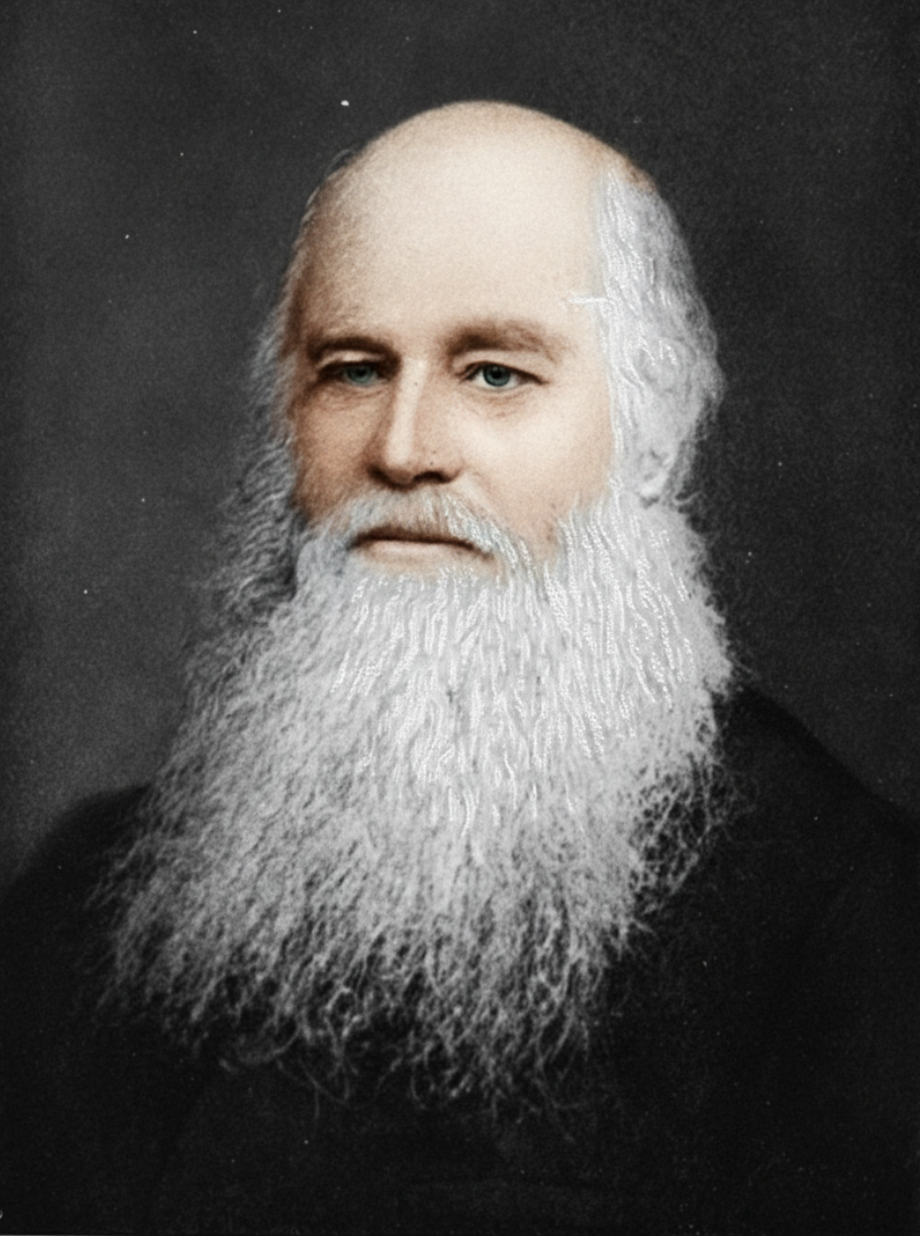
- Years of Life: 1807-1884
Early Life and Godly Upbringing
James George Deck was born on 1 November 1807 at Bury St. Edmunds, Suffolk. Like Timothy of old, he was greatly blessed with a praying mother, a woman of deep piety who nightly retired for a quiet hour with God on behalf of her children and even her children’s children. She never punished her children without first praying with them. All her children were early converted and consecrated to God—a blessing that extended to the third generation.
One of Deck’s sisters, Mrs. M. J. Walker, became a well-known hymn writer, authoring hymns such as “Jesus, I will trust Thee” and “The wanderer no more will roam.”
Military Career and Early Spiritual Conviction
Deck studied for the Army in Paris, under one of Napoleon’s generals, and in 1824 went to India as an officer in the service of the East India Company, receiving a commission in the 14th Madras Native Infantry.
Even in his youth he was under deep conviction of sin. On one occasion, under intense moral pressure, he drew up a set of good resolutions and signed them with his own blood, only to discover his utter inability to keep them—an early lesson in the powerlessness of the flesh.
His youthful ambition was to distinguish himself in the military profession and later enter Parliament for his native town. But God had far better purposes for him.
Conversion and Marriage
Returning to England in 1826, Deck came under the clear power of the gospel and was converted through a sermon preached by a godly Church of England clergyman, whom his sister Clara—herself newly converted—took him to hear. From that moment, “all things became new.” His life’s passion now was to follow Jesus and to win souls for the kingdom of God.
Around this time he married the daughter of Samuel Feild, an evangelical clergyman. In her he found a wife who shared with him “the like precious faith” and who proved a true spiritual companion throughout their pilgrimage.
Return to India and Separation from the Army
Upon returning to India, Deck openly identified himself as a Christian among his fellow officers and boldly witnessed for Christ. Through his testimony, a number were brought to saving faith.
As his understanding of Christian discipleship deepened, he became exercised about his position in the Army. Ultimately, he resigned his commission, intending to become a clergyman, and returned to England in 1835 with his wife and two children.
Exercise of Conscience and Separation from the Church of England
While staying with his father-in-law at Hatherleigh, Devon, his second son—later Dr. J. Feild Deck—was born and christened. A remark made by Mr. Feild during the christening, defending infant baptism against Baptist objections, led Deck to search the Scriptures concerning baptismal regeneration as taught in the Book of Common Prayer.
Finding no Scriptural support for this doctrine, Deck became deeply troubled at the thought of being ordained, which would require him to declare that he “assented and consented to all and everything contained in the Book of Common Prayer.” Turning to his wife, he said:
“I have left the Army to become a clergyman, but now see that the Church of England is contrary to the Word of God; what shall we do?”
Her reply was decisive and noble:
“Whatever you believe to be the will of God, do it at any cost.”
Accordingly, the Church of England and the promised living were given up. Seeking guidance solely from Scripture (“what they found written”), Deck and his wife soon found fellowship with others similarly exercised—later known as the Brethren. Both were baptised by immersion as believers, and infant baptism ceased entirely in their family.
Early Brethren Ministry and Hymn Writing
Trusting the Lord entirely for temporal support—a trust never disappointed—Deck began gospel work in the villages of Colaton Raleigh, Kingston, and surrounding parts of Devon. The parish was noted for godlessness and High Church influence, yet through faithful preaching many were converted, baptised as believers, and gathered simply to the Name of the Lord Jesus Christ, according to Acts 2:42, waiting for God’s Son from heaven.
Between 1838 and 1844, Deck wrote the majority of the hymns that form his most enduring legacy. These were not evangelistic hymns but hymns of worship, consecration, and heavenly hope, written in view of the Lord’s near return. Among them were:
-
“Abba, Father, we approach Thee”
-
“A little while! our Lord shall come”
-
“Lamb of God, our souls adore Thee”
-
“Jesus, we remember Thee”
These hymns quickly found a place in the worship of assemblies and remain widely sung today.
Continued Ministry in England
Deck’s ministry was chiefly exercised in the western counties of England, residing successively at Sidmouth, Wellington, and Weymouth, with mission visits to Otterton and East Coker. In each place he was used both in conversions and in establishing believers in Scriptural truth and church order.
At Wellington he was assisted in educational work by Henry Dyer, who became a valued fellow-labourer in the Word.
In 1852, Deck suffered a severe breakdown, necessitating complete cessation from ministry. Medical advice strongly recommended a sea voyage and change of occupation, leading to the decision to emigrate to New Zealand.
New Zealand: Loss, Restoration, and Fruitful Service
Arriving in 1853, Deck settled at Waiwerro, near Motueka, in the Nelson province. Only three months later, his devoted wife fell asleep after a brief illness and was buried in Motueka Cemetery—a heavy personal loss borne with faith and submission.
In due course, his health was wonderfully restored, and he again took up gospel and assembly work. In 1865, he moved with his family to Wellington, where a wide and effectual door of service opened. A large and happy assembly was gathered there, along with several others in the surrounding district.
During this period, he composed additional hymns, including:
-
“Jesus, our life, is risen”
-
“Great Captain of Salvation”
-
“The veil is rent”
-
“Lord Jesus, are we one with Thee?”
-
“Around Thy grave, Lord Jesus” (baptismal hymn)
He also visited Invercargill, helping a small assembly that met in the home of his son, Dr. J. Feild Deck.
Final Years and Home-Call
With advancing age, Deck felt unequal to continuing the work at Wellington and returned to Motueka. After two years as a complete invalid, the Home-call came on 14 August 1884, in his 76th year.
On Sunday, 17 August, “devout men” laid his body to rest in Motueka Cemetery. At the graveside, one of his own hymns—“Thou hast stood here, Lord Jesus”—was sung.
Writings and Hymnological Legacy
In addition to his hymns, Deck authored and edited numerous valuable works, including:
-
The Heresy of Mr. Prince
-
Brief Meditations on Passages of Holy Scripture
-
Joy in Departing
-
Vital Questions in Connection with the Glory of Christ
His hymn collections, Psalms and Hymns and Spiritual Songs, became foundational to Brethren worship. Through these hymns, he continues to speak, guiding believers into worship centred on Christ’s Person, priesthood, and coming glory.
Legacy
James George Deck is remembered as:
-
a man of deep Scriptural conviction
-
a pioneer of simple New Testament church fellowship
-
one of the greatest hymn writers of the Brethren movement
-
a servant who chose obedience at any cost
-
a worshipper whose voice still leads the Church
Truly, “he being dead yet speaketh.”