
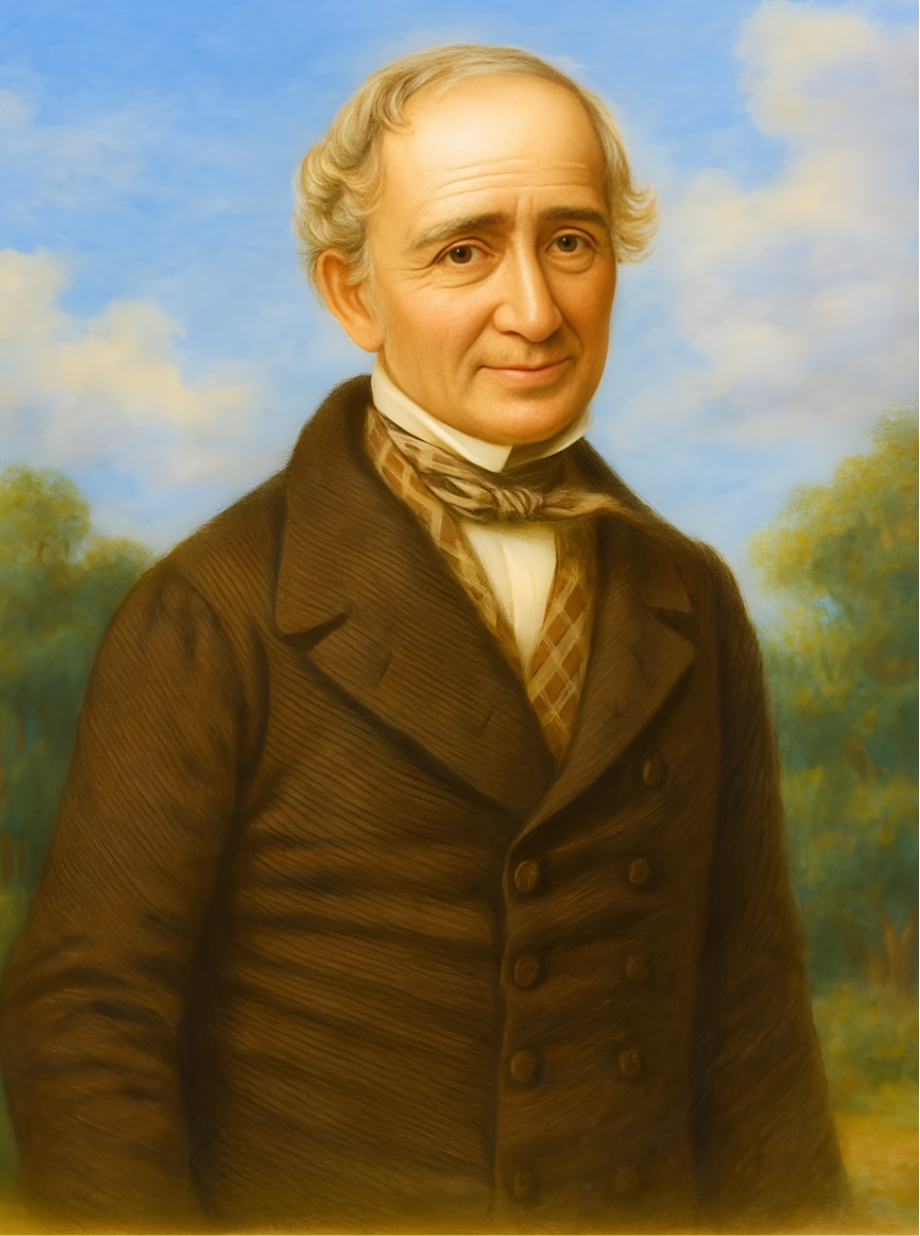
- Years of Life: 1795-1853
Early Life and Profession
Anthony Norris Groves was born in 1795 in Newton Valence, Hampshire, England. He was trained as a dentist, a profession in which he became highly successful. By his late twenties, Groves enjoyed financial security, professional recognition, and social standing.
Yet inwardly, Groves was increasingly burdened by the question of what it truly meant to follow Christ. Through careful reading of Scripture—especially the Gospels—he became convinced that many accepted Christian practices were shaped more by tradition than by the Word of God.
Spiritual Awakening and Radical Obedience
Groves’ life changed decisively when he began to take the plain commands of Scripture literally, especially Christ’s teaching on discipleship, possessions, and trust in God.
He came to the conviction that:
-
Believers should live simply
-
Wealth should be used for the Lord’s work
-
Service to Christ should be carried out in dependence on God alone
As a result, Groves gave away much of his wealth, refused fixed salaries, and committed himself to living by faith. This step—taken years before organized mission societies became common—was deeply influential and countercultural.
The Dublin Fellowship (1825)
In 1825, Groves moved to Dublin, where he became part of a small circle of believers meeting informally for prayer, Bible study, and the breaking of bread. This group included Edward Cronin, John Gifford Bellett, and others, and is widely regarded as the beginning of the Brethren movement.
Groves strongly emphasized:
-
The unity of all believers
-
The absence of clergy-laity distinction
-
Weekly remembrance of the Lord’s Supper
-
Gathering simply in the name of Christ
His famous question from this period—
“Is it possible to unite all Christians on the ground of their common faith in Christ?”
captured the spirit of the early gatherings.
The Baghdad Mission (1829–1833)
In 1829, Groves embarked on a pioneering missionary journey to Baghdad, accompanied by family and fellow believers. This mission is often regarded as the first modern “faith mission”, undertaken without guaranteed financial backing or institutional support.
The work was extremely difficult:
-
Disease, isolation, and cultural barriers were constant
-
Several members of the party died, including Groves’ wife Mary
-
Political unrest and hardship marked the entire mission
Despite suffering and loss, Groves remained steadfast, believing that obedience to Christ was worth any cost.
Missionary Work in India (1836–1853)
After returning from the Middle East, Groves felt called to India, arriving in Madras (Chennai) in 1836. There, he labored primarily in South India, especially in the Godavari Delta region (modern Andhra Pradesh).
His work included:
-
Gospel preaching and teaching
-
Orphan care and famine relief
-
Training local believers
-
Encouraging indigenous leadership
-
Refusing ecclesiastical control or hierarchy
Groves was supported and assisted by fellow laborers such as William Bowden and George Beer, and his work was encouraged by Sir Arthur Cotton, whose engineering projects opened doors for missionary access.
Groves emphasized that Indian believers should not become dependent on Western control but should grow as self-supporting, Spirit-led assemblies.
Theological Convictions
Groves was not a systematic theologian, but his convictions profoundly shaped the Brethren movement:
-
Faith-based service without guaranteed income
-
Simplicity in church life
-
Practical obedience to Scripture
-
Unity of all believers
-
Local autonomy of assemblies
-
Christ-centered ministry
His views influenced later missionary movements and inspired men such as George Müller, who often acknowledged Groves’ impact on his own faith-based work.
Later Years and Death
Groves’ health declined in his later years due to the hardships he endured. He returned periodically to England but continued to labor for the Lord whenever possible.
He went to be with the Lord in 1853, at the age of 58.
Legacy
Anthony Norris Groves is remembered as:
-
The father of faith missions
-
A spiritual pioneer of the Brethren movement
-
A man who lived out the Sermon on the Mount
-
A servant whose obedience reshaped missionary practice worldwide
His life demonstrated that God honors simple faith, costly obedience, and wholehearted devotion to Christ.