
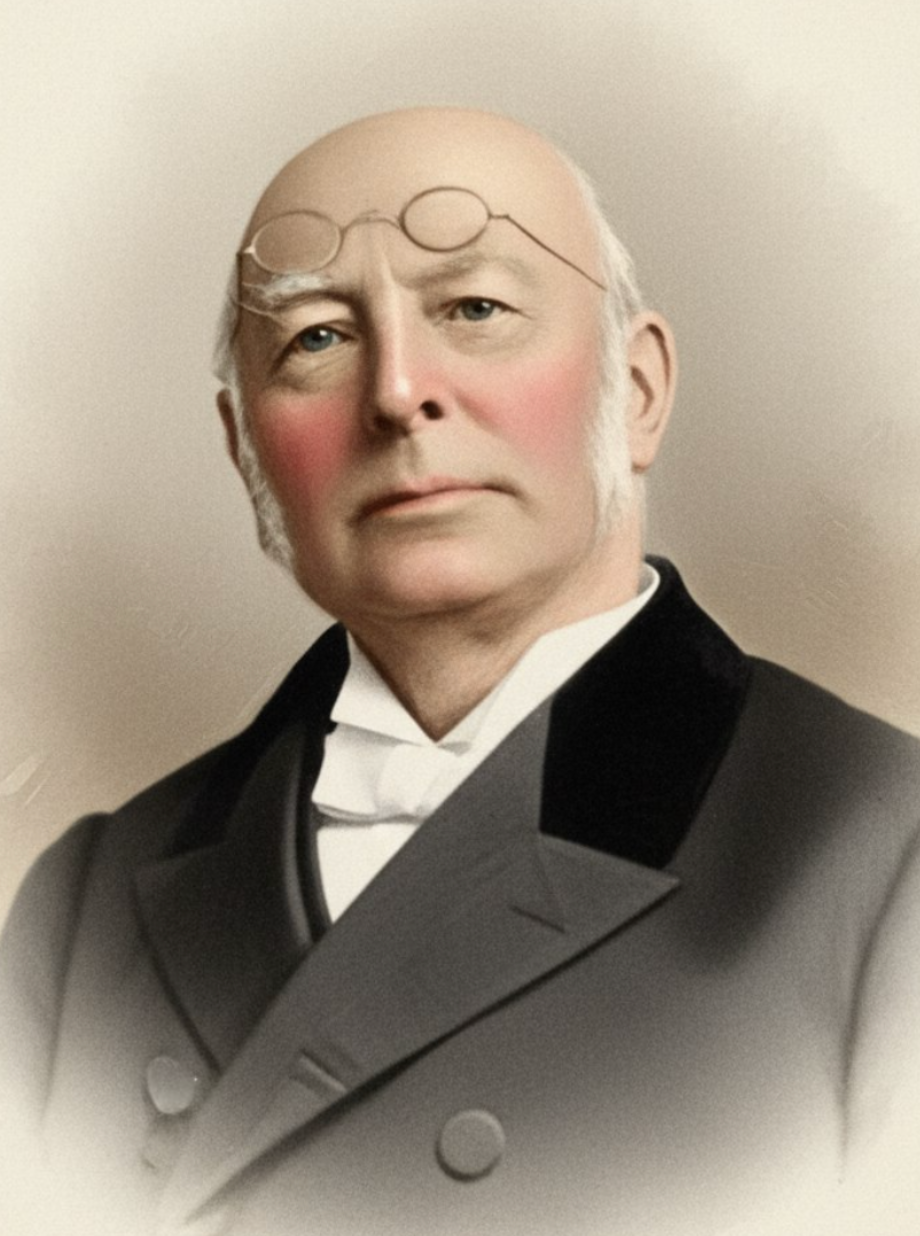
- Years of Life: 1821–1906
Early Life and Education
William Kelly was born in 1821 in Ireland. From an early age, he displayed exceptional intellectual ability, particularly in languages and classical studies. He pursued higher education at Trinity College, Dublin, where he excelled in Greek, Hebrew, and classical literature.
Kelly’s academic background equipped him uniquely for a lifetime of careful Biblical exposition, though his faith was never merely academic. His deep scholarship was matched by sincere devotion to Christ and submission to the authority of Scripture.
Conversion and Spiritual Development
Kelly was converted as a young man and soon became deeply interested in the truths of Scripture concerning Christ, the Church, and God’s purposes in the ages. His studies led him beyond traditional denominational boundaries and into fellowship with those gathering simply to the Lord’s name.
He became associated early with the Brethren movement, where liberty for ministry and careful attention to Scripture allowed his gifts to flourish.
Association with John Nelson Darby
William Kelly became one of the closest associates and most capable co-laborers of John Nelson Darby. While Darby was the pioneering thinker and systematizer, Kelly became the principal editor, interpreter, and defender of much of Darby’s ministry.
Kelly possessed:
-
A calmer temperament than Darby
-
A more systematic teaching style
-
Exceptional precision in language and argument
He played a vital role in preserving, editing, and publishing Darby’s writings, ensuring their accuracy and availability for future generations.
Ministry and Teaching
William Kelly was a prolific Bible teacher whose ministry emphasized:
-
The absolute authority of Scripture
-
The distinction between Israel and the Church
-
The heavenly calling of the believer
-
The imminent return of Christ
-
Sound doctrine joined with practical godliness
He traveled widely, teaching in assemblies throughout Britain and Europe, strengthening believers with careful exposition rather than emotional appeal.
Kelly was known for:
-
Clear reasoning
-
Careful use of original languages
-
Respectful but firm defense of truth
Literary Work and Editorial Legacy
Kelly’s written output was immense. He authored and edited:
-
Bible commentaries on both Old and New Testaments
-
Doctrinal treatises
-
Explanations of prophecy
-
Articles addressing assembly order and church discipline
He also served as editor of influential periodicals, such as:
-
The Bible Treasury
-
The Christian Friend
Through these publications, Kelly helped guard assemblies against doctrinal error and preserved the theological heritage of the Brethren movement.
Role During Times of Division
Kelly lived through periods of significant division among the Brethren, particularly following earlier separations associated with Darby. During these difficult times, Kelly sought to uphold truth while maintaining spiritual dignity.
Though firm in conviction, he avoided unnecessary harshness and worked to explain principles rather than merely enforce positions. His writings from these periods reveal a deep concern for both truth and the spiritual welfare of believers.
Personal Character
Those who knew William Kelly described him as:
-
Quiet and reserved
-
Deeply conscientious
-
Thorough and precise
-
Devoted to Scripture and study
He lived a simple life and sought no prominence. His confidence rested not in his intellect, but in the trustworthiness of God’s Word.
Later Years and Death
In his later years, Kelly continued writing and teaching despite advancing age. His mind remained sharp, and his devotion to Scripture did not diminish.
William Kelly went to be with the Lord in 1906, leaving behind a vast body of written ministry that continues to be studied and appreciated.
Legacy
William Kelly is remembered as:
-
One of the greatest scholars produced by the Brethren movement
-
A faithful preserver of doctrinal truth
-
A bridge between pioneering teachers and later generations
-
A model of careful, reverent handling of Scripture
His life demonstrates that scholarship, when submitted to Christ, can become a powerful tool for spiritual blessing.