
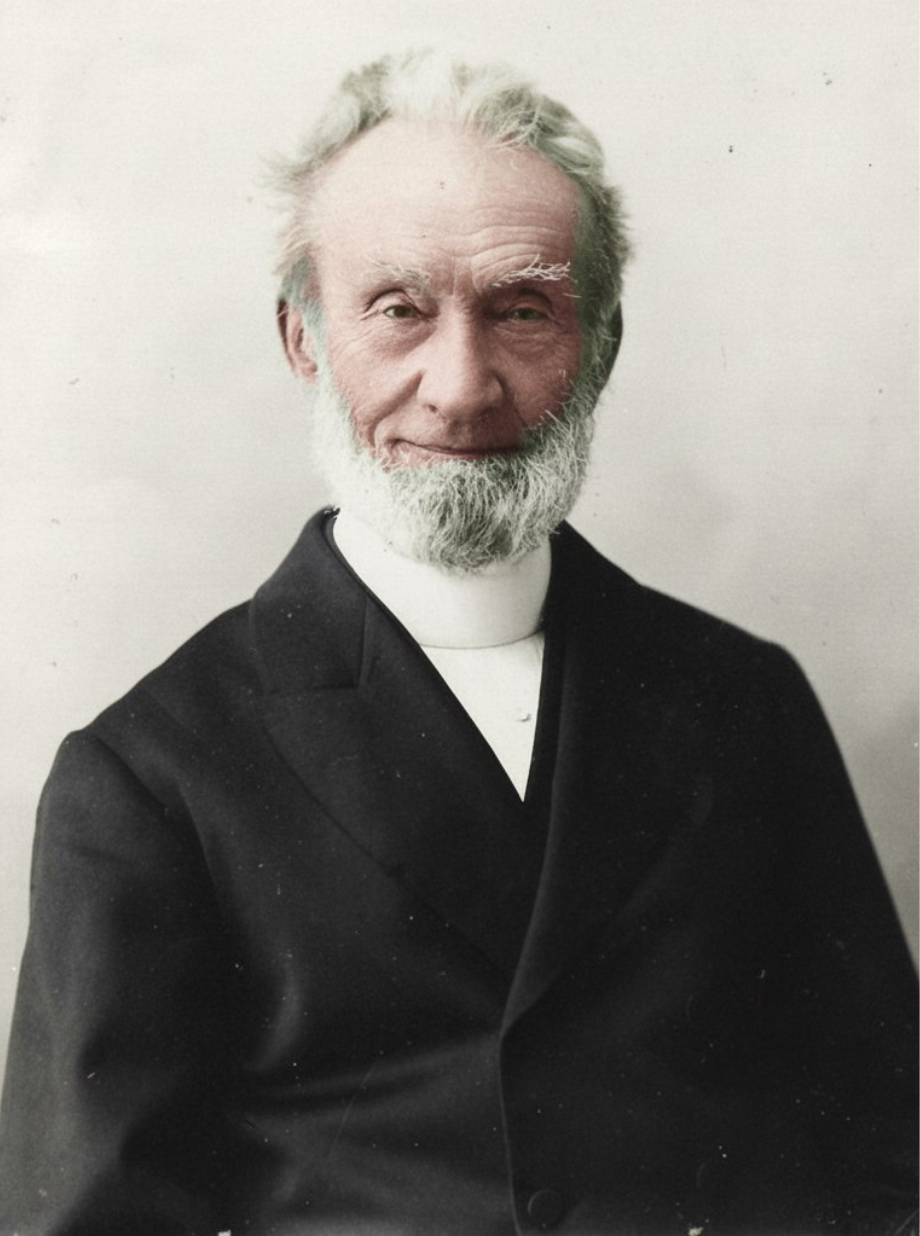
- Years of Life: 1805–1898
Early Life and Youth
George Müller was born in 1805 in Kroppenstedt, Prussia (modern Germany). His early life was marked not by piety but by dishonesty, rebellion, and self-indulgence. As a youth, he lied frequently, stole money, and lived recklessly—even while his mother lay dying.
Despite being intended by his father for the Lutheran ministry (largely for financial security), Müller had no true knowledge of God and lived without conscience toward spiritual things.
Conversion to Christ
Müller’s life changed dramatically in 1825 when, almost by accident, he attended a small Christian meeting in a private home. There he encountered believers who prayed simply, read Scripture, and spoke of Christ with sincerity.
That evening, Müller was truly converted, later writing that he was brought “to the knowledge of the Lord Jesus Christ.” From that moment, his life direction changed completely. He developed:
-
A deep love for Scripture
-
A disciplined prayer life
-
A growing hatred of sin
-
A desire to live wholly for God
Early Ministry and Break from Tradition
After his conversion, Müller began preaching and teaching, first in Germany and later in England. Like many early Brethren leaders, he became increasingly dissatisfied with:
-
Paid ministry
-
Pew rents
-
Clerical hierarchy
-
Dependence on human organization
Through careful study of Scripture, Müller concluded that Christian work should be supported by God alone, not by appeals to men.
Partnership with Henry Craik (Bristol, 1832)
In 1832, Müller moved to Bristol, England, where he met Henry Craik. Their partnership became one of the most significant cooperative ministries in Christian history.
Together they:
-
Shepherded believers
-
Taught Scripture
-
Practiced simple assembly principles
-
Emphasized prayer and dependence on God
Their shared conviction was that God should be trusted implicitly in every detail of Christian service.
The Orphan Work Begins
In 1836, Müller opened his first orphan house in Bristol. His purpose was not only to care for orphans, but to:
“Demonstrate before the world that God is faithful, and still hears and answers prayer.”
Müller made several firm principles:
-
He would never ask anyone for money
-
He would never go into debt
-
He would pray for every need
-
He would record every answer
Over more than 60 years, Müller cared for over 10,000 orphans, entirely through prayer. Food, clothing, housing, education, and staff were all provided without solicitation.
A Life of Prayer
Müller was first and foremost a man of prayer. He rose early, often spending hours reading Scripture and praying before beginning the day.
He believed:
-
Prayer was the secret of spiritual strength
-
Faith must be tested practically
-
God delights in being trusted
Müller meticulously recorded thousands of specific prayer answers—many arriving at the last possible moment—demonstrating God’s faithfulness again and again.
Relationship with the Brethren Movement
George Müller was closely associated with the Open Brethren, though he avoided sectarian labels. He valued:
-
Unity among believers
-
Simplicity in worship
-
Liberty of the Holy Spirit
-
Practical love expressed through action
Unlike some others, Müller strongly emphasized grace, patience, and love in matters of difference and discipline.
Later Ministry: Worldwide Preaching Tours
After retiring from active orphan-house oversight in his later years, Müller began extensive missionary travel at the age of 70.
He traveled across:
-
Europe
-
North America
-
Asia
-
Australia
He preached the gospel and taught Scripture, encouraging believers to trust God fully. It is estimated that he traveled over 200,000 miles and preached more than 3,000 sermons during this period.
Personal Character
Those who knew Müller described him as:
-
Cheerful and warm-hearted
-
Deeply humble
-
Disciplined and orderly
-
Firm in faith, gentle in spirit
He lived simply, giving away much of what he received. His confidence rested not in faith itself, but in the character of God.
Death and Homegoing
George Müller went to be with the Lord in 1898 at the age of 92. On the day of his burial, thousands lined the streets of Bristol to honor the man whose life had pointed so clearly to God.
Legacy
George Müller is remembered as:
-
One of the greatest examples of answered prayer in history
-
A pioneer of faith-based Christian service
-
A testimony to God’s provision without human solicitation
-
A man whose life glorified God rather than himself
His journals continue to inspire believers to trust God for both spiritual and practical needs.